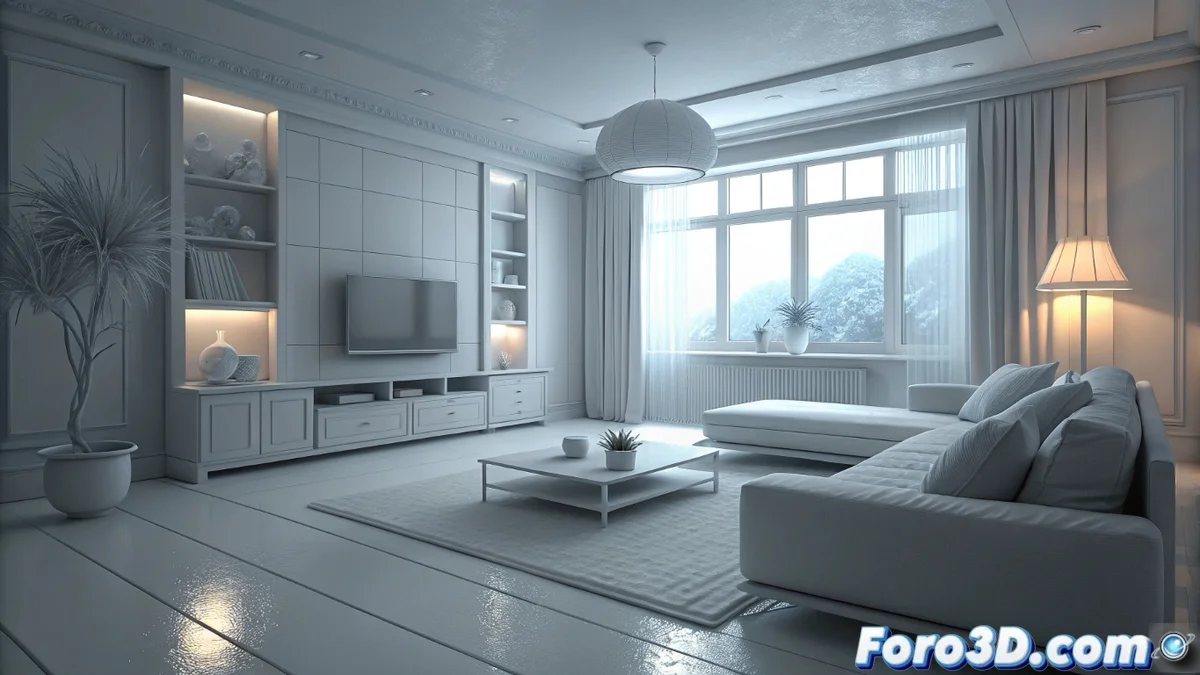
Excessive Sterility in 3D Interior Design and Its Emotional Impact
In the realm of digital design, pursuing absolute perfection can become a double-edged sword. The aesthetic of exaggerated sterility dominates many projects, presenting immaculate environments where any sign of life, such as dust or clutter, has been meticulously erased. The result is a visually striking scene but one that generates a palpable emotional disconnection in the viewer. 🏢
Technological Roots of Digital Coldness
This trend does not arise from nowhere; it has its foundations in the very rendering tools like Blender and 3ds Max. These programs allow total control, facilitating the elimination of any perceived imperfection to achieve hyperrealistic realism. However, this technical capability often inherits the philosophy of advertising and extreme minimalism, where the main goal is to impress with neatness, setting aside the warmth and human narrative that makes a space feel real and livable.
Key consequences of this trend:- Dehumanization of the space: The total absence of organic or casual elements conveys coldness and emptiness, making environments seem like museum sets rather than places to live.
- Perception of falseness: The public may interpret these designs as artificial or fake, similar to a catalog photo that is too edited, which undermines the project's credibility.
- Creative limitation: By prioritizing order and perfect symmetry over authenticity, artistic expression and the ability to tell a story through design can be stifled.
In a world where everything is so impeccably orderly, one almost expects the furniture to complain about not having a speck of dust to feel alive.
Repercussions on Public Reception
The final effect of these too perfect spaces is a form of visual alienation. The lack of warmth and signs of life makes it difficult for people to project themselves or feel comfortable in them. This forces artists and designers to take a critical pause and evaluate their work from a new perspective: the balance between technical precision and the essential humanity that gives soul to an environment.
Factors contributing to the problem:- Legacy of computational rendering: The ease of creating perfect surfaces and exact symmetries effortlessly.
- Marketing influence: The pressure to create "clean" and ideal images to sell a concept or product.
- Fear of controlled chaos: Reluctance to incorporate elements of wear, irregular texture, or asymmetrical arrangement for fear that it will look like an error.
Towards a New Balance in 3D Design
The way forward involves reconsidering the values behind creation. Instead of seeking aseptic perfection, the challenge is to integrate calculated imperfections and details that suggest history and use. This does not mean abandoning technical quality, but enriching it with layers of emotional authenticity. Perfect design, in its most extreme pursuit, can end up being a parody of everyday reality, reminding us that true beauty often lies in balance and the footprint of lived experience. ✨