Advances in Virtual Production in the Academic Field
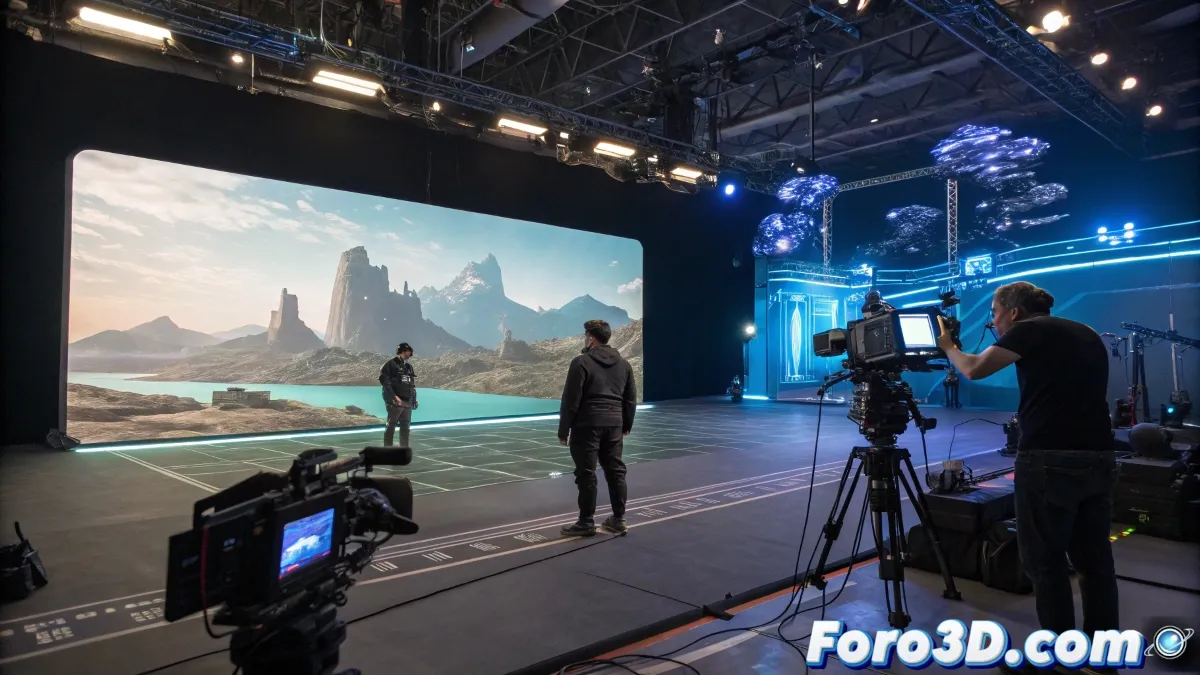
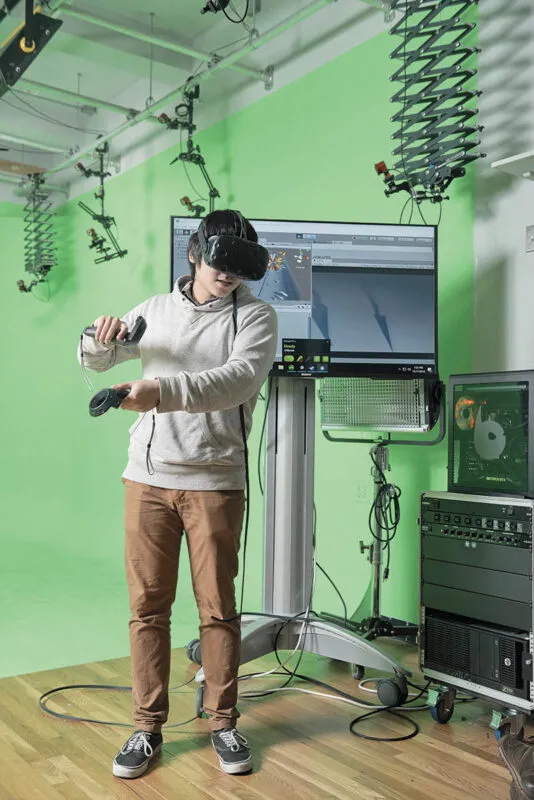
Universities are adapting their study programs to the rapid technological advances in the film industry. Institutions like the Rochester Institute of Technology (RIT) are incorporating advanced virtual production equipment to train the next generation of creators. According to Professor Flip Phillips, the use of technologies such as LED stages and motion capture has transformed teaching and learning in these fields. This allows students to learn to create content more efficiently and develop skills that will be essential to face an increasingly digitalized production environment.
Artificial Intelligence and Its Impact on Visual Effects
A crucial area of innovation in the world of virtual production is the integration of artificial intelligence (AI). Schools like the Savannah College of Art and Design (SCAD) are exploring how AI can optimize the creation of visual effects, facilitating real-time image manipulation. Professor Gray Marshall highlights that, although AI is changing the way artists work, it does not replace human creativity. Instead, it allows artists to experiment and modify their ideas more quickly and accurately, improving efficiency and expanding creative possibilities.
Collaboration Between Universities and the Film Industry
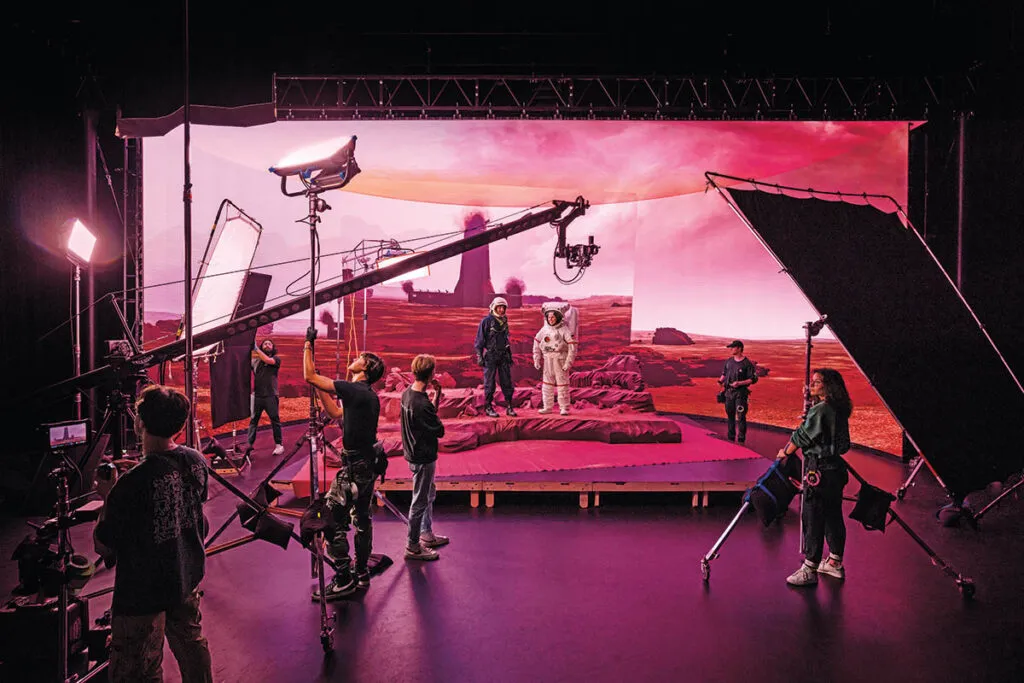
The rise of virtual production has generated a collaborative approach between universities and the industry. The Vancouver Film School, for example, is developing programs focused on training students in creating content for virtual stages. These programs allow students to acquire both the technical and creative knowledge necessary to thrive in a professional world increasingly dependent on technology. This approach also enables universities to influence industry trends, preparing students to integrate new technologies into their film projects.
Artificial Intelligence in the Creation of Visual Effects
While artificial intelligence has generated both enthusiasm and concerns in the visual effects industry, experts like Gray Marshall explain that its goal is to enhance, not replace, creative work. AI is designed to perform repetitive and technical tasks, freeing artists from those processes and allowing them to focus on more creative aspects. Additionally, AI opens new opportunities to test ideas, generate variations quickly, and explore creative directions that were previously not possible. In this way, AI is not a threat to creative jobs, but a tool that can boost creativity in the film industry.
Transformation of Storytelling in the Digital Era
The combination of virtual production and visual effects has profoundly changed the way stories are created in cinema. The ability to generate complete worlds and manipulate elements in real time offers filmmakers total control over their creative visions. This advancement has enabled the creation of narratives where the line between the physical and the digital becomes blurred. Furthermore, the integration of artificial intelligence into this process has further expanded creative possibilities, helping artists visualize new directions and transform stories in ways never before imagined.
Impact of Artificial Intelligence on Creativity in Cinema
The role of artificial intelligence in cinema and visual effects is far from trivial. AI is present in various tools used by filmmakers, from 3D modeling to motion simulation and real-time image enhancement. Despite some fears about the impact of AI on creative jobs, what is happening is a collaboration between human creativity and technological power. With AI support, artists have the opportunity to take their projects to a completely new level, improving the quality and efficiency of their creations.