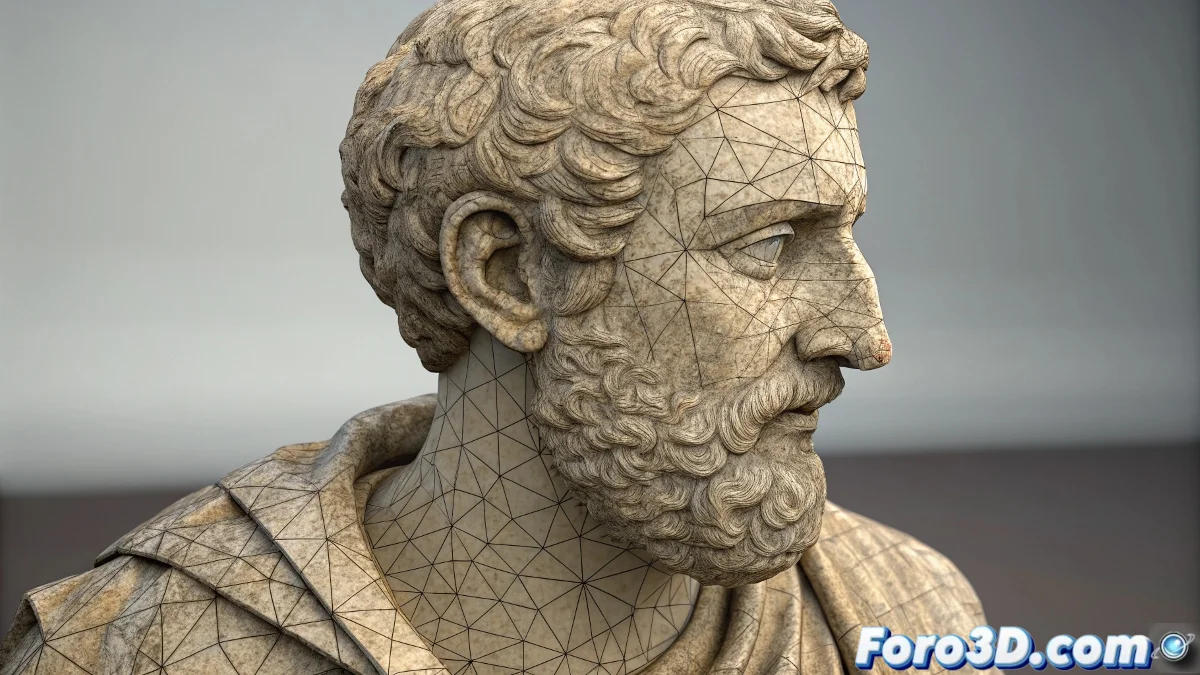
A Classic Tool in the World of Photogrammetry
When it comes to reconstructing 3D objects from simple photographs, PhotoModeler is a name that has been around for decades in architecture studios, engineering, and even the forensic scene. 🕵️♂️ But in an era dominated by software with ultra-automated workflows, the inevitable question arises: is it still a viable option? The answer is not a simple yes or no, but rather it completely depends on what you're looking for: millimeter precision or processing speed.
Precision as the Main Flagship
PhotoModeler's strong point is, without a doubt, its ability to achieve extremely accurate measurements. With good camera calibration and high-resolution photographs, it can achieve impressive precision ratios, such as 1:8000. 📏 This makes it an invaluable tool for projects where every millimeter counts, such as accident analysis or engineering part documentation. It's not just about creating a nice 3D model, it's about generating technically reliable data.
For applications that demand accuracy, PhotoModeler remains a hard-to-beat reference.
The Counterpart: Usability and Competition
Where PhotoModeler shows its years is in the user interface. Many modern 3D artists find it less intuitive and more technical than solutions like RealityCapture or 3DF Zephyr. 🤖 The learning curve is steeper, requiring time to understand concepts like marking reference points and manual calibration. However, this granular control is precisely what enables its high precision.
- Versatility: Supports everything from common cameras to integration with laser scanner data.
- Total Control: Offers precise handling over every stage of the reconstruction process.
- Modern Alternatives: Software like Meshroom or Metashape provide more automated workflows for quick results.
Who is the Ideal Tool For?
The decision to use PhotoModeler boils down to a matter of priorities. If the project demands maximum metric precision and you're willing to invest time in learning, its value is unquestionable. 💡 It's the choice of the technical professional. For projects more oriented toward 3D art, such as creating assets for video games or VFX, where speed and a clean mesh are more important than millimeter accuracy, modern alternatives may be more efficient.
In the end, if the resulting model has more vertices than an apple pie, it might be time to check the camera calibration... or admit that the project's digital diet was a bit excessive. 🥧 The tool is powerful, but it requires an expert hand to tame it.