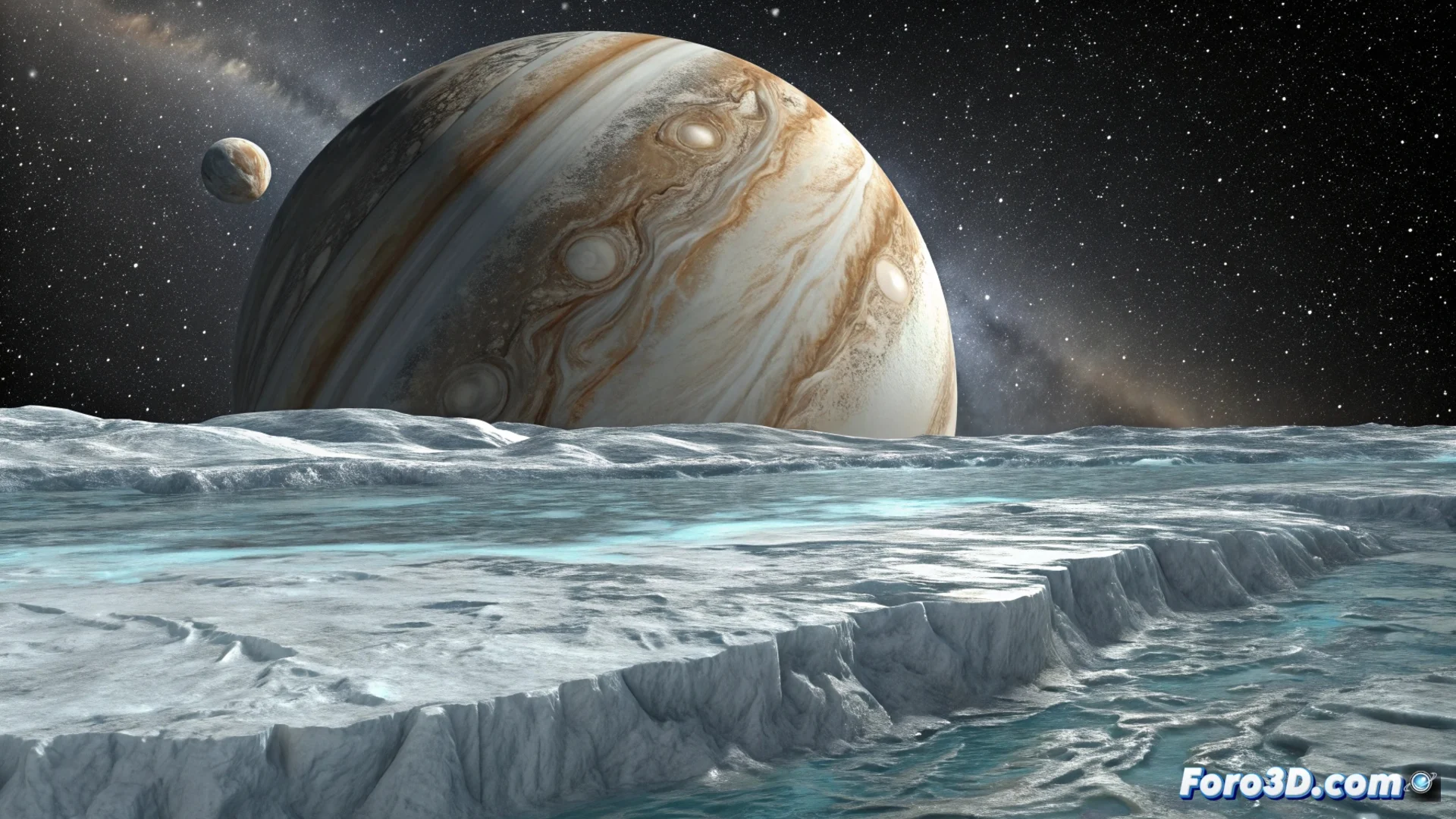
Europe's ocean might be isolated from the surface
The search for life beyond Earth faces a new complex scenario. Recent research on Europa, one of Jupiter's moons, indicates that its enormous reservoir of liquid water might be completely isolated from the outside. This changes the rules of the game for astrobiology 🪐.
A crust that does not communicate
The analysis of data from the Galileo probe and new geological models reveal a different picture. Instead of a dynamic crust that fractures and renews, allowing materials to circulate, Europa's ice layer might act as a permanent seal. This stability forms a physical barrier that would prevent surface compounds, rich in oxidants, from reaching the deep ocean, and the interior water from rising.
Direct consequences of this isolation:- Drastically reduces the availability of nutrients and chemical energy sources in the ocean depths.
- Poses a challenge to models that rely on surface-ocean exchange to sustain ecosystems.
- Forces a rethinking of the moon's internal mechanisms to generate detectable biosignatures.
"Nature seems to enjoy hiding its best secrets under kilometers of ice on irradiated worlds."
Rethinking the search for biosignatures
This finding forces re-evaluating strategies to find life. If the ocean is sealed, future missions cannot rely on an active material cycle. Attention now focuses on other phenomena that could offer windows of opportunity.
Approaches for future missions like Europa Clipper:- Search for biosignatures in vapor plumes and particles that occasionally emerge through deep cracks.
- Investigate alternative internal geochemical processes that can produce energy without surface input.
- Analyze the composition of the icy surface to understand the history of possible past exchange.
A mystery yet to be solved
The possibility of a completely isolated ocean on Europa adds a layer of complexity to space exploration. Although it limits some avenues for life, it also directs research toward new and fascinating questions about the resilience and requirements of organisms in extreme environments. The universe continues to guard its secrets jealously 🧊.