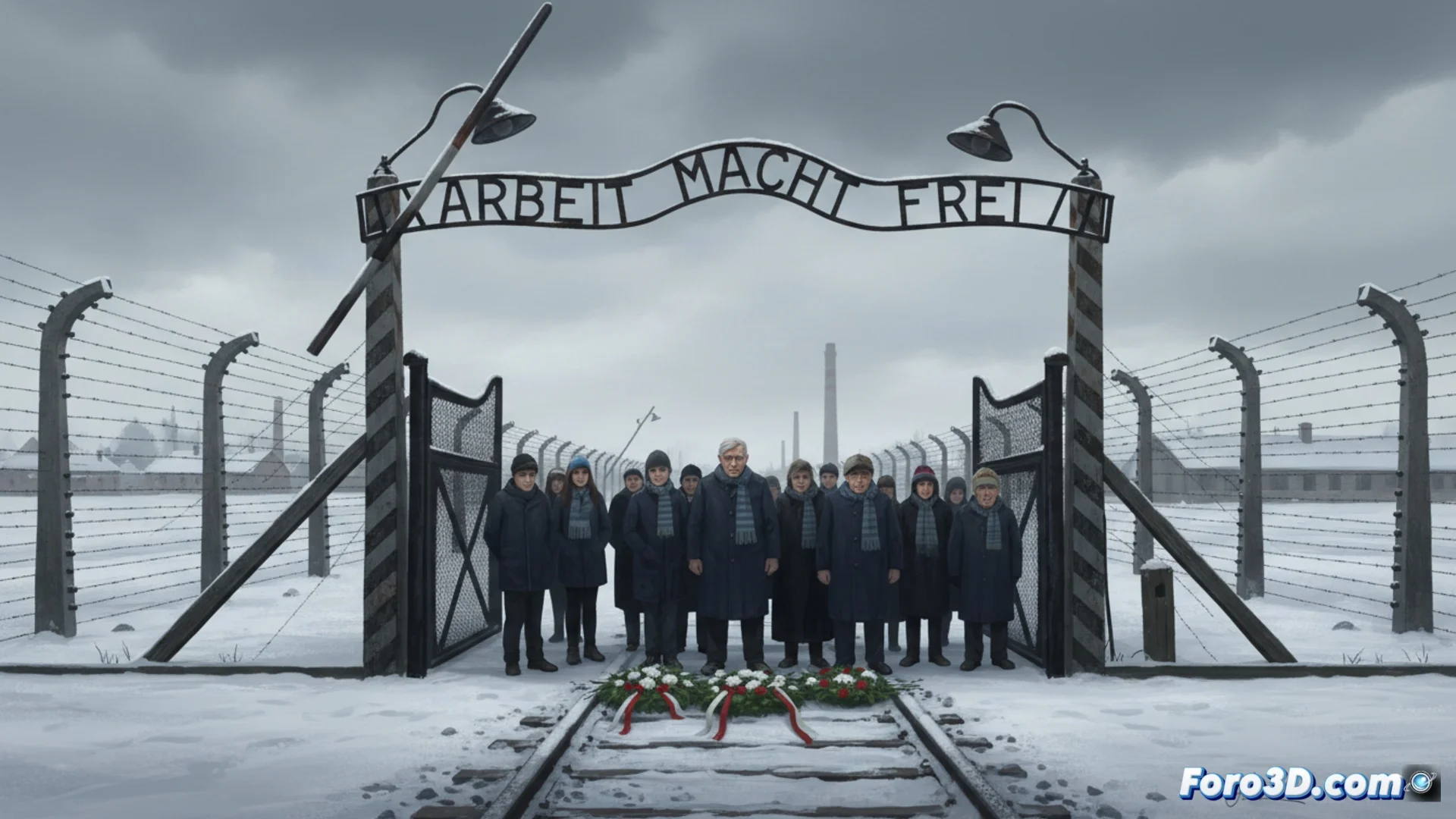
Europe Honors Holocaust Victims on Their International Day
The European continent unites its voices to remember the International Day in Memory of the Victims of the Holocaust. This date marks the anniversary of when Soviet troops liberated the Auschwitz-Birkenau extermination camp in 1945. Authorities and survivors of the barbarity participate in events to pay tribute to the six million Jews murdered by the Nazi regime and its allies. The day encourages reflection on hatred toward Jews and the crucial importance of protecting human dignity. 🕯️
Remembrance Events Across Europe
Various countries organize solemn acts. In Germany, the Bundestag holds a special commemorative session. President Frank-Walter Steinmeier warns about how antisemitism is resurging and the urgency of safeguarding democratic systems. In Poland, official groups and visitors go to the site of the former Auschwitz camp. People who experienced the horror, many of advanced age, recount their experiences to teach the young and combat those who seek to deny what happened.
Key Actions in the Events:- Official ceremonies in parliaments and public institutions.
- Visits to former concentration and extermination camps.
- Talks and direct testimonies from survivors.
Remembering this dark chapter of history is essential to build a future of peace. - Central message of the European Union.
A Universal Call Against Intolerance
European Union institutions emphasize that evoking this tragic past is fundamental to building a peaceful society. For this reason, they coordinate photographic exhibitions, colloquia, and educational programs. The main idea is unequivocal: racial hatred and xenophobia must never again lead to such a crime against humanity. It is considered that educating citizens is the most powerful tool to prevent historical mistakes from happening again.
Measures to Prevent Forgetting:- Implement Holocaust education programs in schools.
- Promote public debates on the dangers of hate speech.
- Support institutions that preserve historical memory.
Memory as a Necessary Shield
In a world where certain intolerant discourses seem to resurface, keeping the memory of the Holocaust alive becomes an urgent and collective task. It is not just about looking at the past, but about drawing lessons that are relevant today to defend democratic values and the rights of all people. The warning is clear: when a society forgets, it becomes vulnerable. The responsibility to remember and act belongs to everyone. ✊