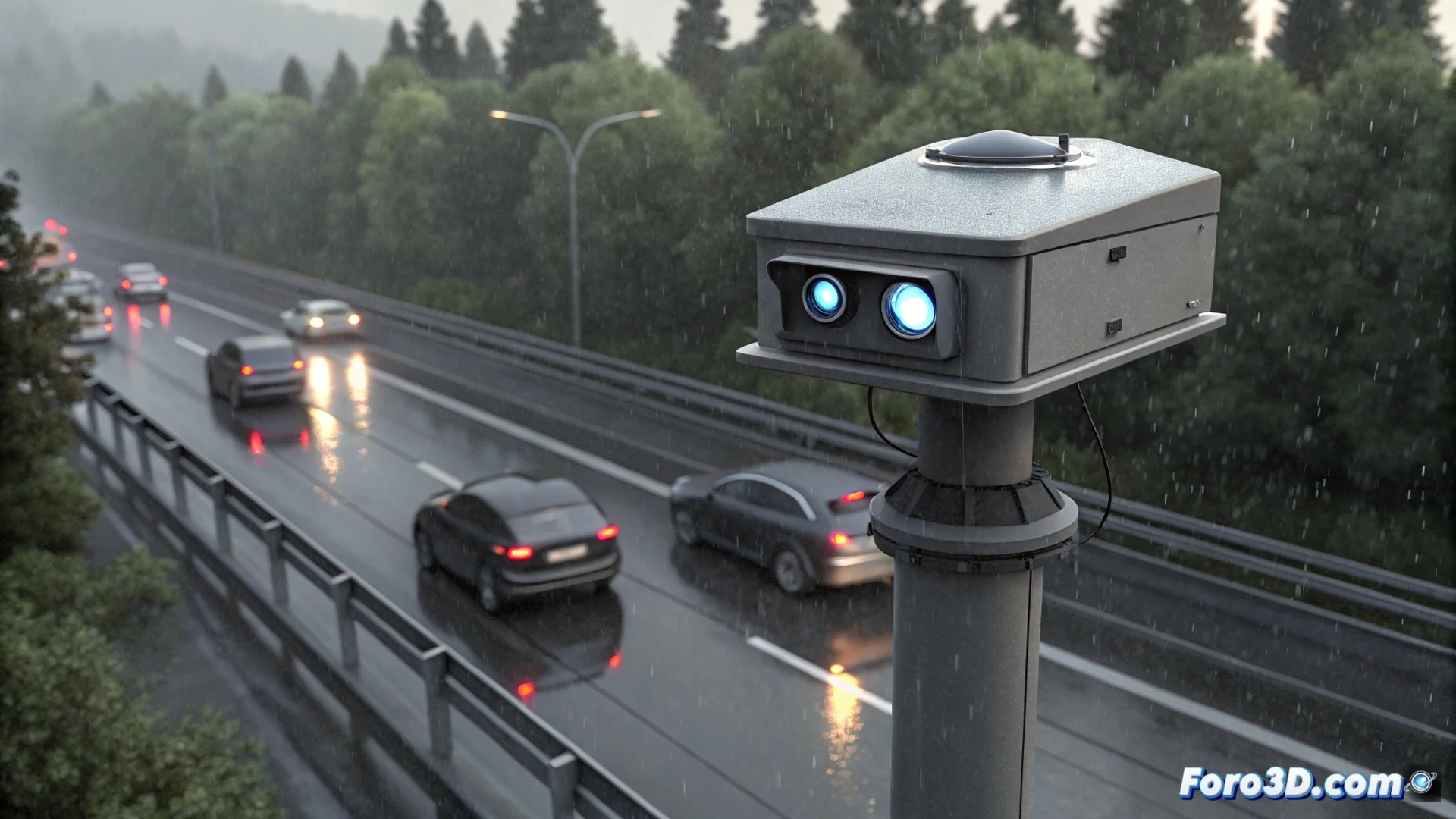
Europe Deploys AI Radars to Monitor Drivers
The European road network is being updated with surveillance systems that incorporate artificial intelligence. These units, already active in countries like France, use advanced algorithms to examine images and detect violations autonomously. Their goal is to identify actions such as handling a phone while driving or not fastening the seatbelt, even with the vehicle in motion. This innovation helps law enforcement enforce rules more effectively and consistently. 🚗📸
The Mechanism of These Intelligent Devices
These new-generation radars combine high-resolution cameras with specialized software. The system analyzes the video stream in real time to detect motorists and classify their actions. It is capable of distinguishing whether a person is holding an electronic device near their head or if the characteristic seatbelt line across the torso is absent. Upon detecting a violation, the system generates digital evidence that a human agent then verifies before issuing the fine. This represents a significant evolution compared to classic systems that only measured speed.
Key Components and Functions:- HD Cameras: Capture detailed video sequences of the vehicle interiors.
- Analysis Software: Runs AI algorithms to interpret images in real time.
- Decision Module: Classifies actions and generates alerts for potential infractions.
The technology does not replace the agent, but provides tools to prioritize their review and make their work more effective.
Implications for Safety and Personal Rights
The implementation of this automated surveillance aims to prevent dangerous behaviors that cause accidents. Supporters argue that its constant use can change drivers' behaviors in the long term, placing greater emphasis on protection. However, its arrival also reignites the discussion on the balance between mass surveillance and personal freedoms. Some experts question how far an automatic system can be allowed to monitor and punish what happens on public roads, a conflict that European communities are beginning to address.
Central Aspects of the Debate:- Deterrence: Seeks to permanently modify drivers' risky habits.
- Efficiency: Allows authorities to cover more checkpoints with fewer resources.
- Privacy: Concerns arise about the limits of collecting and processing personal data on the road.
A New Landscape for Driving
Now, in addition to watching the instrument panel, it might be wise to mind your posture at the wheel and leave that object that from a distance might be mistaken for a smartphone. The road becomes a space where technology observes details that previously went unnoticed, posing a future where safety and privacy must find a sustainable balance. The path ahead involves adapting both laws and society's mindset. ⚖️🛣️