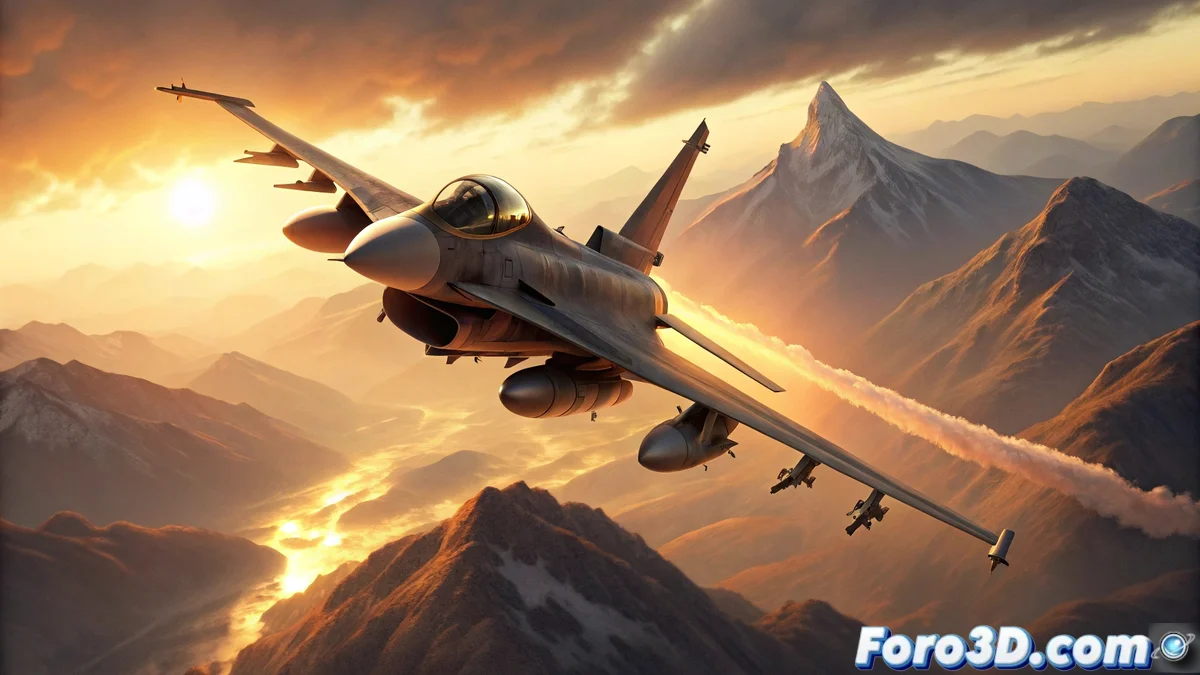
Eurofighter Typhoon: technical analysis of the multirole fighter
The Eurofighter Typhoon represents one of the most versatile fourth-generation combat systems, integrating multi-mission capabilities into an exceptionally agile platform. With impressive dimensions including 15.96 meters in length, 10.95 meters in wingspan, and 5.28 meters in height, its profile is immediately identifiable in any operational scenario. 🛩️
Structural configuration and materials
The Typhoon's architecture leverages state-of-the-art composite materials that optimize the strength-to-weight ratio, allowing an empty weight of approximately 11,000 kg while reaching a maximum takeoff weight of 23,000 kg. This structural efficiency translates into exceptional maneuverability and significant weapons load capabilities.
Key dimensional characteristics:- Total length: 15.96 meters with optimized aerodynamic design
- Wingspan: 10.95 meters for balanced lift
- Total height: 5.28 meters with integrated V-tail
The combination of foreplanes and trapezoidal air intakes defines the Typhoon's distinctive character, creating an unmatched combat platform in its category.
Propulsion system and performance
The powerplant incorporates two afterburning turbofans that propel the aircraft to supersonic speeds of Mach 2.2. The twin trapezoidal air intakes ensure optimal airflow across all flight regimes, while the canard configuration substantially enhances agility and lift capacity at high angles of attack. ✈️
Advanced aerodynamic elements:- Foreplanes for greater control in aggressive maneuvers
- Fixed-geometry wings with integrated elevators
- V-tail providing exceptional stability
Weapons capabilities and operational versatility
The weapons system integrates an internal Mauser BK-27 27 mm cannon complemented by multiple underwing and fuselage stations. These stations can carry advanced missiles such as the Meteor or AIM-120 AMRAAM, as well as specialized ammunition for air-to-surface missions. Operational versatility allows rapid transitions between air superiority, interdiction, and close air support missions without extensive reconfigurations. 💥
Main armament configurations:- Internal Mauser BK-27 27 mm cannon for close combat
- Stations for long-range air-to-air missiles
- Capacity for air-to-surface ammunition in attack missions
Logistical and operational considerations
Beyond its technological prowess, the Typhoon presents interesting logistical challenges, particularly regarding hangar storage. The prominent canards and overall dimensions require specially adapted spaces, creating situations where these elements seem to "wave" at those passing nearby during ground operations. This distinctive feature, while operationally beneficial, adds practical considerations to infrastructure planning. 🏗️