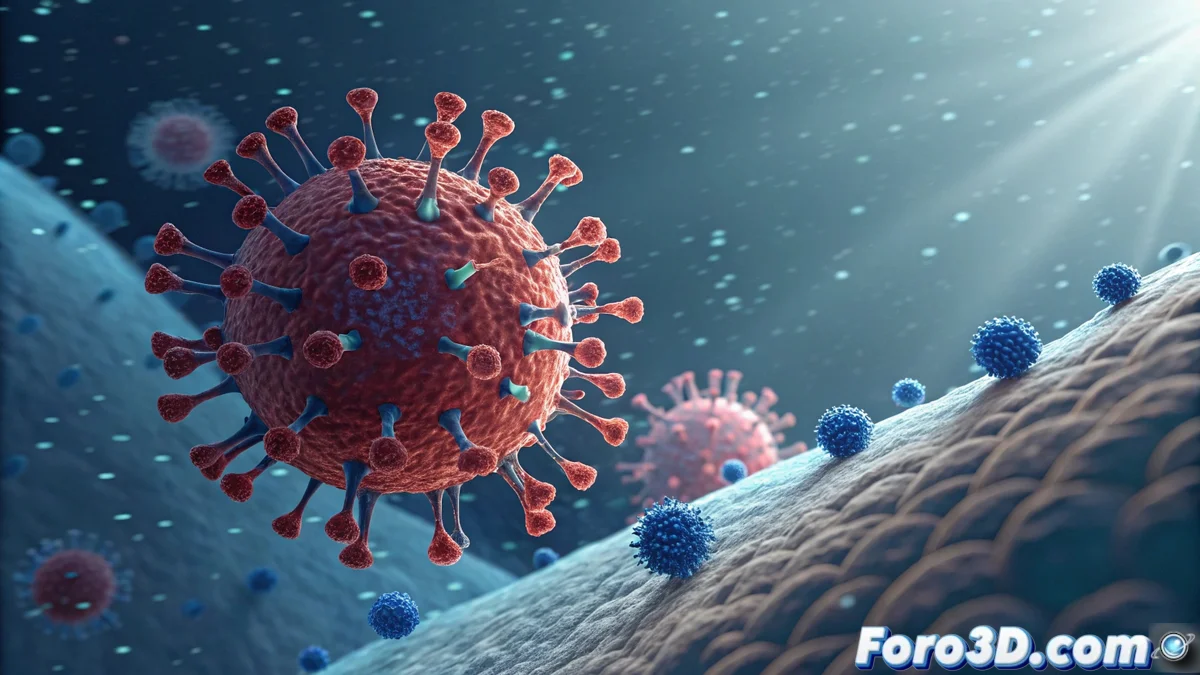
ETH Zurich Researchers Discover How the Flu Virus Enters Cells
A team from ETH Zurich has managed to capture images with unprecedented clarity of the process that influenza viruses use to invade human cells. This achievement, published in the prestigious journal Nature, reveals essential structural aspects of the hemagglutinin protein and its interaction with cellular receptors. Understanding this mechanism in detail is crucial for creating more potent antiviral drugs that can prevent the pathogen from entering. 🔬
Hemagglutinin: A Molecular Key That Changes Shape
The research focused on the hemagglutinin protein, which acts as a complex key on the virus's surface. By applying cutting-edge cryo-electron microscopy techniques, scientists were able to observe how this protein executes a radical conformational change upon locating a precise receptor on the target cell. This change is the decisive event that initiates the viral membrane fusion with the cellular membrane, enabling the virus's genetic material to be released inside the cell.
Key Details of the Discovered Process:- The hemagglutinin undergoes a drastic structural reconfiguration upon coupling.
- This change activates the fusion mechanism between the virus envelope and the cell membrane.
- The viral genetic material is injected into the cytoplasm to begin replication.
By precisely mapping the hemagglutinin region that binds to the receptor and the movements it performs, new vulnerable points are identified.
A New Path for Designing Antiviral Drugs
By precisely mapping the hemagglutinin region that links to the receptor and the specific movements it makes, the study identifies new therapeutic targets. The researchers propose that molecules can be developed to prevent this coupling or stabilize the protein in its inactive state, thereby blocking the entire infection chain at its earliest phase. This approach could lead to broad-spectrum treatments effective against multiple influenza strains.
Potential Strategies for New Antivirals:- Design inhibitors that physically block the receptor binding site.
- Create compounds that stabilize the closed or inactive form of hemagglutinin.
- Target the conformational change mechanisms to deactivate the molecular key.
Implications and Future Perspective
This advance not only deepens our fundamental knowledge of viral biology but also provides a detailed structural blueprint to rationalize drug design. The ability to visualize these processes with such fidelity brings closer the possibility of developing next-generation antivirals that can act before the virus establishes infection, offering a more robust defense against flu pandemics. The virus, essentially, executes a code injection protocol in the cellular system, and now we know better how to intercept it. 🛡️