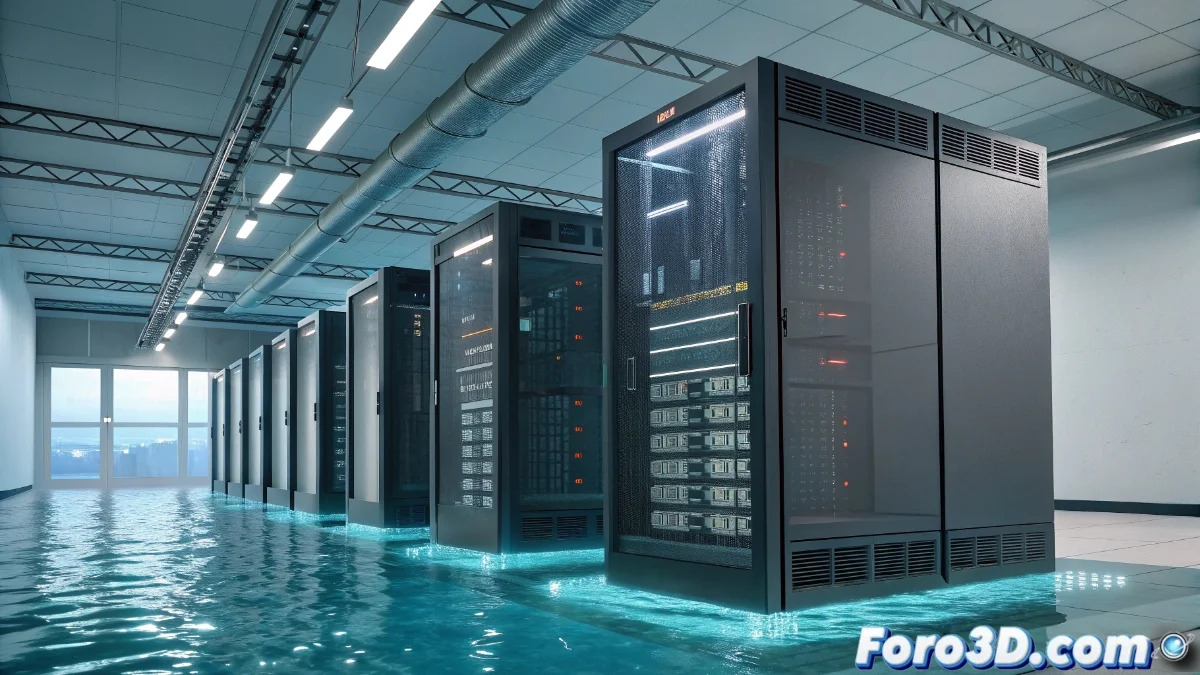
Immersion Cooling in Artificial Intelligence Hardware
Immersion cooling is revolutionizing the cooling of equipment specialized in artificial intelligence, where servers are fully submerged in a dielectric fluid that does not conduct electricity. This technique far surpasses traditional air or water systems, allowing components to operate under extreme computational loads while maintaining optimal temperatures. 🚀
Technical Advantages of Immersion Cooling
The dielectric fluid used in these systems has exceptional thermophysical properties that absorb heat more efficiently than air, transferring thermal energy directly from the components to the fluid. This eliminates critical hot spots, increasing system stability and extending the lifespan of processors, GPUs, and other sensitive elements. Additionally, the sealed environment protects against dust and corrosion, common in conventional installations.
Key Benefits of Immersion:- Superior thermal absorption with reduction of internal hotspots
- Increase in stability and durability of critical components
- Comprehensive protection against environmental contaminants
Immersion cooling not only cools but redefines energy efficiency in high-performance data centers.
Impact on Intensive Computing Infrastructures
For data centers dedicated to artificial intelligence, machine learning, and big data processing, this technology enables consolidating more computational power in less physical space. The reduction in energy footprint associated with air conditioning is significant, attracting tech companies and cloud computing providers seeking to optimize performance per watt. The inherent scalability of these systems makes them ideal for future expansions where energy consumption and thermal dissipation are limiting factors.
Transformative Aspects in Infrastructures:- Consolidation of computational power in reduced spaces
- Drastic reduction in overall energy consumption
- Optimized scalability for high-demand environments
The Silent Future of Computing
Imagine working in a data center without the constant hum of fans, though you might miss that sound that confirmed the machines' activity. Immersion cooling not only offers thermal and energy efficiency, but also promises quieter and more sustainable operating environments, marking a before and after in the evolution of technological infrastructure. 🌊