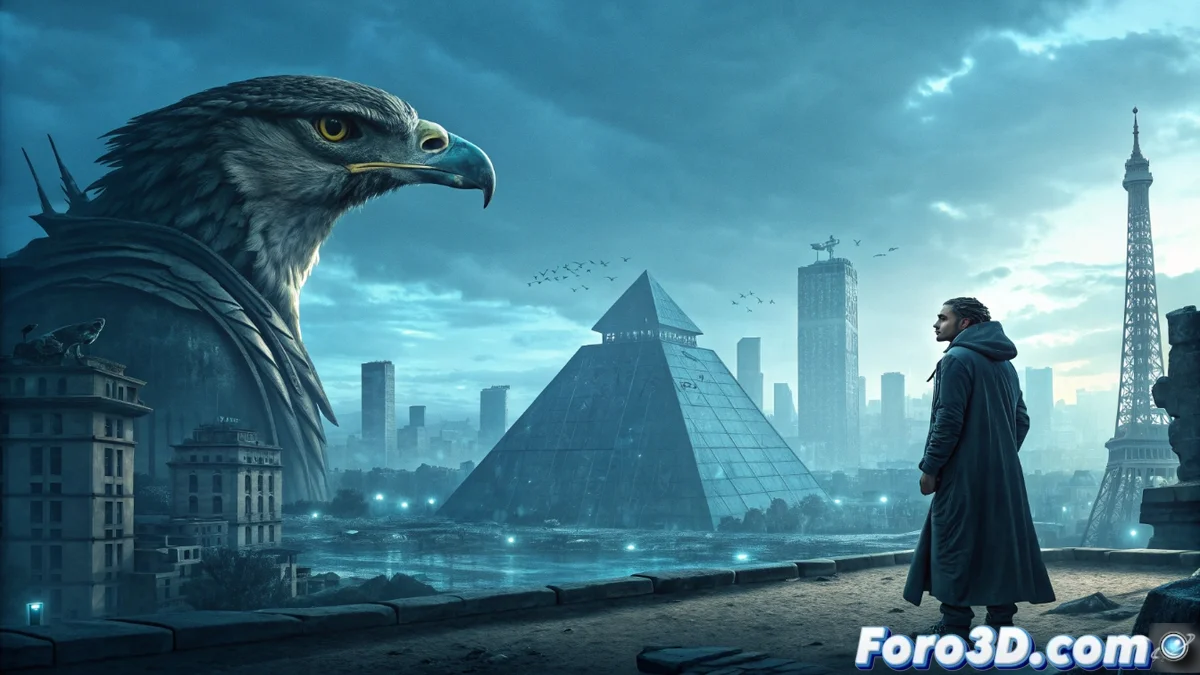
Enki Bilal's Nikopol Trilogy: Egyptian Gods in a Futuristic Paris
In a futuristic and decadent Paris, the Egyptian god Horus seeks a mortal body to carry out his vengeance against other deities, choosing Alcide Nikopol, a dissident recently released from cryogenic hibernation. Together they dive into a complex plot that fuses political intrigue, theological questioning, and surrealist elements, creating a narrative universe where the divine and the human constantly collide 🌌.
Enki Bilal's Unique Visual Style
Bilal showcases his mastery in the use of color and atmosphere through a pictorial approach close to pictorialism, where cool tones of blues and grays predominate, building a melancholic and oppressive future. His character designs reveal an evident psychological depth, while the architectures he illustrates are deeply evocative and consistent with his dystopian world.
Key Elements of the Visual Style:- Predominance of bluish and grayish tones that generate a melancholic atmosphere
- Character designs with notable psychological and emotional depth
- Futuristic architectures that coherently reflect the Parisian dystopia
If Egyptian gods had to look for bodies to rent in futuristic Paris, at least Bilal made sure they did it with style and a lot of bluish melancholy.
Legacy and Influence on Contemporary Culture
The Nikopol Trilogy has left a significant mark on numerous works of contemporary science fiction and fantasy, establishing a precedent in the fusion of mythology with futurism. Its approach to narrative surrealism and its distinctive visual aesthetic continue to be references for artists and writers, maintaining its relevance decades after its original publication.
Highlighted Areas of Influence:- Innovative fusion of Egyptian mythological elements with futuristic settings
- Establishment of visual standards for dystopian representations
- Influence on surrealist narratives within the science fiction genre
Final Reflections on Bilal's Work
The Nikopol Trilogy represents a masterpiece of European comics that transcends genres and temporalities. Bilal not only creates a complex narrative but also establishes a unique visual language that continues to inspire new generations of creators. The persistent relevance of this work demonstrates how the fusion of the ancient and the futuristic can generate enduring and influential artistic experiences 🎨.