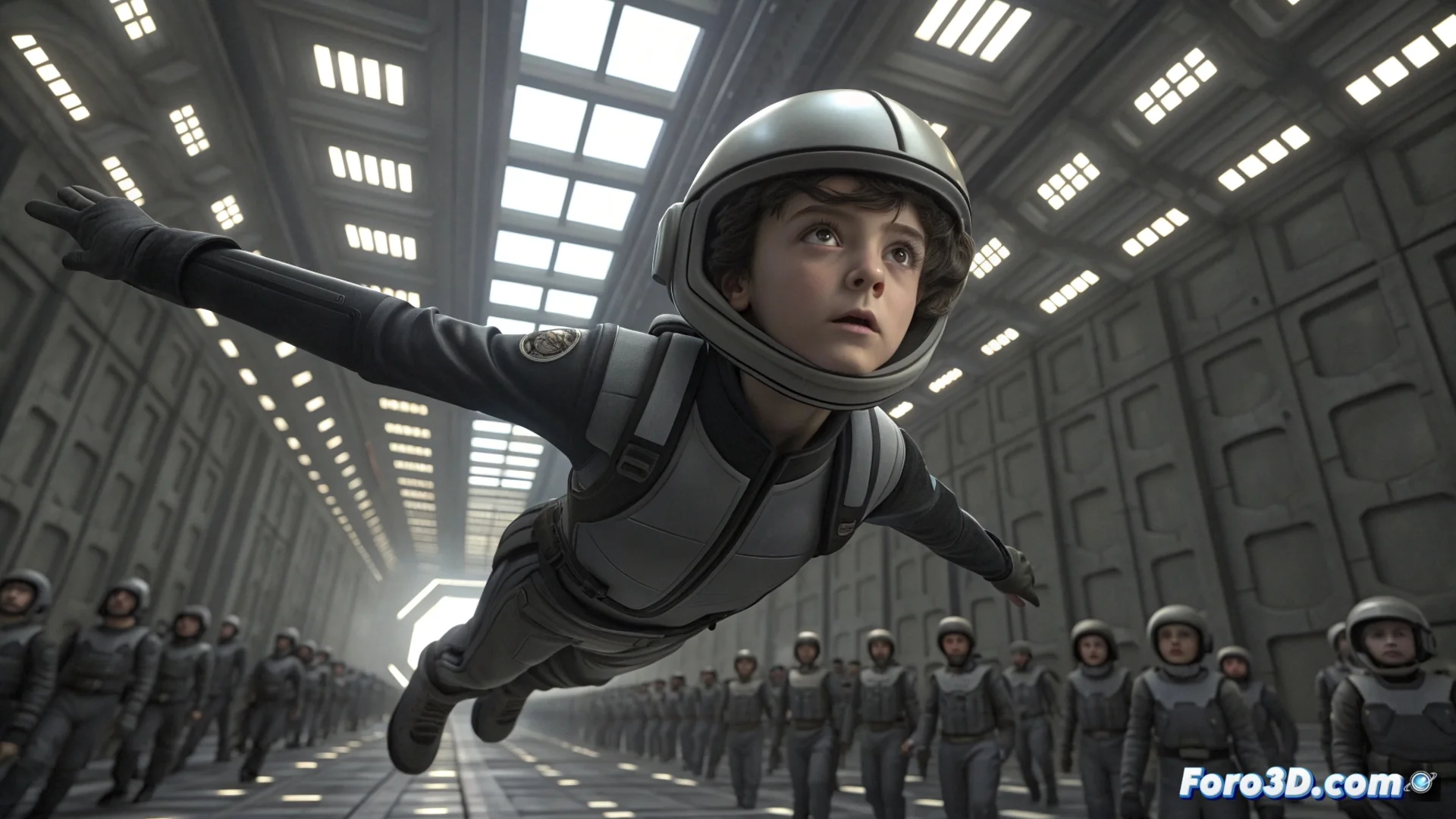
Ender's Game: Analysis of the Military Science Fiction Novel
In a future where humanity is threatened by an insectoid species called Formics, international military forces desperately seek a supreme commander. Their method is to recruit children with prodigious strategic abilities. Among them stands out Andrew Ender Wiggin, a tactical genius sent to the Battle School to undergo unrelenting training. 🚀
The Training that Forges a Leader
The narrative focuses on how Ender rises through zero-gravity combat simulations. The instructors design these tests to evaluate and enhance his ingenuity under extreme pressure. The boy faces deliberate isolation, rivalries with his peers, and constant manipulation by his superiors, who hide the true purpose of his mission.
Key Elements of the Training:- Battle simulations that progress in complexity and realism.
- Psychological pressure to break and rebuild the candidate.
- A fiercely competitive environment where trust is a scarce resource.
“The moment you understand that the enemy outnumbers you, at that very instant you outnumber them.” - Central idea of Ender's training.
Thematic Depth and Moral Conflict
Beyond the space action, the work examines the ethics of using children as instruments of war and justifying a preemptive conflict. The dynamics with his siblings, Peter and Valentine, add layers of complexity to Ender's psyche. The simulations he perceives as advanced games lead to a revelation that completely redefines his victory and the real cost of survival. 😔
Main Themes Explored:- The morality of war and the concept of xenocide.
- The effects of institutional manipulation on a child.
- The thin line between strategic genius and disposable tool.
Legacy and Cultural Impact
Published in 1985, this novel won the prestigious Hugo and Nebula awards. Its focus on pure strategy and psychology under pressure established it as a benchmark in the genre. The original story generated a long saga of sequels that expand its universe. Additionally, it was adapted into a movie in 2013, bringing Ender's conflict to a massive audience. Its narrative invites reflection on how much a society is willing to sacrifice for its security. 🏆