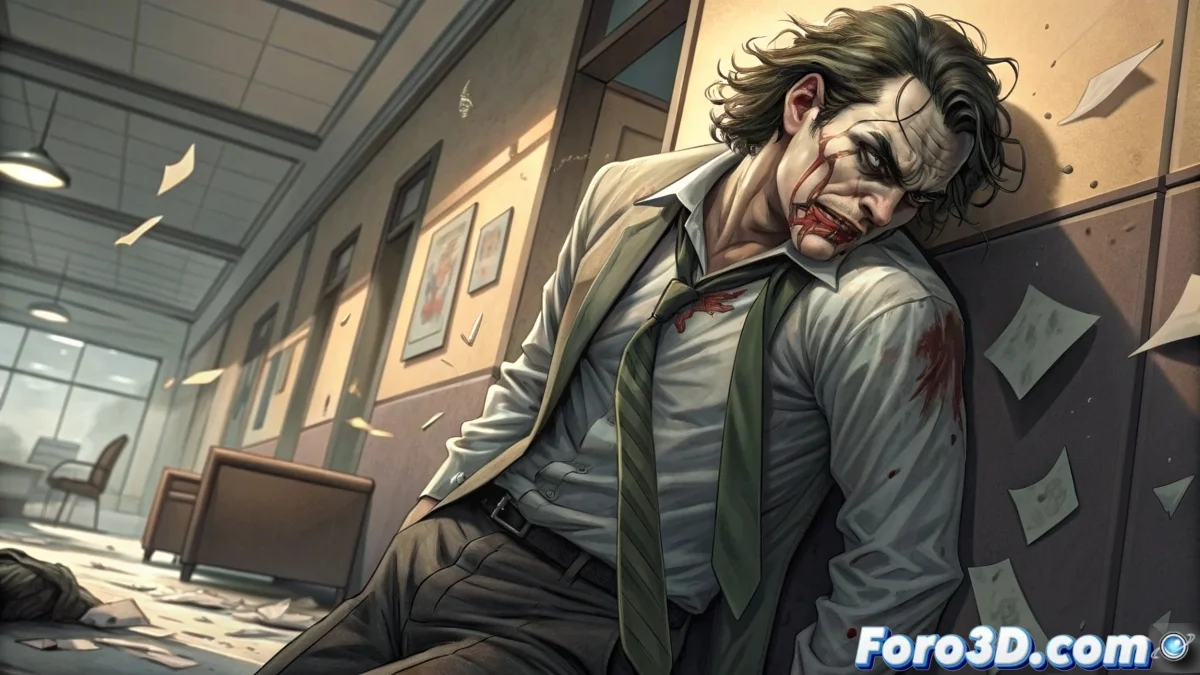
End of Life: the graphic elegy of the end of consciousness
Image Comics has published End of Life, a deeply philosophical work that addresses the final moments of conscious existence before an imminent extinction event. Created by writer Alex Paknadel and artist John Pearson, the comic presents a radical concept: instead of fighting against annihilation, humanity has accepted its fate and dedicates its last hours to reflecting, connecting, and finding meaning in the inevitability. The story follows a diverse group of characters in their final encounters, exploring how different personalities face the absolute knowledge of their end. This contemplative approach to the apocalypse is challenging the conventions of the science fiction genre. ☄️
The tragic beauty of acceptance
What makes End of Life exceptional is its rejection of typical post-apocalyptic survivalism tropes. There are no heroes fighting to reverse the inevitable, no conspiracies to uncover, not even a real hope of salvation. Instead, the series focuses on what it means to live authentically when you know exactly when and how everything will end. The characters are not defined by their resilience in the face of adversity, but by their ability to find peace and meaning in the certainty of their disappearance. This approach turns every panel into a meditation on mortality and existential purpose.
Narrative and structure analysis
The series employs a non-linear structure that intertwines the final moments of multiple characters as their paths cross in the last hours. Each issue functions as a mosaic of human experiences in the face of the inevitable, creating an emotional tapestry that is both heartbreaking and strangely hopeful.
The cast of terminal souls
The characters represent different approaches to mortality: the scientist seeking to understand the mechanisms of the end, the artist trying to capture the last beauty, the elderly person who sees the end as a reunion, and the child who does not fully understand what cessation means. Their interactions are free from the artificiality of normal social courtesy—when time is literally limited, every word and gesture acquires extraordinary weight. Character development accelerates exponentially under the pressure of finite time.
Approaches to mortality:- philosophical acceptance
- search for scientific understanding
- final artistic expression
- interpersonal reconciliation
The extinction event as a character
The exact nature of the end is deliberately kept vague—it is not an asteroid, nor a nuclear war, nor a virus—but a phenomenon that will simply end consciousness. This ambiguity allows the story to focus on the human response rather than on the details of the mechanism. The event functions as an omnipresent character whose influence is felt in every interaction and decision, creating an existential tension rather than a physical one.
End of Life does not ask how we will die, but what we will do with the time we have left when we know the answer.
Art as visual meditation
John Pearson brings a pictorial style that feels both like traditional painting and sequential art. His use of color evolves through each issue, with palettes that become progressively more saturated and dreamlike as the final moment approaches. Page compositions frequently break with comic conventions, using asymmetric designs and panels that flow freely to convey the dissolution of conventional structures. Detailed backgrounds gradually give way to more abstract spaces, reflecting the dissolution of consensual reality.
Visual innovations:- transition from realism to abstraction
- evolving color palettes
- unconventional page compositions
- recurrent time symbolism
Deep philosophical themes
The series functions as a graphic exploration of philosophical concepts normally reserved for academia: meaning in an indifferent universe, the nature of finite time, the paradox of seeking purpose when the ultimate purpose is annihilation. However, Paknadel presents these ideas through natural dialogues and emotionally resonant situations rather than through abstract discourses. Each character embodies a different philosophical response to the same existential dilemma, allowing readers to find their own answers in the mirror of fictional experiences. 📚
Central philosophical questions:- does life have meaning without a future?
- how does the value of time change when it is limited?
- what legacy matters when there will be no one left to remember it?
- is acceptance a form of defeat or victory?
In the end, End of Life achieves what few works of fiction manage: to make the reader seriously contemplate their own mortality, though you will probably need to read something lighter afterward to lift your spirits. ⏳