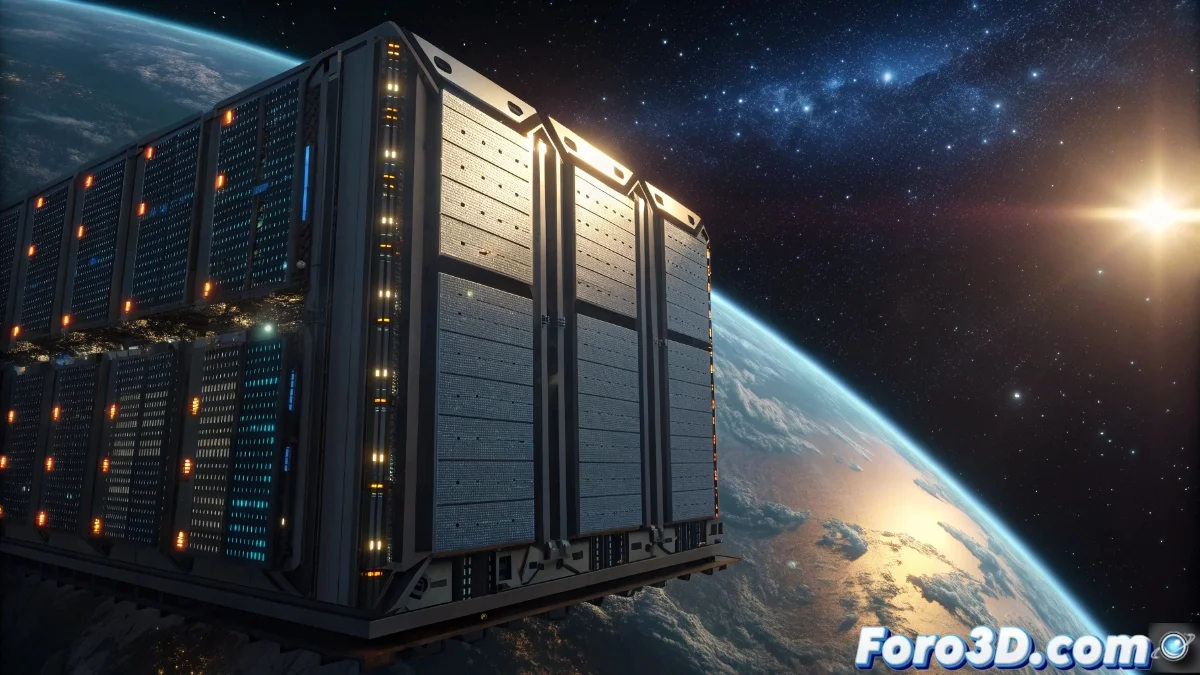
Elon Musk vs Jensen Huang: The Debate on AI Computing in Space
In a futuristic vision that is generating controversy in the technology industry, Elon Musk proposes moving artificial intelligence data centers to outer space, arguing significant economic and technical advantages over conventional terrestrial infrastructure 🚀.
Musk's Revolutionary Proposal
The founder of SpaceX claims that within just five years, artificial intelligence processing could be more cost-effective from orbit than on our planet. This bold prediction is based on the use of space solar panels that would generate continuous energy without the need for battery storage systems, combined with natural cooling through thermal radiation into the space vacuum.
Key advantages of orbital computing:- Constant and free solar energy without atmospheric interruptions
- Complete elimination of energy-intensive terrestrial cooling systems
- Reduction in material costs by dispensing with protective glasses and support structures
"Space offers natural resources that surpass terrestrial limitations: perpetual solar energy and infinite cooling" - Elon Musk
Jensen Huang's Technical Objections
In contrast to Musk's visionary optimism, the CEO of Nvidia presents a more cautious stance. Although he recognizes the theoretical potential of orbital energy generation and natural thermal dissipation, Huang emphasizes multiple practical obstacles that would complicate large-scale implementation.
Main challenges identified:- Need for giant radiators for effective thermal radiation
- Constant exposure of computing chips to damaging space radiation
- Additional costs of technological adaptation and equipment launches
Two Opposing Visions of AI's Future
This technological debate reflects the classic tension between visionaries and pragmatists. While Musk imagines a future where artificial intelligence orbits our planet harnessing unlimited space resources, Huang prefers to keep advances within more controlled and predictable terrestrial parameters. The temporal viability also separates their perspectives: Musk envisions medium-term implementation, while Huang considers these projects as long-term dreams that will face numerous engineering barriers before materializing 🌍.