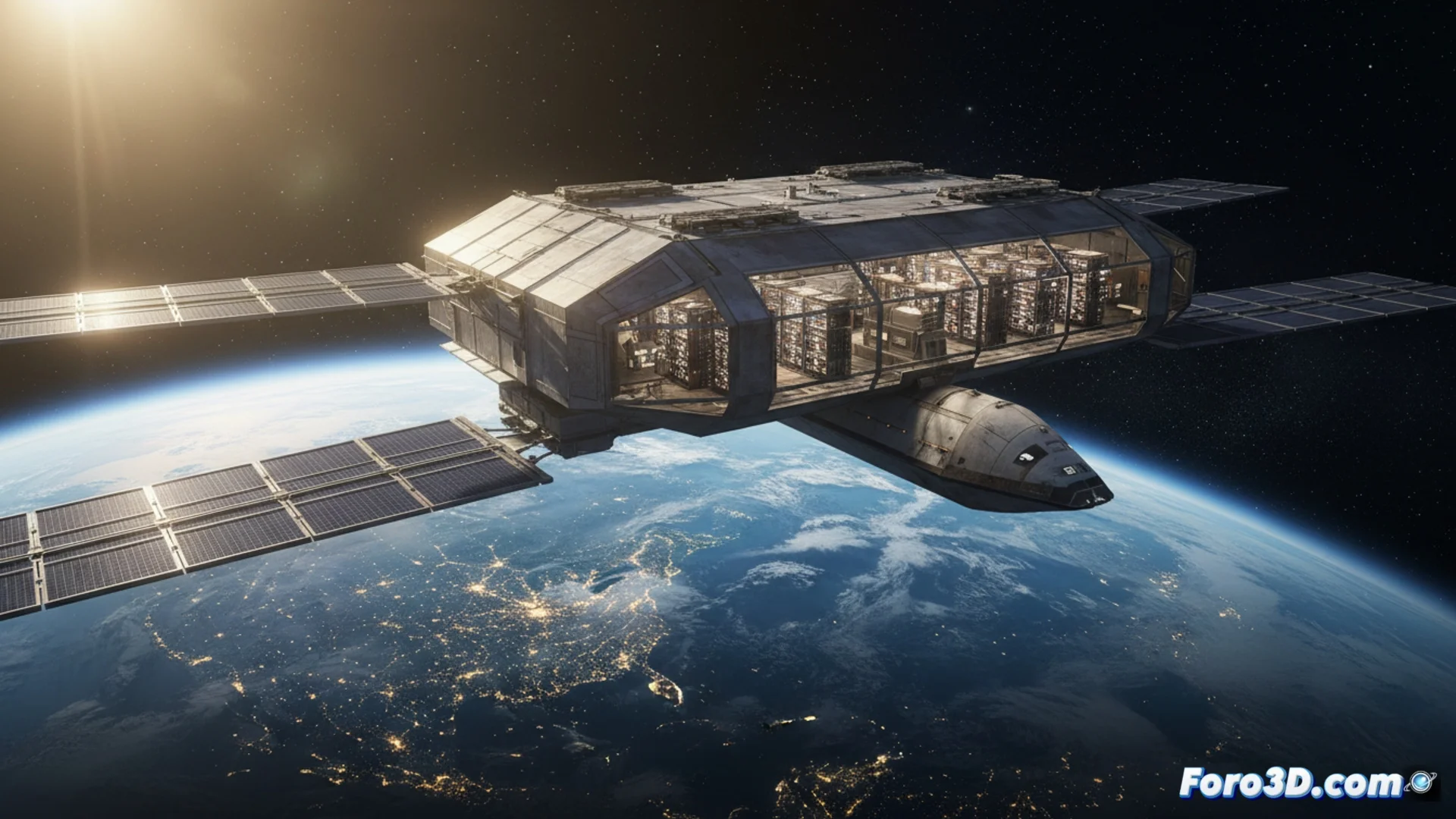
Elon Musk Proposes Taking SpaceX Public with Orbital Data Centers
The founder of SpaceX, Elon Musk, has indicated that the company could go public when its revenue streams become more regular. According to reports, an ambitious project to achieve that stability involves building computing infrastructure directly in space. 🚀
The Vision of Orbital Servers
The central concept is to position servers in orbit to shorten latency times in global communications and offer computing power more efficiently. By processing data near its origin, it avoids sending all the information to Earth and then sending it back. This approach opens up a vast market that could interest large corporations and governments, diversifying the company's revenues beyond launching rockets and operating the Starlink network.
Key Advantages of Space Computing:- Reduce Latency: Processing information in orbit accelerates global communications.
- Create a New Market: Attracts corporate and governmental clients with massive data needs.
- Diversify Revenues: Adds a stable business line to launches and Starlink.
SpaceX needs a more stable and predictable cash flow before going public.
The Path to Financial Stability
Musk has been direct: SpaceX requires more predictable finances before going public. The company already generates revenue from its launches and the growing Starlink constellation. However, a large-scale initiative like a space data center could secure long-term contracts, reassuring investors and paving the way for the IPO.
Factors for Going Public:- Predictable Revenues: Need for stable cash flow to attract institutional investors.
- New Contracts: Projects like space data centers offer long-term agreements.
- Expanded Customer Base: Going beyond the traditional aerospace sector.
The Technical Challenges
The idea, though promising, faces considerable obstacles. Operating servers in the vacuum of space, exposed to cosmic radiation and the risk of micrometeorite impacts, presents unprecedented engineering and maintenance challenges. Managing and repairing that infrastructure hundreds of kilometers above is a formidable task that the company would have to solve. 🤔