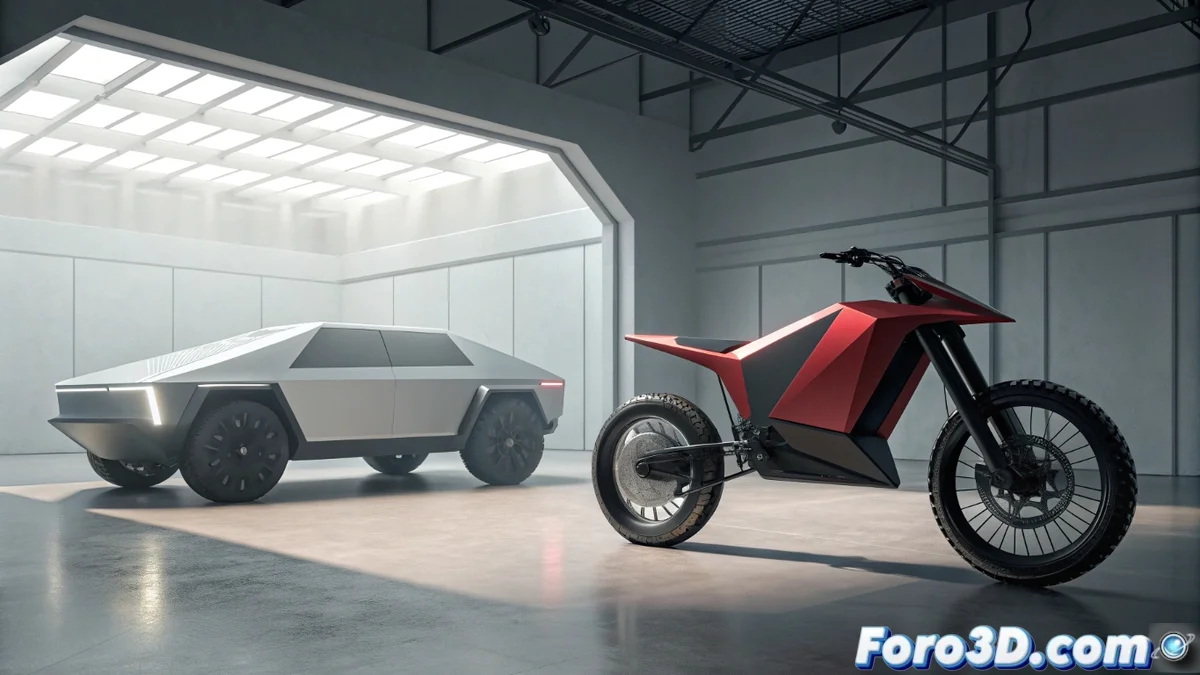
Elon Musk Explains Why Tesla Won't Manufacture Electric Motorcycles
In a recent post on the social network X, the visionary Elon Musk definitively settled the debate about a possible Tesla motorcycle. His response was clear and is based on the central pillar of the company's philosophy: absolute safety. For Musk, the inherent risks of two wheels are incompatible with the mission to protect occupants, which keeps Tesla away from this market segment 🛡️.
Safety as an Impassable Barrier
The architecture of Tesla vehicles is designed from scratch to offer maximum protection. Elements such as the rigid battery structure, which acts as a shield, and the advanced driver assistance systems, are difficult to transfer to a motorcycle chassis. Musk argues that, no matter how much innovation is applied, a motorcycle lacks the crumple zone and the enveloping bodywork that save lives in a car. This conviction is so deep that it redirects all engineering efforts toward its current and future four-wheeled projects.
Design principles that exclude two wheels:- Passive protection structure: The safety cage of Tesla cars is a concept that cannot be replicated on a motorcycle.
- Priority on mass and size: A larger and heavier vehicle has physical advantages in dissipating energy in an impact.
- Autopilot systems integration: The effectiveness of these systems depends on a stable platform with multiple sensor mounting points.
"Our mission is to accelerate the transition to sustainable transportation, but not at the expense of safety. A motorcycle, by definition, offers less protection than a car." - Reflection attributed to Elon Musk's stance.
Strategic Focus on the Mobility of the Future
This decision does not mean that Tesla is closed to other forms of transportation. On the contrary, it concentrates its resources strategically. The development of the Cybertruck, the Semi trucks, and the crucial robotaxi platform consume all innovation capacity. Meanwhile, other manufacturers are covering the niche of high-performance electric motorcycles. By avoiding this dispersion, Tesla seeks a massive impact on the electrification of freight transport and fleets of autonomous vehicles.
Projects that absorb Tesla's attention:- Cybertruck and Tesla Semi: Commercial and work vehicles that electrify high-emission sectors.
- Robotaxi Platform: The development of the shared autonomous vehicle, considered the future of urban mobility.
- Continuous improvement of Model S, 3, X, and Y: Perfecting the safety and efficiency of its flagship models remains a priority.
A Future on Two Wheels, Only in Science Fiction
Musk has left the door slightly open, but in a realm almost of technological fantasy. He suggested that only a revolution like a personal force field or an omnidirectional spherical airbag system could change his stance. Until that happens, Tesla's presence in the two-wheeled world will be limited to merchandising, toys, or appearances in digital media. The road, at least in the foreseeable future, will not see an electric motorcycle with the iconic "T" logo circulating officially 🏍️❌.