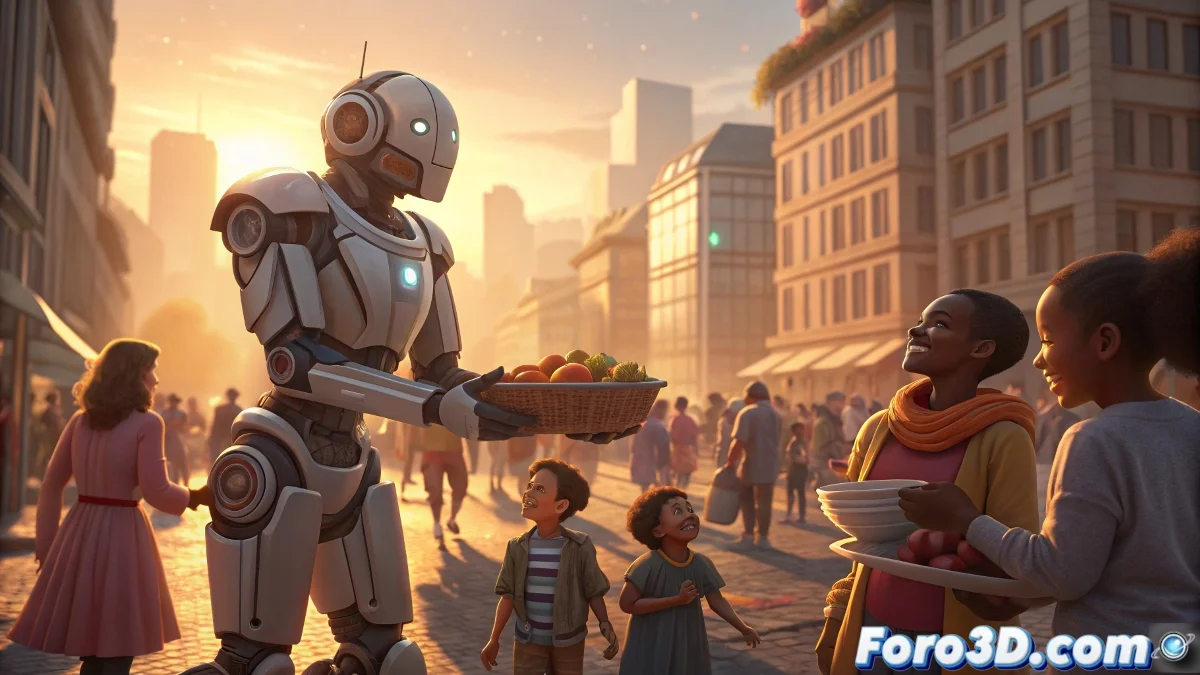
Elon Musk Claims Optimus Could Eliminate Global Poverty
During Tesla's most recent presentation, visionary Elon Musk made a statement that has captured global attention: his humanoid robot Optimus has the potential capacity to eradicate poverty worldwide. According to the tech mogul, this innovation would mark a historic milestone by establishing an economy of abundance where no human would need to work to survive, though he admits that the path to that future still requires years of technical development. 🤖
The Revolutionary Vision Behind Optimus
Musk's proposal is based on Optimus being able to perform any physical labor currently done by people, from simple household tasks to complex industrial operations. By fully automating the production of goods and services, labor costs would be eliminated and the prices of essential products would be drastically reduced, making food, housing, and energy practically accessible to the entire population. This unprecedented economic surplus would facilitate redistributing wealth so that every individual has their basic survival ensured.
Key Elements of the Proposal:- Complete replacement of human physical jobs with versatile robots
- Radical reduction of costs in essential goods and services
- Creation of an automatic wealth redistribution system
"Total automation could create a society where physical work is optional and basic resources are universally accessible" - Technology analysts
Skepticism and Objections from the Specialized Community
Experts in economics and technology have expressed serious reservations about these projections, pointing out that historically automation has tended to concentrate wealth rather than disperse it. They emphasize that, without profound transformations in current political and economic systems, the benefits of advanced robotics would likely remain in the hands of corporations and majority shareholders. Additionally, they question the real technical viability of developing a robot with the adaptability and versatility of a human in uncontrolled environments, a challenge that contemporary robotics has not yet fully overcome.
Main Critical Points:- Risk of wealth concentration in technological elites
- Lack of guaranteed economic distribution mechanisms
- Current technical limitations for robots in unstructured environments
Final Reflections on the Robotic Future
Musk's bold promise certainly generates hopes for a future without poverty, but it also raises fundamental questions about how the benefits of automation will truly be distributed. History shows that radical technological advances require equally transformative social and economic frameworks for their advantages to reach the entire population. The debate between technological optimism and economic realism will continue as Optimus advances in its development. 🌍