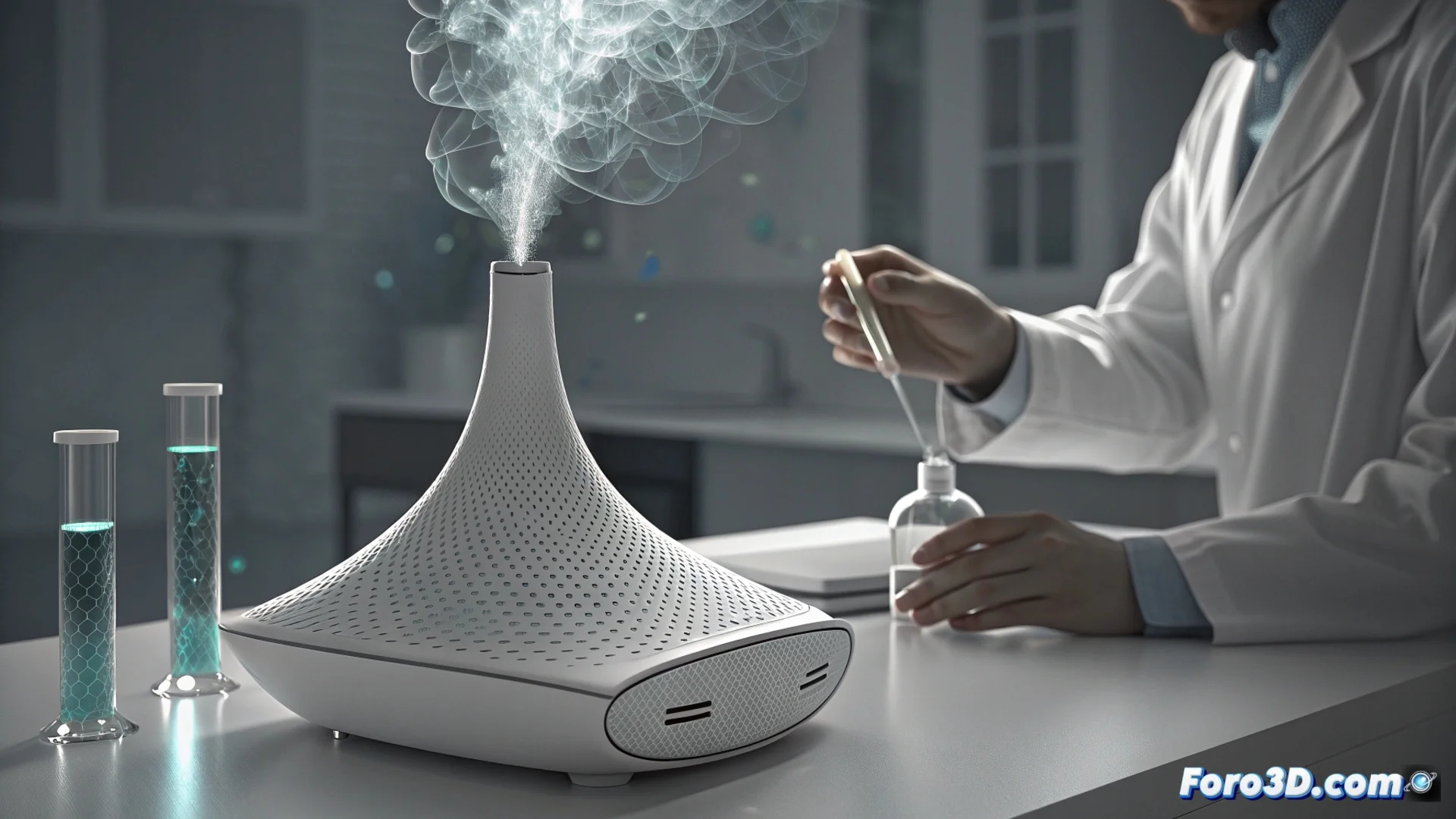
AI Electronic Noses Detect Diseases by Smelling
An innovative device analyzes the air we exhale or that emanates from our skin to search for signs of disease. These systems, known as electronic noses, are non-invasive and aim to diagnose health problems early, long before symptoms are clear. 🧠
The Mechanism Behind Artificial "Smell"
The technology is based on an array of chemical sensors that react upon contact with specific molecules. These sensors, often built with advanced nanomaterials, alter their electrical properties. A device captures these alterations and transforms them into digital data that an artificial intelligence algorithm can interpret.
Key Detection Process:- Capture samples: The system collects volatile organic compounds from breath or skin.
- Transform signals: The sensors convert chemical presence into measurable electrical data.
- Compare with patterns: A machine learning model, trained with thousands of samples, contrasts the new chemical profile with databases of healthy and sick people.
AI does not smell in the biological sense, but correlates complex chemical profiles with the statistical probability of suffering from a pathology.
Concrete Application in Neurology
One of the most active lines of research focuses on detecting Parkinson's. Studies reveal that those who develop this disease produce a distinctive chemical signature on the skin, particularly in the nape area. The electronic nose can capture this unique pattern, proposing a way to diagnose more quickly and objectively, complementing classical neurological evaluation. 🔬
Advantages in Parkinson's Diagnosis:- Allows identifying the disease before motor symptoms are evident.
- Offers a fast method that requires no physical intervention in the patient.
- Provides a result that can be quantified and objectified, reducing subjectivity.
Challenges and Future of Smell-Based Diagnosis
Although the potential is enormous, this technology still does not replace conventional clinical diagnoses. Its accuracy depends on extremely careful calibration of the sensors and training the algorithms with very broad and diverse databases. The great challenge now is to perfect the technology so that it is reliable in real clinical settings, beyond controlled laboratories. In the future, a routine medical check-up could include the simple gesture of exhaling in front of a sensor. 🚀