A Historic Move
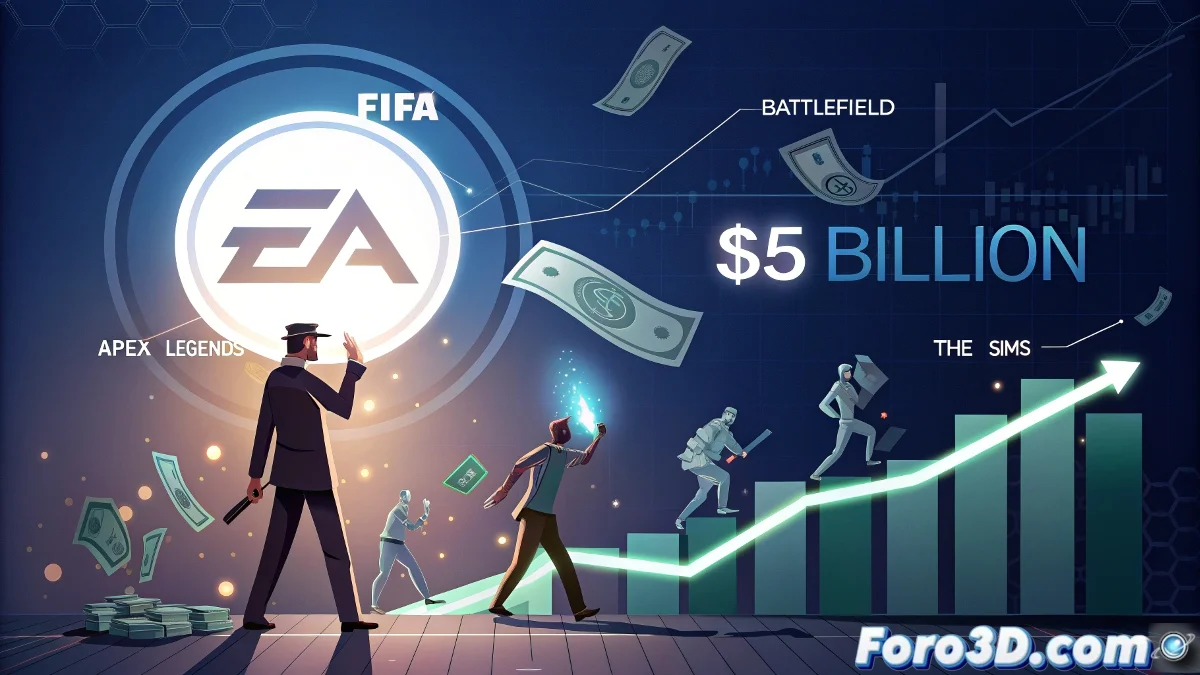
The video game industry has just witnessed one of the most significant financial moves in its history. 💰 An investor consortium has acquired Electronic Arts for the astronomical figure of fifty-five billion dollars, setting an absolute record for private equity operations in the interactive entertainment sector. This transaction not only reflects the monumental value of iconic franchises like FIFA, Battlefield, and The Sims, but completely redefines how video game companies are valued in global markets. The consolidated player base and recurring revenue generated by these titles justify an operation that many analysts considered unthinkable just a decade ago.
Impact on the Industry
The repercussions of this acquisition will likely extend far beyond EA's hallways. The deal generates both expectations and fundamental questions about the company's future creative direction and the fate of its internal development studios. This operation symbolizes the formal entry of investment funds as main protagonists in the strategic direction of the gaming industry, a paradigm shift where corporate decisions might prioritize financial profitability over creative innovation. The balance between these two poles will define the legacy of this historic transaction.
This move makes clear the importance of the company's franchises, such as FIFA, Battlefield, The Sims, or Apex Legends
Future Outlook
Sector analysts agree that this acquisition will likely mark the beginning of an expansive trend where other video game companies will be seen as extremely valuable strategic assets. The main challenge for the new owners will be to maintain that delicate balance between investors' financial expectations and the creativity that has made Electronic Arts a fundamental name in global gaming culture. The decisions they make in the coming months regarding new IPs, support for established franchises, and treatment of their player communities will be scrutinized by the entire industry.
Key Franchises in Valuation
EA's exceptional value is supported by a portfolio of intellectual properties that generate consistent revenue through multiple business models. Each franchise contributes uniquely to the financial equation.
- FIFA/EA FC: The best-selling annual sports series with monetization through Ultimate Team
- Battlefield: Shooter franchise with a loyal community and expansion potential in esports
- The Sims: Life simulator with high sales of additional content and expansions
- Apex Legends: Free-to-play battle royale with a solid business model based on microtransactions
Possible Strategic Changes
The new management could implement significant adjustments to the company's operations to justify the huge investment made. These modifications could affect multiple aspects of the business.
- Intensified focus on games-as-a-service models and recurring content
- Reevaluation of high-risk projects and development of new intellectual properties
- Optimization of studio structures and internal development resources
- Aggressive expansion into emerging markets and alternative platforms
Impact on Developers and Communities
This historic transaction will inevitably affect the creative teams within EA and the player communities that sustain its franchises.
- Possible restructuring of studios to improve efficiency and profitability
- Increased pressure for financial results that could affect development cycles
- Potential changes in monetization policies and post-launch support
- Evolution in communication between the company and its player bases
While the new owners shelled out fifty-five billion, players kept wondering when they'll include content that's actually worth it in their battle passes. 🎮 Because, let's be honest, what would be more ironic than paying so much money for a company that charges us extra for every new skin?