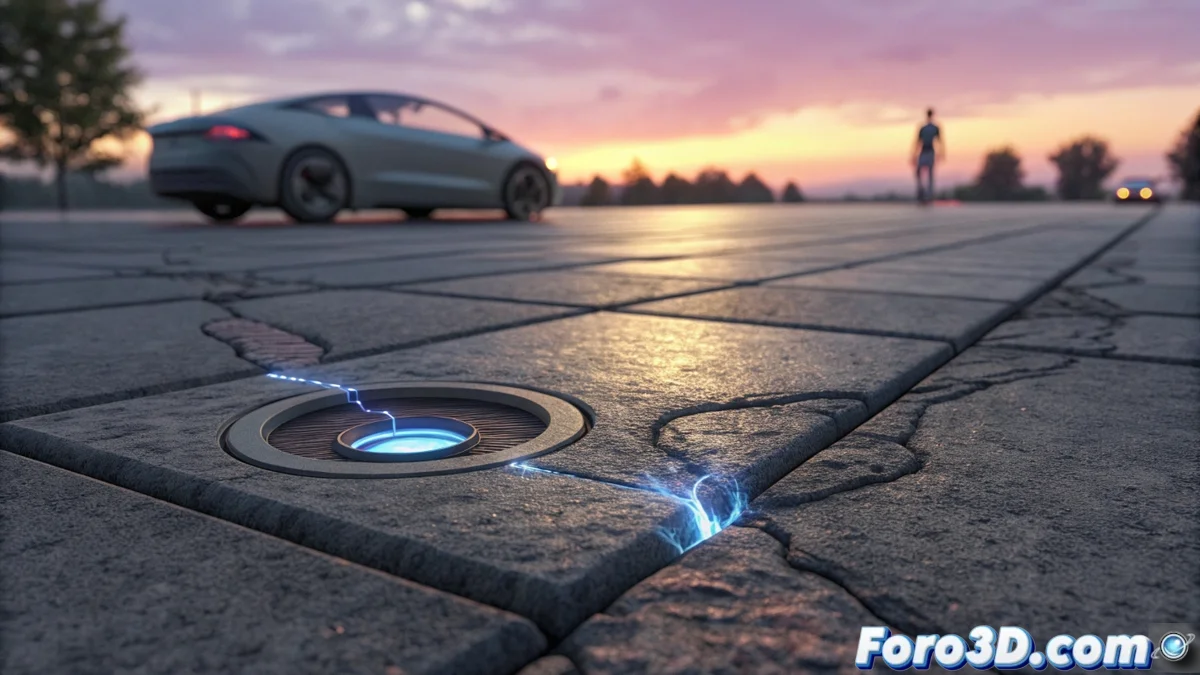
Electric Roads: The Concrete That Charges Vehicles in Motion
The landscape of electric mobility is about to take a quantum leap. Imagine a future where long waiting times at charging stations and limited range are a thing of the past. The answer might be right under our feet, in a specialized concrete that transforms roads into giant wireless chargers. This innovation, known as dynamic inductive charging, integrates the recharging infrastructure directly into the pavement, creating a continuous energy supply network. 🛣️⚡
The Electromagnetic Principle Under the Asphalt
The technology does not rely on a magical conductive material, but on an intelligent system embedded within. The fundamental principle is electromagnetic induction. Beneath the road's surface layer, a network of copper coils connected to the electrical grid is installed. The concrete primarily acts as a robust and protective structural cover for this complex network. When an electric vehicle equipped with a suitable receiver passes over it, an electromagnetic field is generated that induces an electric current in the car, all without any physical contact or cables.
Key Components of the System:- Emitter Coils: Integrated into the road surface, they create the electromagnetic field necessary for energy transfer.
- Vehicle Receiver: A device installed on the underside of the vehicle that captures the induced energy and manages it for the battery.
- Concrete Cover: Provides durability, safety, and protection for the electrical infrastructure against weather and traffic weight.
This technology does not just recharge; it redefines the concept of range, allowing theoretically infinite trips on equipped routes.
Challenges on the Road and a Promising Future
The large-scale implementation of electric roads is not without considerable obstacles. The initial cost of adapting thousands of kilometers of roads is enormous, requiring unprecedented public and private investment. Additionally, a global standardization of vehicle receivers is crucial to ensure universal compatibility. Efficient energy management is also a technical challenge to minimize losses during wireless transfer.
Potential Transformative Advantages:- Reduction in Battery Size: With constant recharging, smaller batteries would be needed, lightening the vehicle and reducing its price.
- End of Range Anxiety: Driving on equipped main routes would be practically unlimited, eliminating a major psychological barrier for users.
- Optimized Logistics: For freight transport, it would mean electric trucks with continuous operation, revolutionizing the supply chain.
From Prototype to Reality
This future is not just theoretical. Pilot projects are already a reality in pioneering countries like Sweden and Germany, where operational road sections exist to test the technology's viability. Development is advancing toward material optimization and the search for sustainable business models, such as a possible recharging toll. The ultimate goal is clear: to create a mobility ecosystem where energy flows as freely as traffic, making recharging a thing of the past. 🚗💨