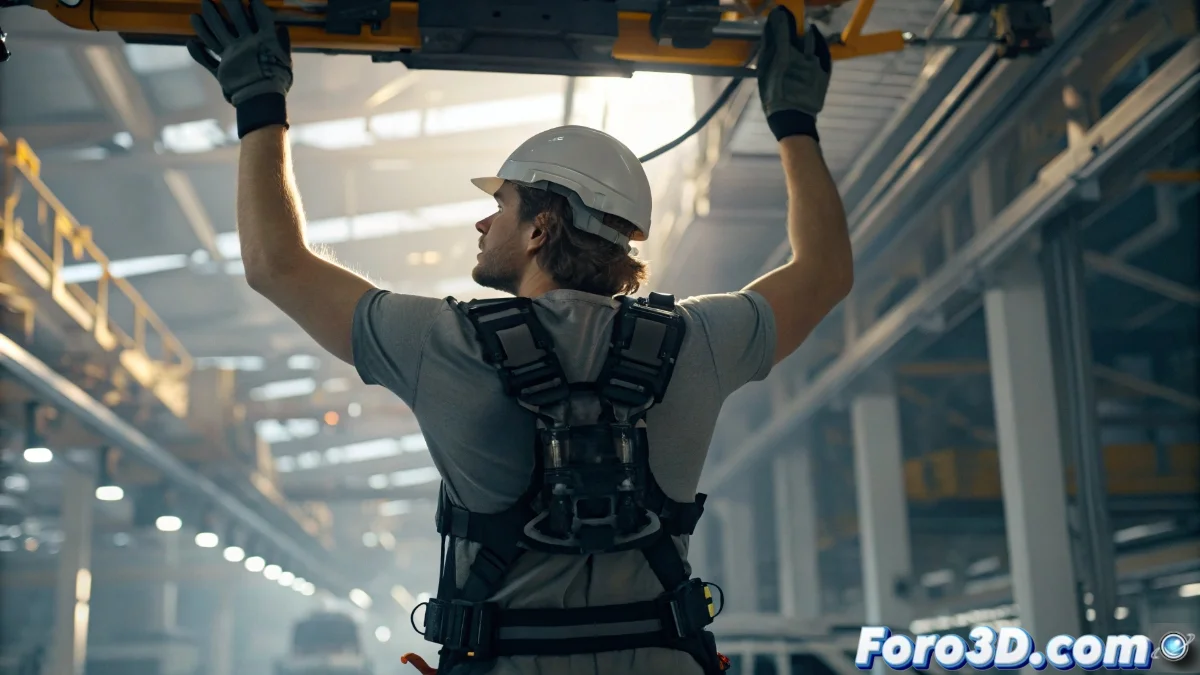
EksoVest: The Exoskeleton That Transforms Industrial Work
Wearable robotic technology is revolutionizing work environments, and the EksoVest represents one of the most significant advances in this field. Developed by the specialized company Ekso Bionics, this lightweight exoskeleton has been specifically designed to reduce physical fatigue in occupations that require keeping the upper limbs elevated during full workdays. Its implementation is changing the way we approach work ergonomics in industry 🦾.
Mechanism of Operation and Operational Advantages
The system operates through a passive assistance mechanism that intelligently redistributes physical loads. By transferring part of the natural weight of the arms to the torso structure, it significantly reduces the accumulated tension in the shoulders, neck, and dorsal region. This technology is especially beneficial in industries such as manufacturing, automotive, and construction, where operators frequently perform installations, adjustments, or maintenance with their arms above shoulder level.
Documented Benefits:- Reduction of up to 80% in muscle fatigue during repetitive overhead tasks
- Decrease in work absenteeism related to musculoskeletal disorders
- Measurable increase in productivity and quality of work performed
The implementation of the EksoVest has proven to reduce workplace injuries by 60% according to studies in manufacturing plants
Versatility and Practical Applications
One of the most notable aspects of the EksoVest is its universal adaptability, as it incorporates adjustment systems that allow customizing the fit for any body type. This feature makes it suitable for a wide diversity of users in sectors such as logistics, infrastructure maintenance, and warehouse operations, where arm elevation activities constitute a fundamental part of the daily routine.
Sectors of Implementation:- Automotive industry: assembly operations on production lines
- Construction: installation work at heights and roofs
- Logistics: handling goods on elevated shelves
Impact on the Future of Work
While we celebrate these technological solutions that improve worker well-being, an interesting reflection arises about the evolution of the work environment. The growing implementation of exoskeletons makes us question whether in the future we will need robotic assistance even for everyday activities that we currently consider simple. What is indisputable is that devices like the EksoVest are establishing new safety standards and comfort in industrial work spaces 🏭.