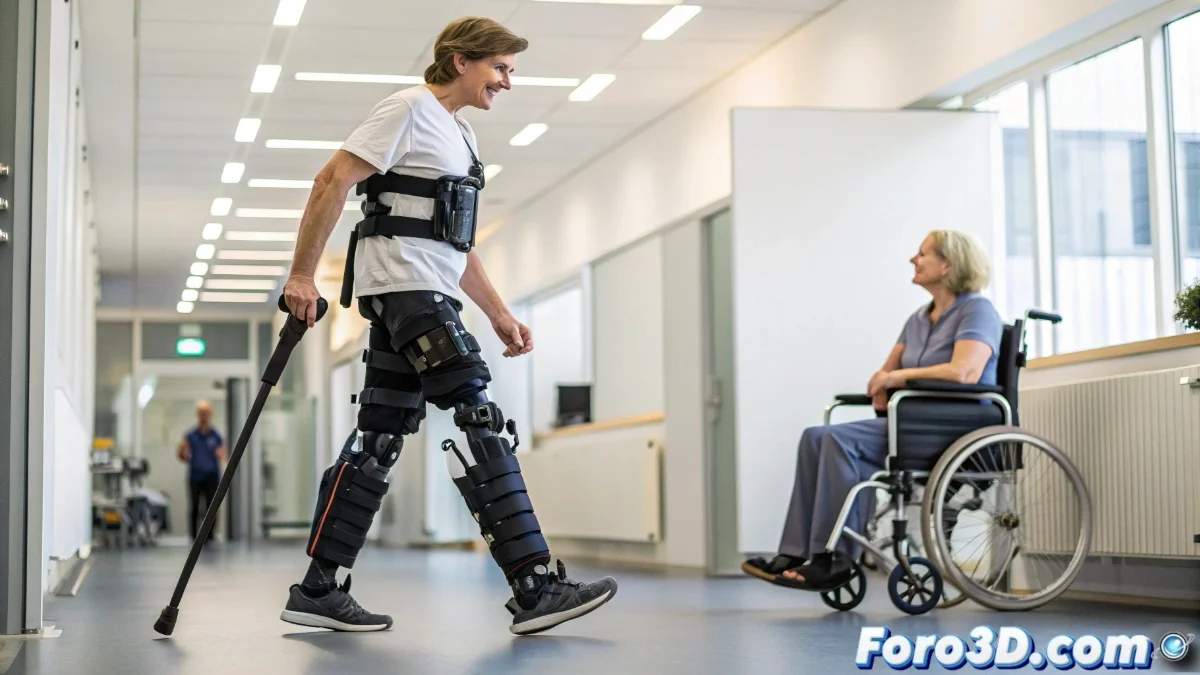
Ekso Bionics ELEGS Exoskeleton: Robotic Mobility for Rehabilitation
The ELEGS exoskeleton, developed by Ekso Bionics, represents a significant advancement in robotic devices to assist individuals with paralysis in the lower extremities. This innovative system allows users to stand up and walk through personalized adaptation, integrating sensors that interpret body movements and provide support with every step. Its main objective is to restore mobility to those who have lost it, such as patients with spinal cord injuries, promoting comprehensive rehabilitation and enhancing quality of life. 🦿
Technological Innovations in the ELEGS Exoskeleton
Among the most notable improvements, the device features an intelligent control system that modulates assistance based on the user's activity, allowing switching between training and everyday use modes. It employs lightweight actuators and batteries with high autonomy, increasing its portability and comfort compared to previous models. Additionally, the built-in software tracks the patient's progress, generating valuable data for healthcare professionals, which refines therapy sessions and accelerates functional recovery.
Main Features:- Body sensors that detect movements and adjust assistance in real time
- Lightweight actuators and long-lasting batteries for greater portability and comfort
- Monitoring software that provides detailed metrics to optimize rehabilitation
The ability to walk again not only transforms the body but also the spirit, opening doors to a more independent life.
Applications and Advantages in the Rehabilitation Field
The ELEGS exoskeleton is predominantly used in rehabilitation centers to help patients regain muscle strength, improve blood circulation, and prevent complications such as pressure ulcers. Its benefits go beyond the physical, as the simple act of walking has a positive psychological impact, reinforcing confidence and autonomy. This makes it a comprehensive tool that fuses advances in robotics and health, expanding therapeutic options for motor disabilities.
Key Benefits:- Muscle strengthening and improved circulation in patients with reduced mobility
- Reduction of risks of pressure ulcers and other complications associated with immobility
- Psychological reinforcement through increased independence and self-esteem
Final Reflections on the Future of Assisted Mobility
Although using a robotic exoskeleton may seem straight out of science fiction, its real value lies in restoring the ability to take meaningful steps. Beyond technical concerns like battery charging, the essential thing is the potential to transform lives through rehabilitation technology. This device not only facilitates physical recovery but also restores hopes and opens paths to a fuller existence. 🌟