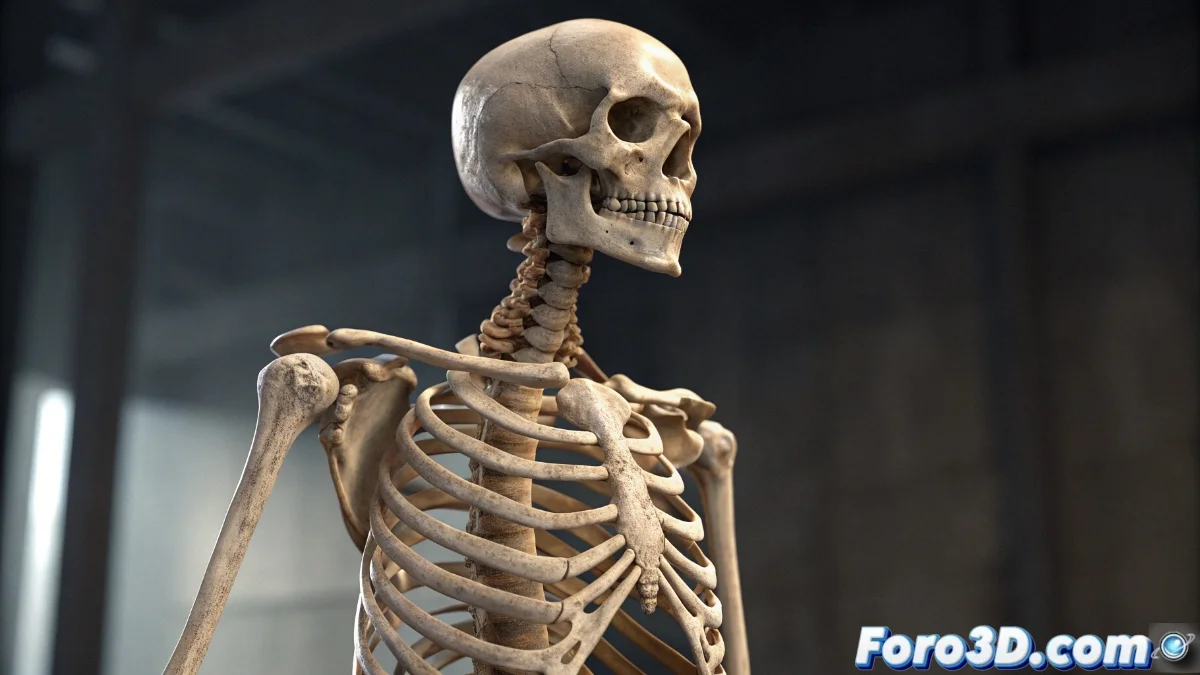
Efficient Skeleton Design for Realistic 3D Animation
The creation of a well-planned bone structure constitutes the fundamental basis for achieving natural and expressive movements in three-dimensional characters. A correctly established hierarchy not only facilitates the animation process but also guarantees coherent deformations in all poses 🦴.
Bone Hierarchy Configuration
The first step involves faithfully replicating the human anatomy or creature we are modeling, positioning primary bones at critical flexion points such as shoulders, wrists, hips, and vertebrae. An organized nomenclature for each element is crucial to streamline work during later phases of animation and mesh binding.
Key Elements in the Bone Structure:- Main bones strategically placed at high-movement joints
- Descriptive names that reflect their function and position in the hierarchy
- Correctly established parent-child relationships for transformation transfer
Patience during rigging becomes your best ally when facing unexpected deformations
Mesh Preparation for Skinning
Before starting the binding process, the character's geometry must present a topology optimized specifically for deformations. Areas of complex mobility such as armpits, neck, and facial region require greater polygon density to preserve quality during extreme animations.
Essential Pre-Verifications:- Correct orientation of normals across the entire mesh surface
- Elimination of duplicate or unconnected vertices that affect weighting
- Adequate distribution of edge loops in areas of pronounced flexion
Advanced Skinning Techniques
The assignment of influences determines how each vertex responds to the skeleton's movements. We use weight painting tools to create smooth transitions between bone control zones, achieving natural folds at joints. Limiting influence to two or three bones per vertex prevents erratic behavior, while testing with extreme poses helps identify problems early.
The most common challenge arises when, after intense work sessions, the character develops exaggerated deformations in complex positions, reminding us that rigging demands meticulousness and constant perseverance 💪.