Educational Innovation in the Design of Resins for 3D Printing
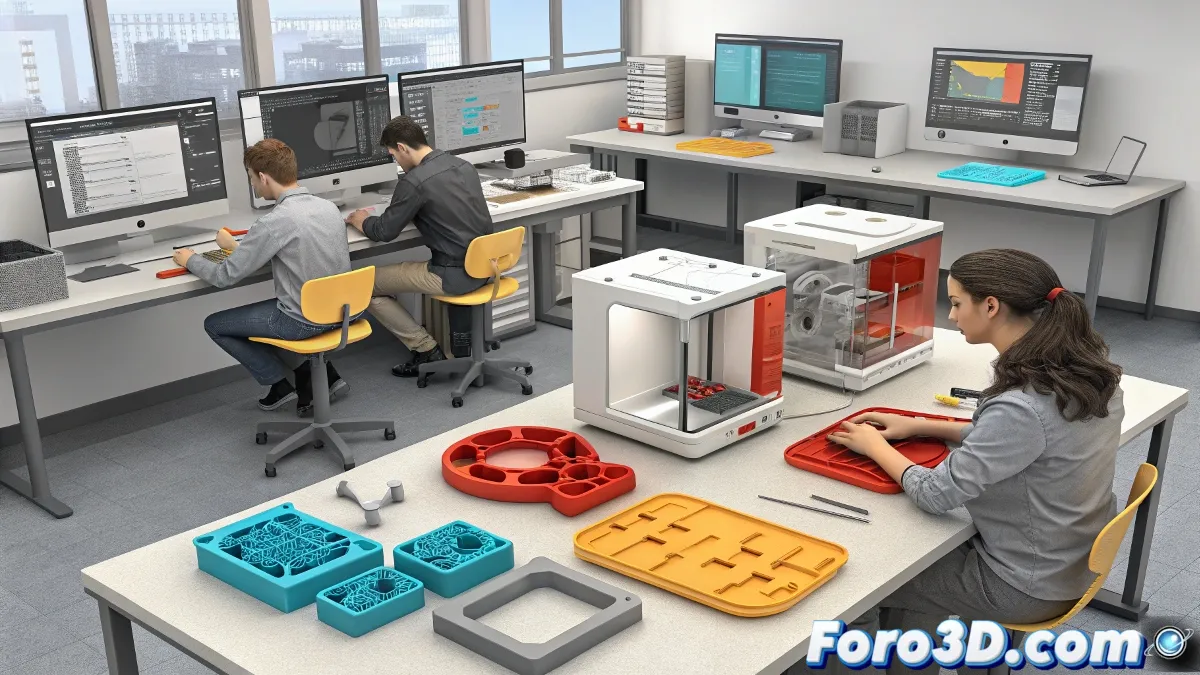
Northwestern University has implemented a novel approach to teaching soft materials, particularly in its MAT_SCI 331 course. This course, led by Professor Ryan Truby, introduces students to the design of custom resins for 3D printing. Participants can create and adjust their own printing materials in a dedicated laboratory, using desktop resin printers.
Development of Custom Resins for Specific Applications
One of the key objectives of the course is for students to develop resin formulas designed specifically for practical applications. In teams, students work on designing plastic buckles capable of withstanding heavy loads. Over six intensive laboratories, students explore the 3D printing process, material characterization, and mechanical testing. Through this hands-on approach, they become familiar with the effects that modifications in resin formulations have on the final performance of printed parts.
An Interdisciplinary Approach to Education
Professor Truby emphasizes that 3D printing requires knowledge from multiple disciplines, including organic chemistry, polymer physics, rheology, and mechanics. The course combines these theoretical fundamentals with practical applications, providing students with a comprehensive understanding of the impact of these fields on creating materials suitable for printing. This educational innovation has been made possible thanks to the Searle Fellowship 2023-24 and the Murphy Society Award 2023, awarded to Truby along with Professor Jonathan Emery.
Positive Evaluation of the Course's Practical Format
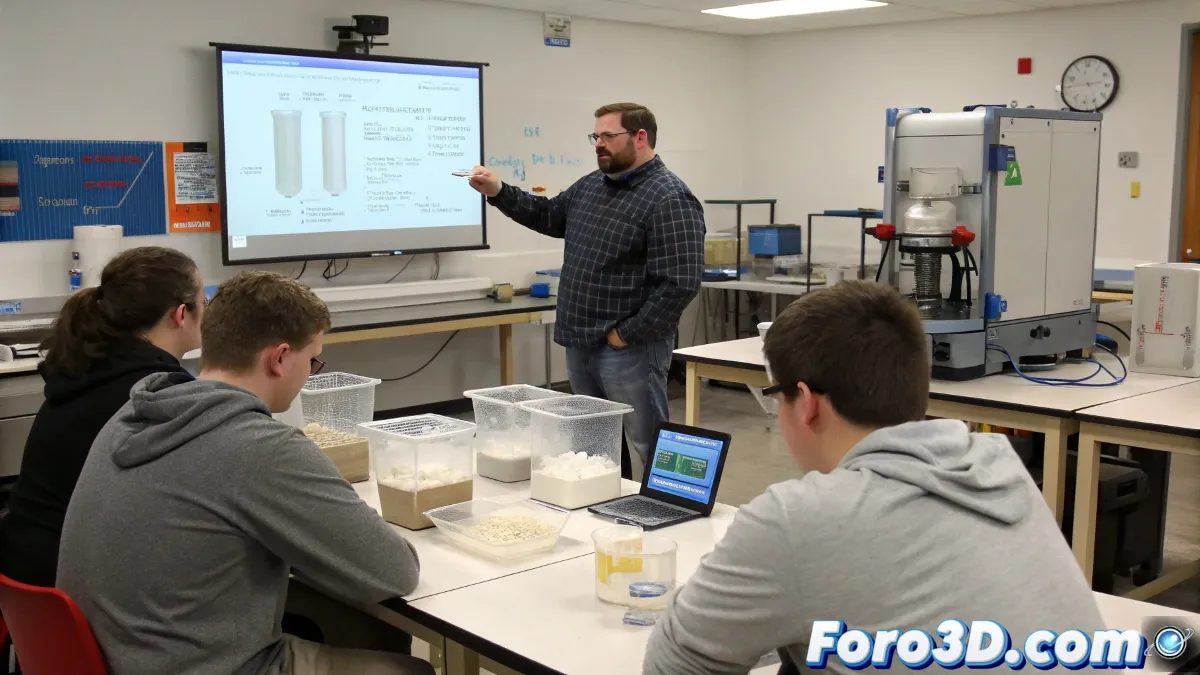
Students have expressed their satisfaction with the course's practical methodology. Julia Wiater, a third-year student, comments that the course has far exceeded her expectations, offering her a much more enriching hands-on experience than she anticipated. Hayden Williams, another student, mentions that he appreciated the autonomy the course provided, as unlike other laboratories that focus on specific tests, here he had greater control over the experiments and the creation process.
An Approach that Shapes the Future of Engineering
This teaching approach represents a transformation in how engineering students interact with emerging technologies. By being directly involved in creating materials for 3D printing and their practical development, students acquire not only theoretical knowledge but also skills applicable to real-world situations. Additionally, by experimenting with material innovation, students gain a deep understanding of how new developments can influence various industrial and commercial applications.