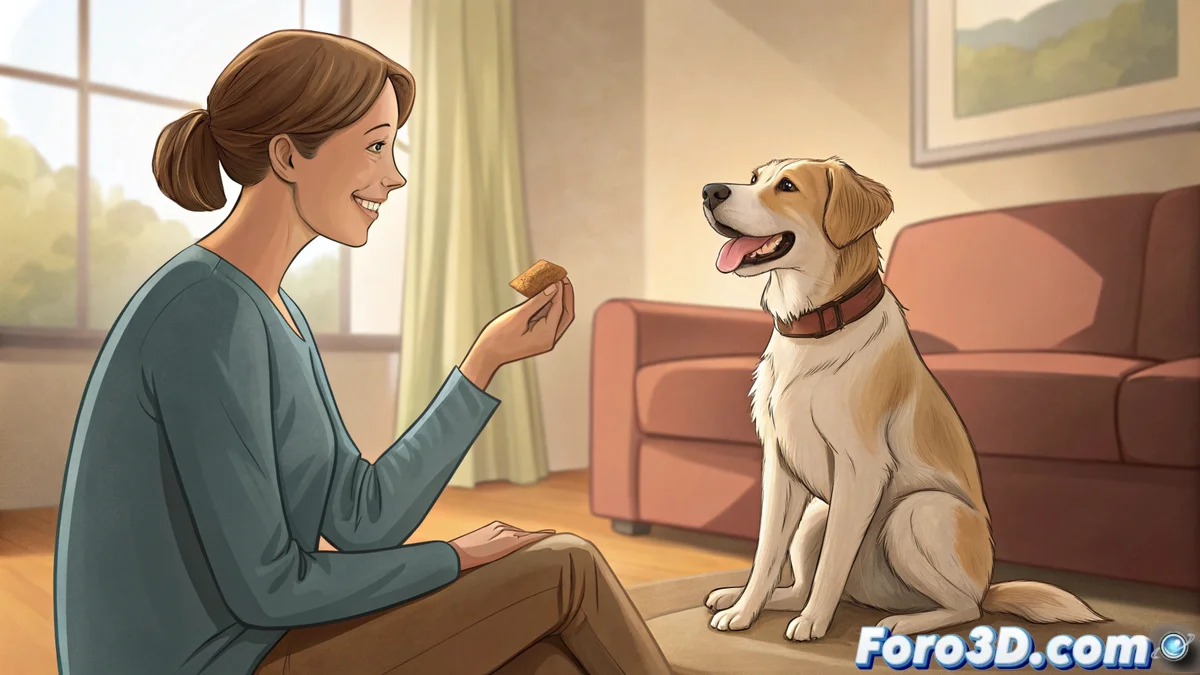
Training a Pet with Clear Boundaries and Positive Reinforcement
When a pet understands what is expected of it, it feels secure and its adaptation to the home is smoother 🐾. The most effective technique for teaching is positive reinforcement, which is based on rewarding the behaviors we want it to repeat. This method takes advantage of the animal's natural tendency to repeat actions that bring it a benefit, such as a treat, a caress, or a moment of play. By using it, the bond with the owner is strengthened and anxiety or fear is avoided, emotions that can arise with punishments.
Consistency is the Pillar of Learning
For the animal to learn, it is vital that all family members apply the same rules and use the same signals. If one day an action is rewarded and the next it is ignored, the animal becomes disoriented and the learning process slows down. Establishing predictable routines for eating, walking, and playing helps create a stable environment. Teaching basic commands like sit, stay, or come when called should start in a space without distractions and then be practiced gradually in more stimulating places.
Keys to Applying Positive Reinforcement:- Immediacy of the Reward: Giving the reward in the seconds following the correct action is crucial for the pet to associate both things.
- Transition in Rewards: At first, every success is rewarded, but then it can be transitioned to intermittent rewarding to consolidate the behavior long-term.
- Variety of Reinforcers: In addition to treats, enthusiastic verbal praise and caresses are powerful tools for rewarding.
A dog that only obeys when it smells the snack bag is not well-trained, just well-funded.
Avoid Common Mistakes When Rewarding
A fundamental aspect is not to unintentionally reward undesired behaviors. For example, if the animal jumps on people out of excitement and receives attention (even if it's to scold it), it learns that jumping is an effective way to interact. Patience and constant repetition are the indispensable allies throughout this process.
Elements for an Optimal Learning Environment:- Uniform Rules: Everyone at home must follow the same criteria to avoid confusing the pet.
- Consistent Signals: Use the same words and gestures for each command.
- Progressive Practice: Start training in a quiet place and gradually increase the difficulty.
Building a Relationship Based on Trust
Training with clear boundaries and positive reinforcement is not just about the animal obeying, but about building a relationship of mutual trust and respect. This approach encourages the pet to think and choose to behave correctly, rather than acting out of fear. The end result is a well-integrated animal companion, confident in itself and that enjoys family coexistence 🐕❤️.