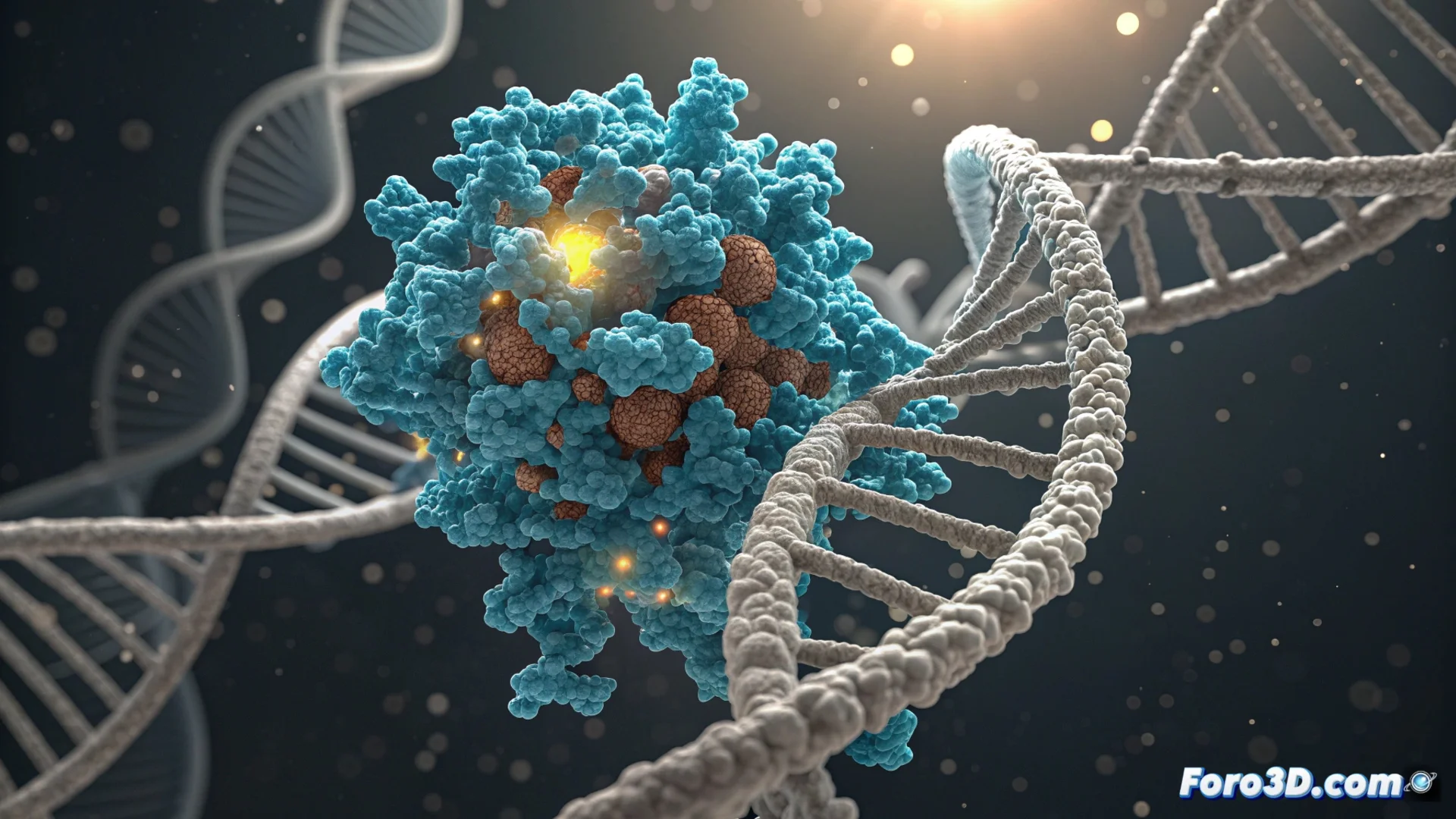
Editing genetic bases, the technique that corrects DNA letters
This genetic engineering tool allows rewriting a single letter of the genetic code without the need to break the DNA double helix. It works like a precision chemical corrector, offering a different and potentially safer approach than techniques that cut DNA. 🧬
The mechanism behind the genetic pencil
The system fuses a deactivated Cas9 enzyme, which only anchors to the DNA, with a deaminase enzyme. The latter is responsible for carrying out the chemical reaction that transforms one nucleotide into another. The Cas9 protein guides the complex to the exact site in the genome where the deaminase must act.
Key components of the process:- Inactive Cas9 (nCas9 or dCas9): Acts as a navigation system that positions the tool on the desired DNA sequence without generating cuts.
- Deaminase enzyme: Performs the specific chemistry to change one base, such as converting a cytosine (C) into a thymine (T).
- Guide RNA: Directs the entire protein complex to the precise genomic location that requires modification.
Imagine correcting an error in a book by changing only a misspelled letter, instead of cutting and pasting entire paragraphs.
Benefits and current challenges
The main strength of this method is that it avoids double-strand breaks, which minimizes the risk of unintended deletions, insertions, or rearrangements in chromosomes. This is vital for developing safe gene therapies. However, the technique has inherent limitations.
Aspects to consider:- Limited scope: It can only change one type of nucleotide to another; it is not suitable for inserting or deleting long DNA segments.
- Editing window: The deaminase enzyme operates in a restricted area within the DNA bubble opened by Cas9.
- Off-target editing: The most relevant side effect, where the enzyme can modify similar bases in undesired locations in the genome.
Precision, the horizon to reach
The central challenge lies in perfecting absolute specificity. Although the risk of off-target editing is lower compared to methods that cut DNA, its existence demands continued development of the tool. The future of this technology involves optimizing the fidelity of the enzymes and delivery systems for robust clinical applications. 🔬