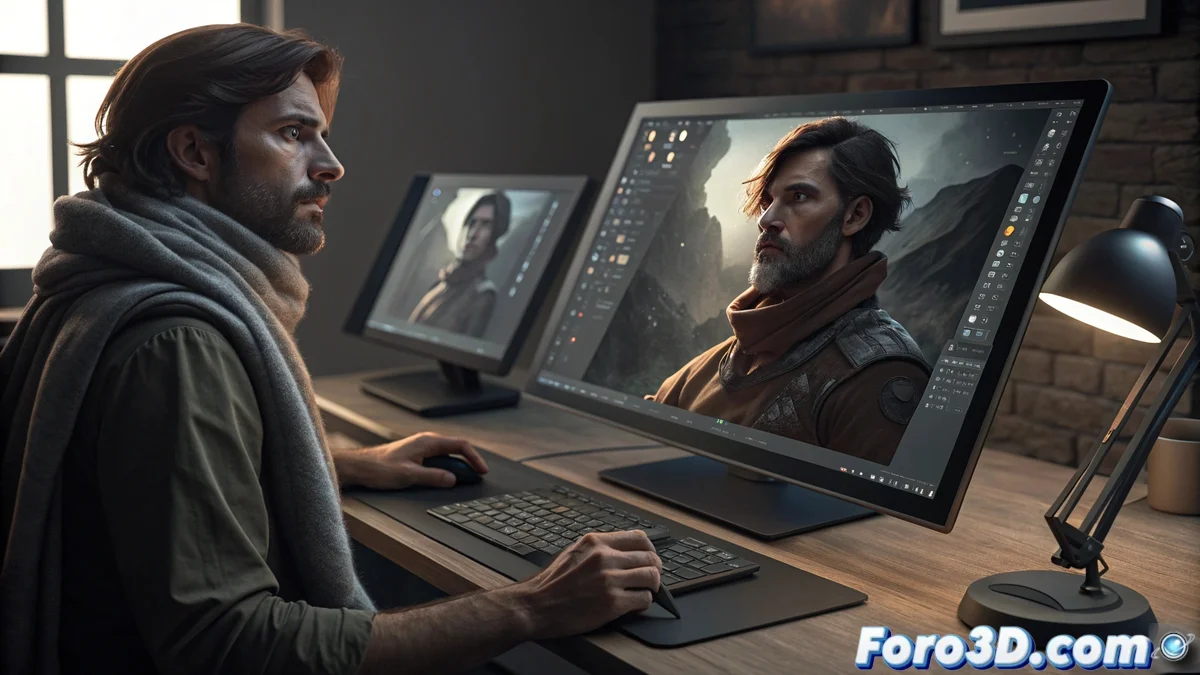
Edit Images Without Destroying Original Data
In the world of design and digital photography, there is a superior method for processing images: non-destructive editing. This technique avoids permanently altering the source pixels, allowing you to adjust, filter, and transform an image without compromising its base information. It is based on using elements like special layers and containers, which provide total creative freedom. 🎨
Essential Tools for Reversible Work
The core of this method lies in three key components. Adjustment layers act as separate instructions that modify attributes such as brightness or tone. Layer masks precisely control in which areas of the image those changes are revealed or hidden. Finally, smart objects function as containers that preserve all the original data of a layer, even after scaling or distorting it, and allow the application of editable smart filters.
Key Advantages of This Approach:- Preserves the maximum image quality by avoiding pixel degradation with multiple saves.
- Encourages experimentation without fear, as every modification can be undone or adjusted at any stage of the project.
- Optimizes collaborative work and reviews, as files keep intact the entire history of applied adjustments.
Imagine being able to revert a color change you applied hours ago without needing to start over, as if time had not passed for your original photograph.
Why Integrate This Workflow
Adopting this methodology transforms how graphic projects are managed. It's not just about being able to undo, but about maintaining a live and flexible file. It allows generating variants of the same design efficiently, testing different styles without duplicating efforts. This is crucial for professionals who need to adapt their work to different formats or client feedback.
Practical Benefits:- Maximizes efficiency by eliminating the need to maintain multiple saved versions of the same file.
- Protects time investment, as errors or changes of mind do not force restarting the process from scratch.
- Facilitates updating old projects, as all elements remain fully editable.
Conclusion: A Standard for Professional Work
Non-destructive editing has ceased to be an advanced option to become the standard for any serious image work. Its ability to preserve quality and offer absolute flexibility makes it indispensable. Mastering the use of adjustment layers, masks, and smart objects is not a luxury, but the foundation for a modern, efficient, and risk-free workflow. ✅