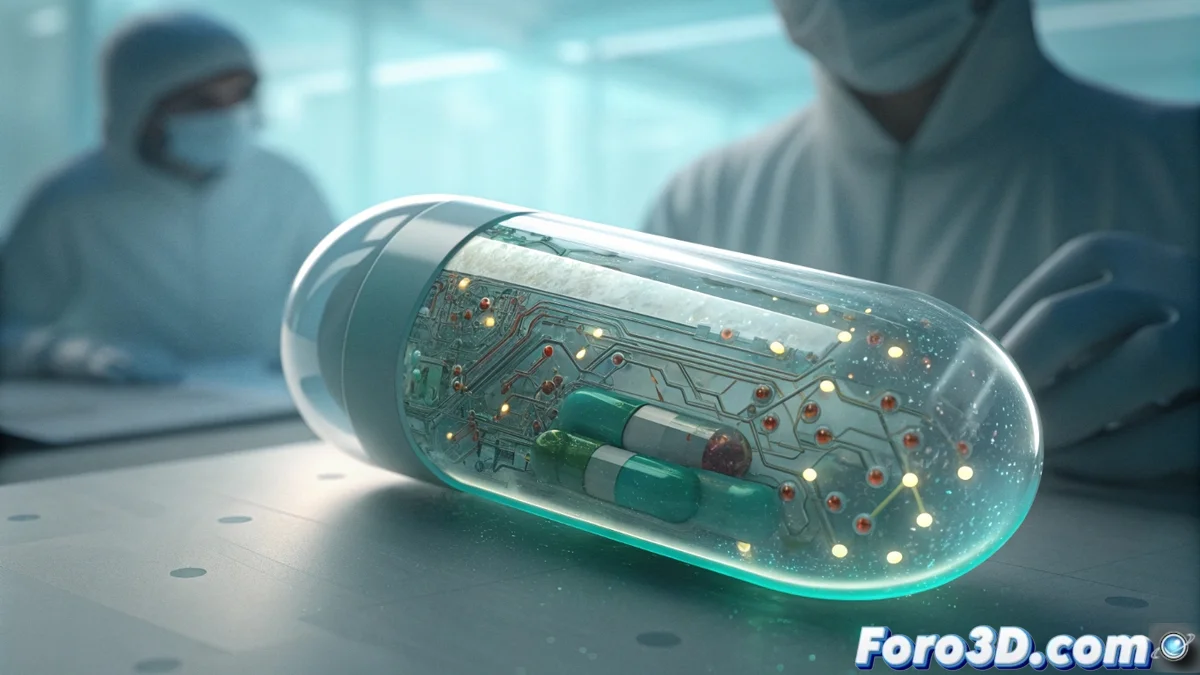
Edible and Biodegradable Electronics Advance in Medical Diagnostics
Innovation in edible electronics marks a milestone by designing circuits and sensors that the body can absorb without risk. These systems are created to operate within the body, collect physiological information, and then disintegrate completely, without generating harmful waste. This method promises to revolutionize how health is evaluated and therapies are administered, presenting a less invasive option than current procedures. 🧪
Safe Materials Form the Core of the System
Researchers manufacture these circuits using substances like food-derived graphene, edible pigments to form conductive and insulating layers, and gelatin or cellulose bases. The sensors can detect indicators such as pH, temperature, or specific enzymes. By incorporating miniature passive and active components, the devices achieve basic data processing and wireless transmission to an external receiver, before the body metabolizes or eliminates them.
Key Components of These Devices:- Food-Derived Graphene: Acts as the main conductor.
- Edible Pigments: Form the insulating and conductive layers.
- Gelatin or Cellulose Substrates: Serve as the biodegradable base for the circuits.
Imagine a future where swallowing a smart pill is as common as taking an aspirin, though probably with a more extensive instruction manual.
The Gastrointestinal Tract is the Main Application
The stomach and intestines environment emerges as the primary target for this technology. An ingested device can diagnose bleeding, ulcers, inflammation, or continuously monitor the gut microbiota. This offers more accurate measurements than conventional methods and eliminates the need to retrieve the device via endoscopy, as it disintegrates naturally.
Key Advantages in Gastrointestinal Diagnosis:- Provides continuous and real-time physiological data.
- Eliminates the invasive procedure to recover the sensor.
- Reduces patient risk by using non-toxic materials.
The Future of Personalized Monitoring
This technological evolution brings closer the possibility of personalized and non-invasive medicine. Biodegradable devices not only diagnose but could also administer drugs in a controlled manner. The constant progress in materials and miniaturization suggests that they will soon integrate more complex functions, making interacting with our health from within an everyday and safe reality. 🔬