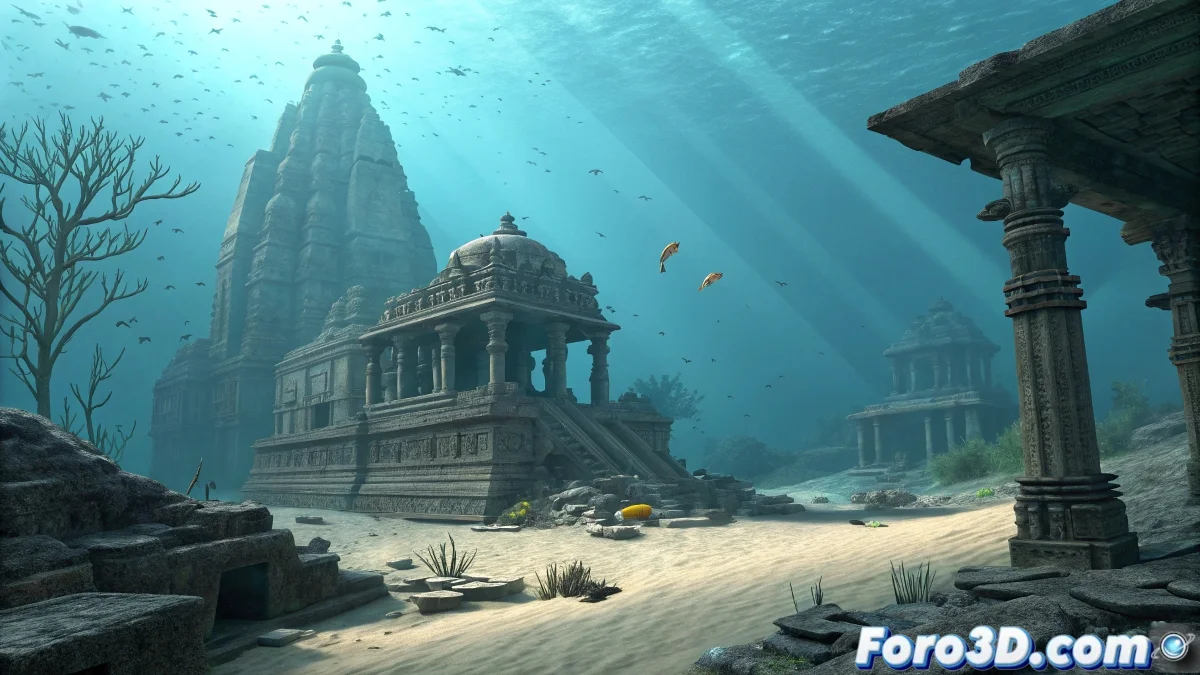
Where Myth Meets Archaeology
Dwarka, the legendary city of the god Krishna mentioned in the epic text Mahabharata, has captured the imagination for millennia. According to tradition, this fabulous city was swallowed by the sea after the end of Krishna's era. What is fascinating is that archaeological research in the Gulf of Khambhat has revealed submerged structures, docks, and artifacts that suggest the existence of an ancient civilization, sparking a passionate debate about the boundaries between legend and verifiable history. 🌊
Nuke: Reconstructing a City Under the Sea
To visualize this theory, Nuke becomes a powerful tool. Its capability for advanced digital compositing allows for the creation of credible visual reconstructions of what Dwarka might have been like. Through the use of deep compositing, particle effects to simulate sediments, and careful volumetric lighting, it is possible to immerse the viewer in the mysterious atmosphere of this lost city, blending archaeological evidence with historical interpretation.
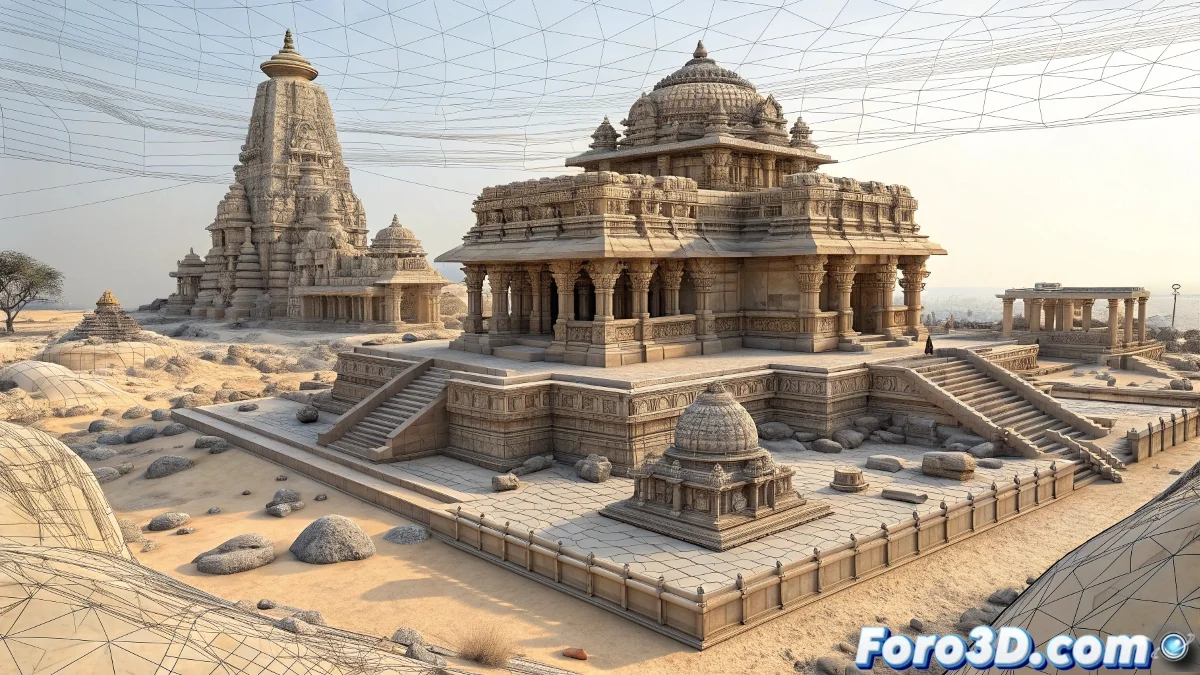
A Workflow to Revive the Past
Recreating Dwarka in Nuke requires a methodical approach that respects both scientific data and mythological narrative.
- Base Material Integration: Import real underwater images and 3D models of architectural structures from the era.
- Aquatic Environment Simulation: Use particle and fluid nodes to create water effects, currents, and suspended sediments.
- Atmospheric Lighting: Adjust the light with Grade and GodRays nodes to simulate how sunlight filters through the depths.
- Final Compositing: Combine all elements with masks and color corrections to achieve a cohesive and realistic image.
The result is a visual window into an ancient world. 💻
Archaeological research in the Gulf of Khambhat has revealed submerged remains that suggest the existence of urban structures, docks, and artifacts that could belong to a very ancient civilization.
The Power of Visualization for History
These recreations are not just a technical exercise; they have immense educational and cultural value. They allow the general public to understand the scale and possible splendor of Dwarka, making tangible archaeological concepts that would otherwise be abstract. For documentaries and educational projects, this ability to "revive" an underwater site is invaluable for conveying the excitement of discovery and the connection between our foundational myths and real history. 📜
In the end, discovering the submerged remains of the mythical Dwarka is fascinating. The irony is that, now that we have found it, archaeologists' greatest doubt is not whether it existed, but whether Krishna left the city key before it sank. 😉