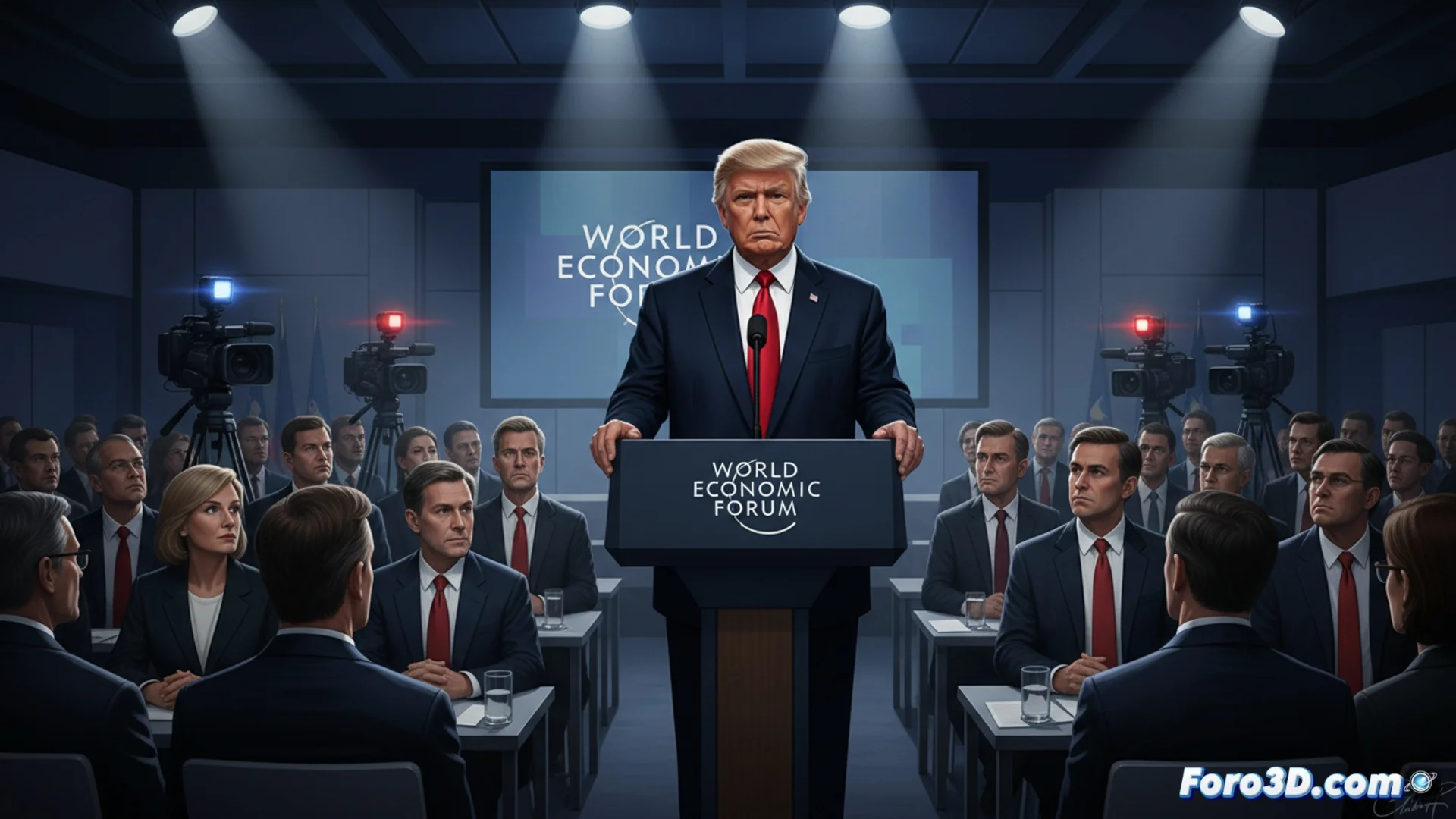
DW Examines Trump's Claims at the World Economic Forum
The German international service Deutsche Welle conducts a process to fact-check several statements that Donald Trump made during his intervention at the World Economic Forum. The work focuses on reviewing numbers on economic policy, energy sector, and global agreements. 🔍
Reviewing Data on Economy and Labor Market
One of the key claims under scrutiny is that of having built the most powerful economy in U.S. history. DW consults information from the World Bank and the Federal Reserve to put this statement in context, showing solid growth that does not break historical records. Employment figures are also analyzed, placing them within the trend that existed before the pandemic. 📊
Key Points of the Economic Analysis:- Compare GDP growth with previous historical periods.
- Contextualize hiring numbers within the labor market evolution.
- Use institutional sources like the World Bank to verify.
The process of fact-checking political speeches often reveals differences between words and what official figures indicate.
Statements on Energy and Climate Policy
Another axis of the analysis verifies the claim of achieving energy independence for the United States. Fact-checkers point out that the country was already exporting more energy than it imported before that administration. Additionally, Trump's criticisms of the Paris Agreement are examined, explaining the actual terms of the pact and its economic effects. ⚡
Aspects Verified in Energy Policy:- Confirm the United States' status as a net energy exporter in previous years.
- Explain the commitments and conditions of the Paris Agreement on climate.
- Analyze the impact that the climate pact has on industry.
The Value of Fact-Checking Public Information
This type of journalistic work underscores the importance of examining public figures' statements with objective data. When speeches diverge from numerical reality, the public seeking accurate information is harmed. Maintaining analytical rigor is essential to understanding complex policies. 🧐