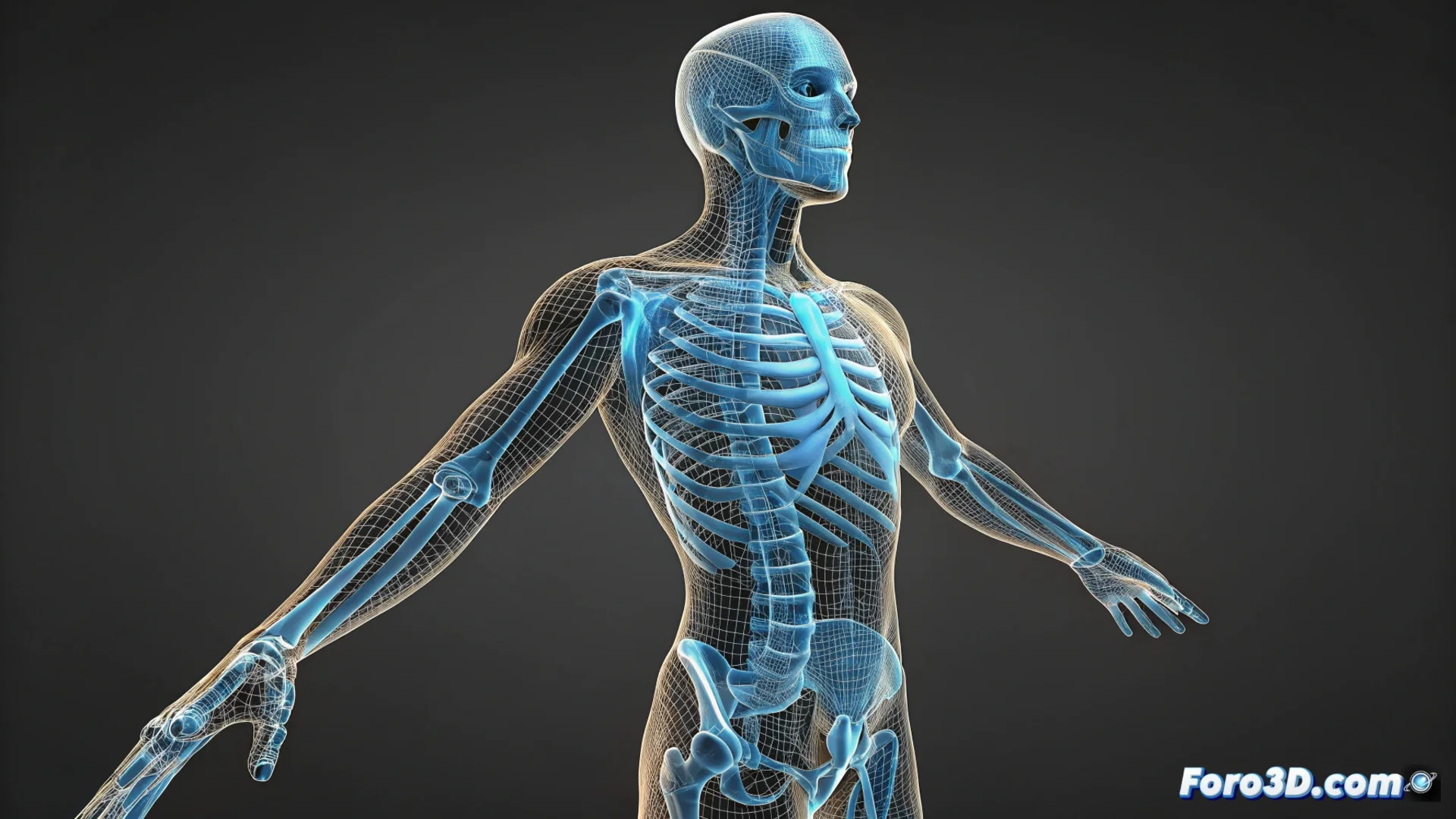
Dust3d Automates Skeleton Creation and Skinning for Animation
In the 3D character animation workflow, preparing the rig is usually a technical and slow stage. Dust3D presents itself as a pragmatic solution by automating two of the most complex tasks: building the armature and painting the skin weights. This allows artists to move faster to the phase of bringing their models to life. 🚀
A Skeleton from Simple Lines
The process in Dust3D starts intuitively. Instead of creating complex bones, the user draws a line sketch within the model's volume. The software interprets this drawing as the base bone structure. From these lines, it automatically generates the complete armature with its corresponding joints. Subsequently, it calculates how each bone influences the mesh vertices, assigning the skinning weights coherently.
Advantages of this approach:- The artist defines the structural intent without technical details.
- The system produces a functional rig ready for basic animation tests.
- The automatic base can be manually adjusted later, especially in critical areas like elbows or knees.
Automation is an entry point for rapid prototyping and for those starting in 3D animation.
Optimizing the Workflow Toward Animation
This ability to automate changes the work dynamic. It is especially useful for projects with tight deadlines, stylized designs, or for learning the fundamentals of rigging without drowning in details. Dust3D reduces the initial technical barrier, allowing effort to be focused on the animation itself and not on its preparation.
Key features of the workflow:- Exports the model, its skeleton, and skin weights to standard formats like FBX.
- Facilitates importing the asset into a game engine or animation software for final work.
- Provides a solid starting point that can be refined in more specialized tools.
Manual Review Remains Crucial
Although the system is efficient, it is not infallible. Sometimes, it may assign excessive weight to a bone in small or complex areas, like the tip of the nose or fingers, causing unwanted deformations when moving the character. This serves as a reminder that automation is an assistant, not a replacement. The artist's eye and judgment are indispensable for polishing the result and ensuring that deformations are natural and correct. ✅