Innovation in the Maritime Industry through Aquatic Drones
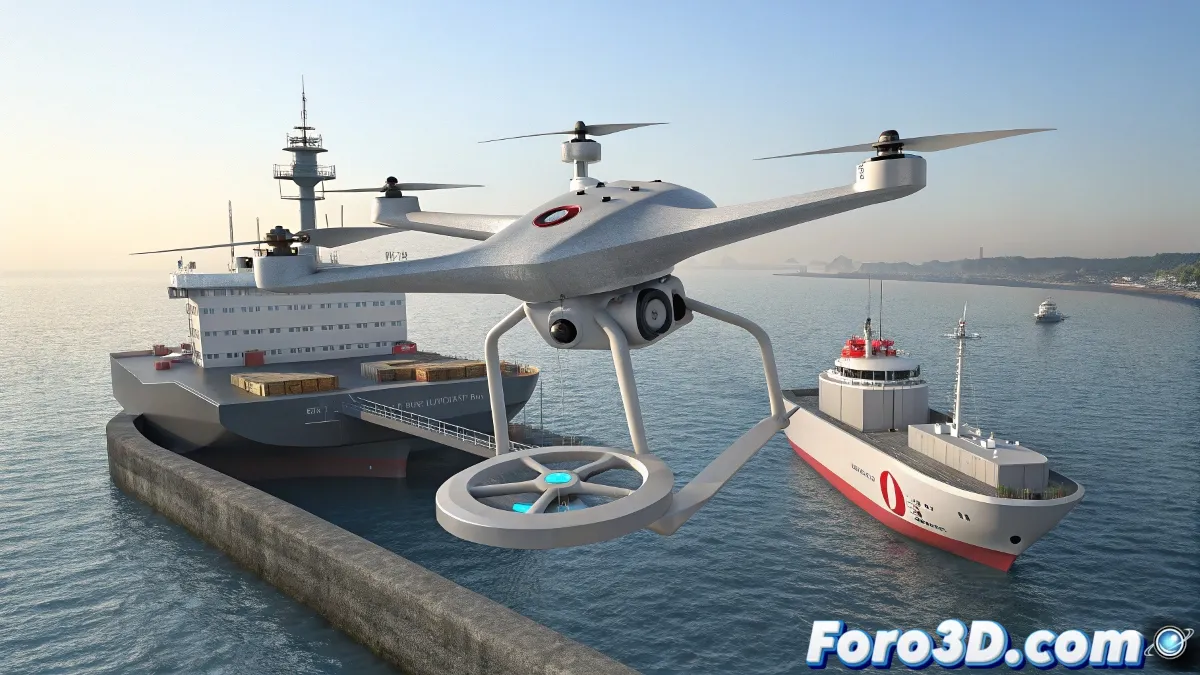
3D printing has revolutionized various industries, and the maritime sector is no exception. A clear example of this transformation is the ShearWater Aquatic Drone, a prototype by Royal3D designed to perform critical tasks such as maintenance and surveillance at sea. This drone has the ability to adapt to different needs, making it a flexible and highly functional tool for various maritime companies.
Sustainable Materials in the Manufacturing of the ShearWater
One of the main features of the ShearWater is its commitment to the environment. This drone has been entirely manufactured with recycled and recyclable materials, which helps reduce its environmental impact. To ensure its durability, thermoplastic polymers and PETG fiber-reinforced materials are used, offering an excellent combination of strength, lightness, and capability to operate in demanding maritime environments. Additionally, its waterproof structure allows it to remain operational even in extreme conditions.
Advanced Manufacturing through 3D Printing
The manufacturing of the ShearWater is based on an advanced 3D printing technique that uses infrared cameras to ensure precise adhesion of each layer of material. This process, developed by Royal3D, not only guarantees the robustness of the parts but also ensures their resistance to the challenges of maritime environments. This technology makes the ShearWater an ideal tool for the surveillance and maintenance of vessels, optimizing safety and efficiency in operations.
Sustainability and Efficiency in the Maritime Sector
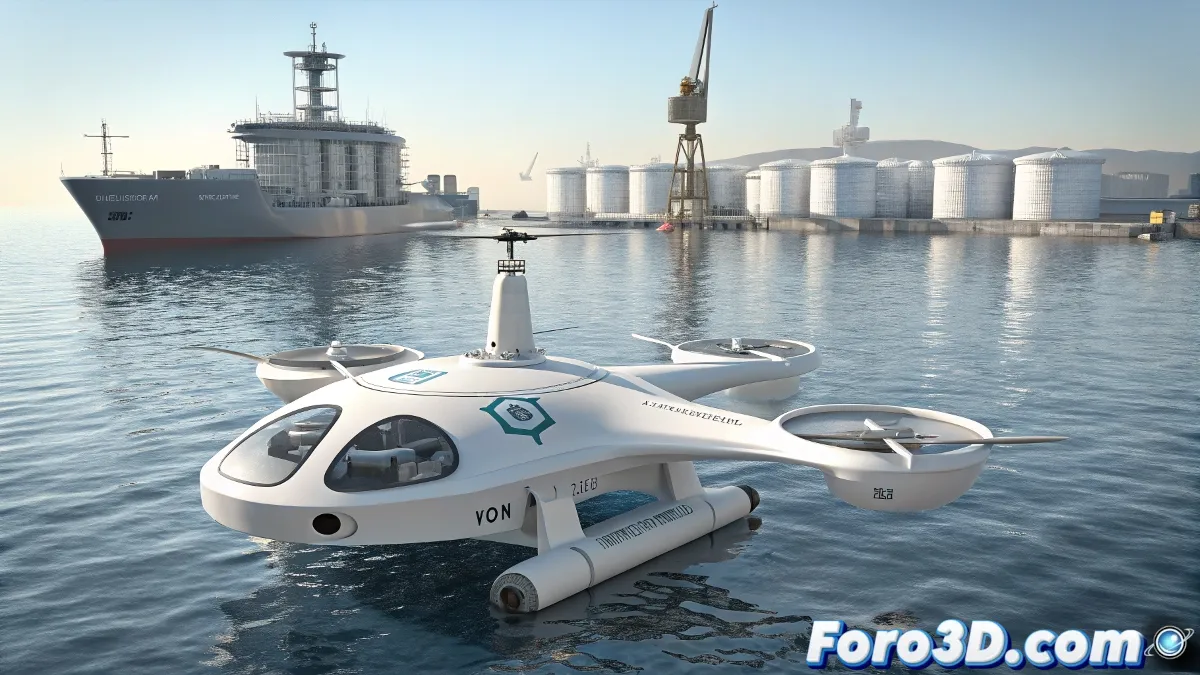
The ShearWater is also part of a larger project supported by the European Union, which aims to improve safety and efficiency in port inspections and other maritime activities. Equipped with artificial intelligence and advanced solutions for the sector, the drone facilitates more detailed inspections, minimizing risks and protecting both wildlife and human safety. This type of innovation highlights the growing trend in the industry to use drones to optimize maintenance processes and data collection.
The Evolution of Drones in Maritime Maintenance
The use of 3D-printed drones for the maritime industry is not a new idea. Since 2017, various initiatives have integrated drones into ship structure inspections, especially in hazardous environments. Collaboration between companies has improved maritime operations using drones and technologies like digital twins, which has optimized vessel design and reduced downtime.
The Future of 3D Printing in the Maritime Industry
As 3D printing continues to advance, maritime sector experts are exploring new ways to incorporate these technologies into a variety of applications. In the near future, 3D-printed aquatic drones are expected to be used not only for inspections and surveillance but also for tasks such as data collection and environmental monitoring. These innovations will continue to expand the possibilities of the industry, improving efficiency and reducing operational costs.