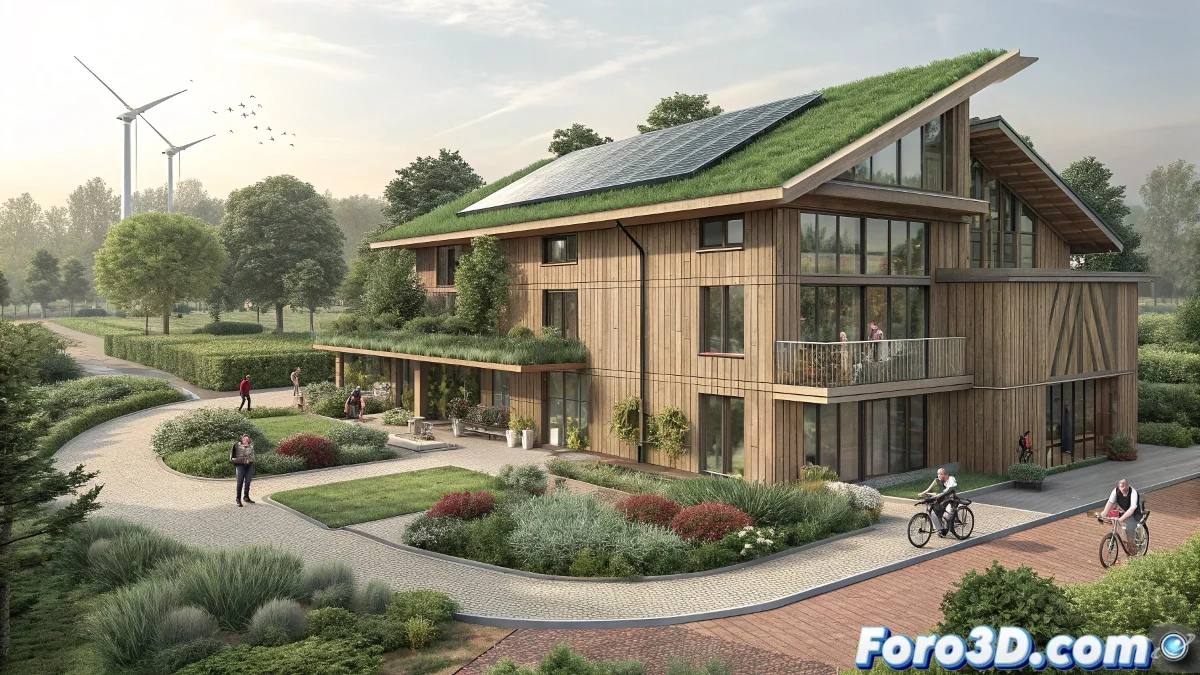
DREIHAUS Project in Germany Reduces CO₂ Emissions by 30% with Sustainable Building Materials
Sustainable construction marks a significant milestone with the German DREIHAUS project, which demonstrates a 30% reduction in CO₂ emissions through innovative materials. This ecological approach integrates energy efficiency and environmental responsibility without compromising residential quality 🌱.
Strategic Selection of Low-Carbon Materials
The project uses building materials specifically selected for their low carbon footprint throughout their entire life cycle. The selection methodology considers everything from raw material extraction to final recycling potential, prioritizing local and renewable options.
Sustainable materials implemented:- Natural insulations based on wood fibers and cellulose
- Laminated timber structures with sustainable forestry certification
- Mortars and concretes with reduced Portland cement content
DREIHAUS represents a paradigm shift towards conscious construction, where each material is chosen for its environmental impact and not just for its cost or availability
Integration of Energy Efficiency and Passive Design
Energy optimization is achieved through passive design strategies that reduce heating and cooling demands. The integrated systems leverage solar orientation, natural ventilation, and thermal mass to minimize operational energy consumption 🏡.
Implemented efficiency features:- Optimized orientation for passive solar gain in winter
- Natural cross-ventilation systems for summer conditioning
- Green roofs that improve insulation and manage rainwater
Replicable Model for Sustainable Residential Construction
This pioneering project establishes a scalable precedent for future residential developments, demonstrating that environmental sustainability is compatible with economic viability and housing comfort. The DREIHAUS methodology can be adapted to different climates and urban contexts 🌍.