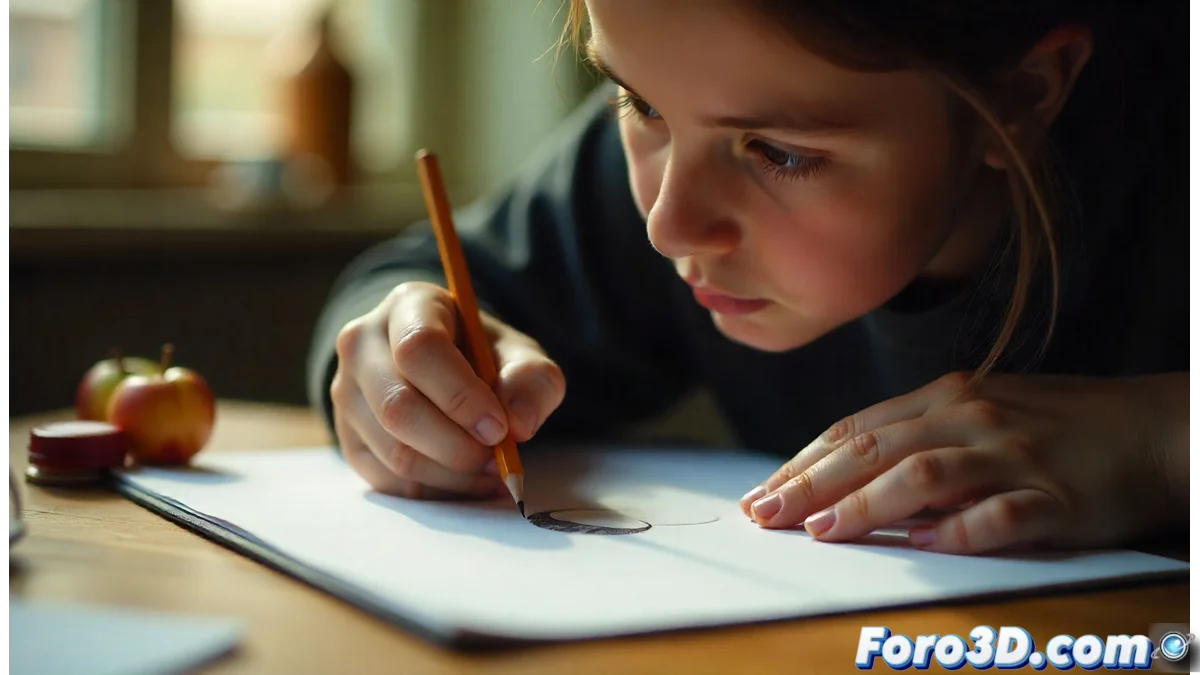
Drawing with the Non-Dominant Hand to Improve Observation
This fascinating artistic technique involves using the non-dominant hand to make strokes, which challenges the brain to abandon its usual routines and focus on pure and renewed observation. By switching hands, new neural connections are activated and reliance on muscle memory is minimized, allowing shapes and details to be captured from a fresher perspective. It is similar to blind contour drawing, but with the added challenge of lack of motor skill. 🎨
Benefits for Coordination and Visual Perception
By practicing this method, eye-hand coordination is strengthened, as the brain processes visual information more consciously to compensate for limited skill. This promotes meticulous and patient observation, avoiding reliance on preconceived symbols. Additionally, it helps reduce anxiety about results, as expectations of perfection are lower, fostering an experimental and free approach in the creative process.
Key benefits of the technique:- Improves the connection between the eye and the non-dominant hand, promoting more deliberate visual processing
- Fosters patience and reduces dependence on established mental patterns
- Allows a pressure-free artistic approach, ideal for exploring new ideas
Switching hands when drawing is not about creating perfect works, but about training the mind to see with new eyes.
Practical Implementation in the Daily Routine
To incorporate this technique, start by selecting a simple object and place it in front of you. Use your non-dominant hand to draw it, focusing on observing every contour and texture without worrying about accuracy. Perform short sessions of 10 to 15 minutes, gradually increasing the complexity of the subjects. Combine it with other exercises, such as blind contour drawing, to enhance its benefits.
Steps to apply the technique:- Choose a basic object and draw it with the non-dominant hand, prioritizing detailed observation
- Dedicate short and regular sessions, progressively increasing the level of difficulty
- Integrate this practice with complementary methods to maximize brain training
Conclusion on the Impact on Artistic Development
This approach does not seek the creation of masterpieces, but rather to train the brain to perceive the world in a renewed way. By challenging motor habits, creativity is stimulated and a more authentic vision of elements is obtained, which is invaluable for artists of all levels. 🌟