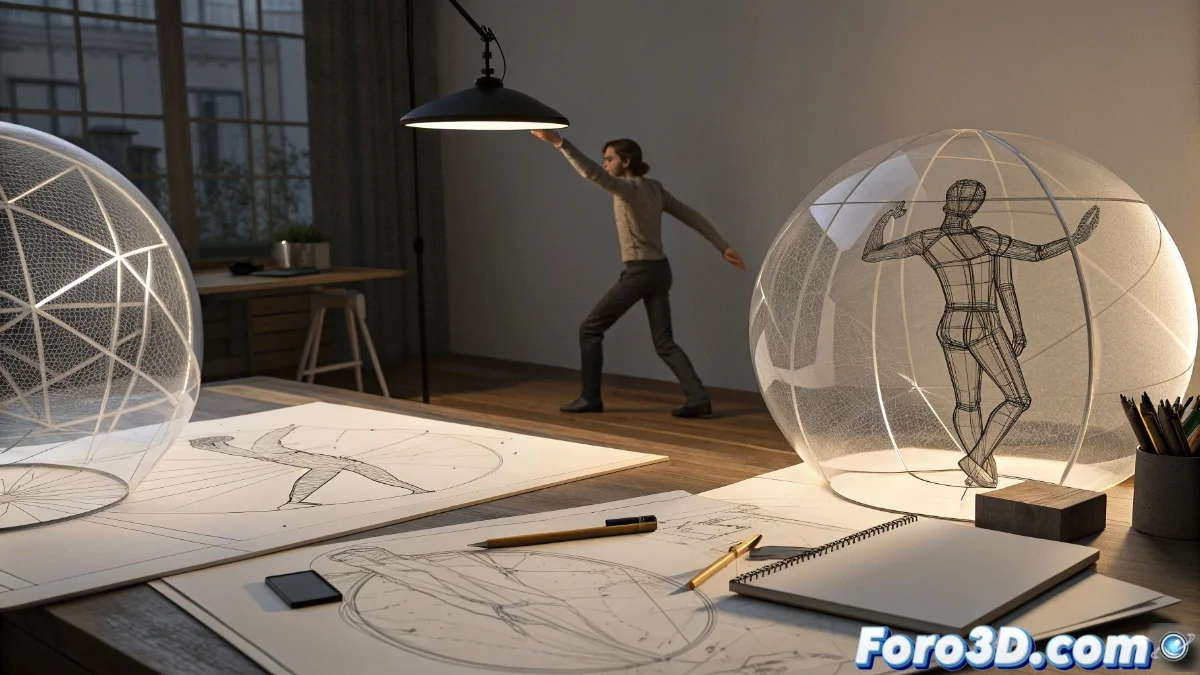
Drawing through: the transparent visualization technique in drawing
Drawing through represents a fundamental approach in visual creation that completely transforms how we perceive and represent objects in space. This methodology involves conceptualizing forms as if they were transparent, allowing us to draw both visible lines and those that would remain hidden in a conventional view 🎨.
Advantages of mastering this technique
Consistent practice of transparent drawing develops a deep structural understanding that transcends simple superficial observation. Artists who incorporate this method into their routine experience a significant evolution in their ability to position elements with spatial precision, anticipate visualizations from multiple angles, and avoid the frequent proportion errors that affect beginners.
Key benefits identified:- Development of advanced spatial intuition to predict appearances from diverse perspectives
- Substantial improvement in the three-dimensional positioning of elements within a composition
- Ability to convey sense of mass and weight in represented objects
The visual paradox: drawing the invisible to make the solid visible
Multidisciplinary applications of the method
This versatile technique finds equally valuable applications in diverse creative fields, from traditional arts to the most advanced digital ones. Its implementation adapts fundamental principles to the specific needs of each discipline, demonstrating its conceptual universality ✨.
Specific implementations by area:- In anatomical drawing: complete understanding of underlying skeletal and muscular systems
- In industrial and architectural design: visualization of internal structures and assemblies
- In 3D modeling: mental handling of complete polygonal mesh topologies from any view
The transformative impact on visual representation
It is fascinating to observe how this seemingly simple methodology —based on drawing lines that will not appear in the final result— generates an abysmal difference between representations that ambiguously float in space and those that convincingly affirm their three-dimensional presence. The secret to creating solid and believable forms paradoxically lies in remembering and understanding their invisible components, establishing a cognitive bridge between the visible and the structurally essential 🏆.