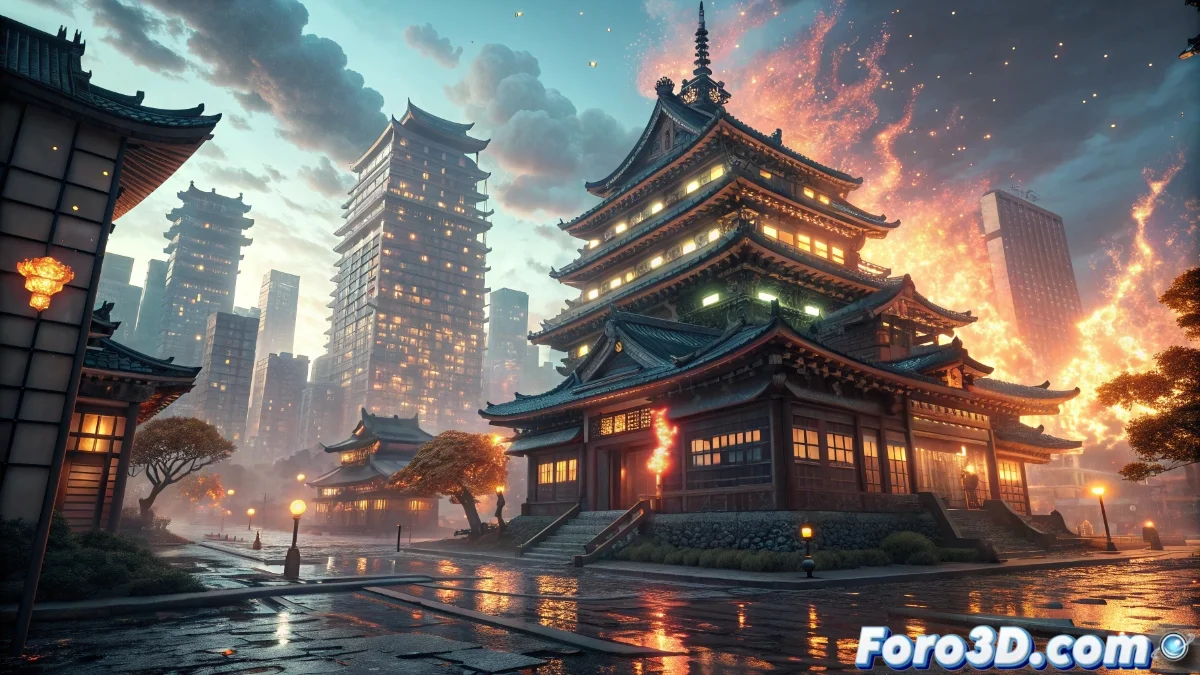
Dragon Engine: Analysis of Yakuza's Graphics Engine
The Dragon Engine has positioned itself as a fundamental technological solution in the development of flagship titles like the Yakuza series. Its architecture is designed to offer exceptional visual representation of urban environments and characters, integrating a dynamic lighting system that brings striking realism to every scene 🎮.
Technical Strengths of the Engine
Among its main virtues, the engine demonstrates efficient resource management even in high-complexity scenes. It supports a high density of objects and visual effects without compromising smoothness on consoles and PC. Its rendering pipeline is optimized to create persistent worlds with imperceptible transitions between interiors and exteriors, while integrated tools accelerate the production of cinematic narratives and intense action sequences 💪.
Key Features:- Advanced resource management for complex and densely populated scenes
- Support for high density of objects and visual effects without performance loss
- Optimized rendering pipeline for smooth transitions between spaces
The Dragon Engine represents a balance between visual fidelity and technical capability, albeit with interesting trade-offs in its design.
Limitations and Areas for Improvement
On the other hand, the engine presents certain significant disadvantages, especially on older hardware where resource consumption can cause noticeable framerate drops. Initial versions of games developed with this engine often require optimization patches to stabilize performance. Additionally, its specialized focus on urban environments limits its applicability for genres requiring extensive natural landscapes or highly varied gameplay mechanics 🌆.
Identified Areas for Improvement:- High resource consumption on modest hardware configurations
- Optimization issues in initial releases that require updates
- Specific focus on urban environments that limits versatility
Final Reflections on the Engine
There is a curious trade-off in the Dragon Engine's design: it prioritizes the ability to destroy detailed environmental elements (like bar tables) over maintaining constant smoothness during large-scale confrontations. This design decision reflects a philosophy where physical fidelity surpasses performance consistency, creating a unique experience but with evident technical challenges ⚖️.