Dracula's Tomb: When Marvel Resurrected the King of Vampires
In the 1970s, while Marvel was revolutionizing superhero comics, a dark and gothic title proved that the House of Ideas could also master horror: Dracula's Tomb. With the masterful pen of Marv Wolfman and the atmospheric pencil of Gene Colan, this series not only adapted Bram Stoker's character but redefined him for a new generation, creating a mythology that would influence everything from Blade to modern horror in comics. Over 70 issues, Wolfman and Colan demonstrated that true horror doesn't need Lovecraftian monstrosities, but rather the sinister elegance of the original vampire. 🦇
Gene Colan: The Artist Who Drew with Blood and Shadows
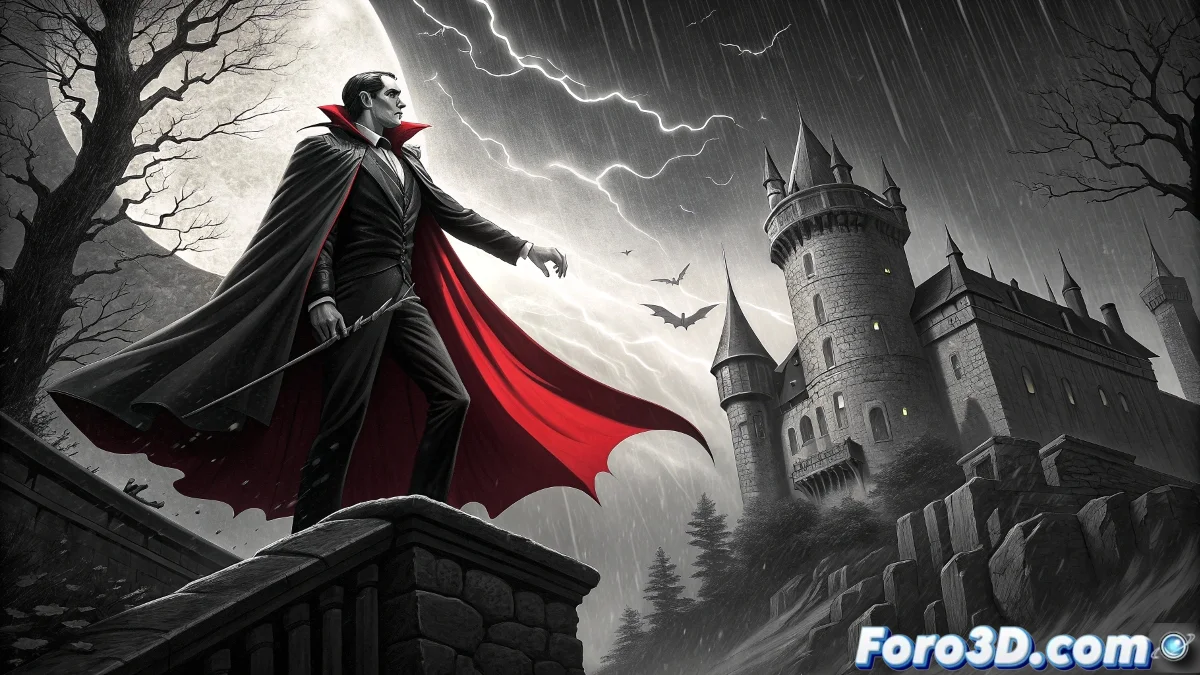
Gene Colan's style was perfect for Dracula. His cinematic compositions, expressionist use of shadows, and ability to convey movement and emotion created a unique atmosphere. Colan didn't just draw vampires; he drew fear itself. His Draculas were both terrifying and magnetic, with capes that seemed to flow like blood and eyes that gleamed with intelligent malice. His approach to horror was psychological and visual, making every panel breathe pure Marvel gothic. 🎨
Distinctive visual elements of Colan:- compositions that emulated angles from classic horror cinema
- masterful use of shadows to create tension and mystery
- design of Dracula as an elegant and threatening figure
- fluid and dramatically choreographed action sequences
Marv Wolfman: Delving into the Cursed Count
Wolfman didn't settle for making Dracula a one-dimensional villain. Throughout the series, he explored his complex psychology, his eternal curse, his moments of near humanity, and his immortal pride. Wolfman's Dracula was intellectual, strategic, and philosophical, a being who reflected on his condition while planning world conquests. This deepening of the character allowed readers to fear and understand the vampire simultaneously, creating one of the richest characterizations in the medium. ✒️
I am Dracula. I am not the monster of your childhood nightmares, but the reality of your worst adult fears
The Birth of Blade and Other Iconic Characters
One of the series' most enduring legacies was the introduction of Blade, the vampire hunter, created by Wolfman and Colan in issue 10. Unlike other vampire hunters, Blade was an urban and modern antihero, a "daywalker" who used contemporary techniques to fight ancient threats. Alongside other memorable characters like Frank Drake (Dracula's descendant), Rachel Van Helsing, and Taj, they formed a solid cast that sustained the series between the count's appearances. ⚔️ Key characters from the series:
- Blade - the vampire hunter who would later have his own franchise
- Frank Drake - the human descendant who fights his legacy
- Rachel Van Helsing - continuer of the family legacy
- Deacon Frost - the vampire who created Blade
Integration into the Marvel Universe Without Losing the Tone
Wolfman achieved the difficult balance of integrating Dracula into the Marvel universe without diluting its horror essence. Appearances by Doctor Strange, Wolverine, and the Fantastic Four worked because they maintained the series' gothic tone. Dracula didn't become just another superhero villain; superheroes visited his world of horror. This approach allowed the series to maintain its unique identity while expanding its mythology within the shared universe. 🌐
Legacy and Influence on Popular Culture
The impact of Dracula's Tomb is hard to overestimate. It not only set the standard for horror in mainstream comics but also influenced future adaptations of the character in film and television. The characterization of Dracula as a tragic yet dangerous figure, the modernization of vampire mythology, and the creation of Blade (who would star in successful movies) are testaments to its relevance. The series proved that horror could be intellectual, emotional, and visually stunning within the monthly comic format. 🎬
Dracula's Tomb remains a milestone not only in Marvel's history but in the evolution of horror comics. Wolfman and Colan understood that Dracula was not simply a monster, but the archetype of seductive evil, the embodiment of our most elegant fears and our fascination with the forbidden. In an era of colorful superheroes, they proved that sometimes the darkest shadows cast the most memorable stories. And that, like the count himself, some creations simply refuse to die. ❤️🔥