When Family Adventure Meets Digital Art
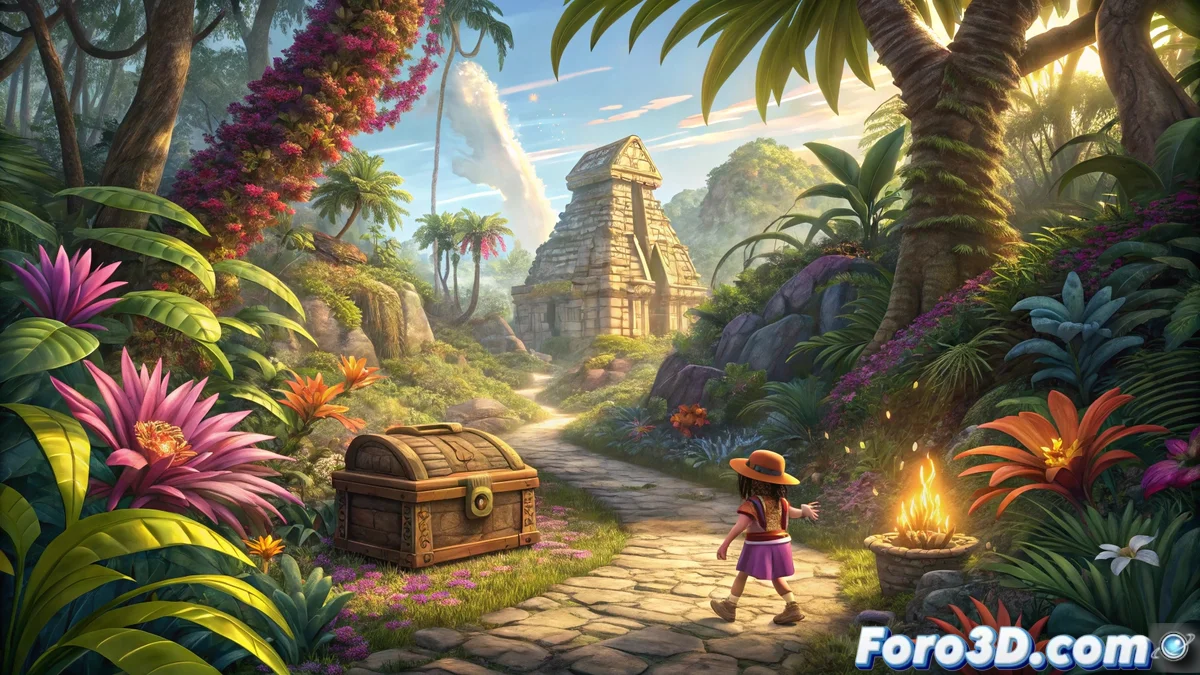
The cinematic adaptation of Dora the Explorer transcends its purpose of family entertainment to become an unexpected source of inspiration for 3D artists and designers. The movie presents a visual display of colorful and meticulously detailed scenes that demonstrate how the combination of live-action and CGI can create immersive worlds. A visual case study that deserves analysis beyond its main narrative.
The Art of Building Believable Worlds for All Ages
The movie's scenes, ranging from dense jungles to ancient ruins and lost cities, represent a masterclass in environmental design. Each environment is built with meticulous attention to textural details, atmospheric lighting, and proportional scale, creating spaces that are simultaneously fantastic and believable. The vibrant yet harmonious color palette demonstrates a sophisticated understanding of color theory applied to digital environments.
Notable Technical Elements
- Seamless integration between real actors and CGI scenes
- Detailed textures that support close-up shots
- Lighting that sets moods
- Natural simulations of vegetation and water
Lessons for 3D Artists
What makes this production particularly valuable for the Foro3D community is how it resolves common technical challenges. The management of complex scenes with multiple natural elements, the creation of materials that respond credibly to different lighting conditions, and the composition of 2D and 3D elements into a coherent whole are lessons directly applicable to personal and professional projects.
Techniques Transferable to 3D Software
- Creation of particle systems for foliage
- Development of shaders for organic materials
- Composition of render passes for depth
- Geometry optimization for extensive scenes
A demonstration of how family cinema can offer sophisticated visual solutions that inspire and educate the digital artists community.
For modelers, texturizers, and look development artists, analyzing the work behind Dora offers valuable insights into how to approach projects that require balancing realism and stylization. The ability to create worlds that work for both children and adults with a technical eye represents a creative challenge worth studying 🌿.
And so a movie that many dismiss as simple children's entertainment ends up being a covert masterclass in environmental design... although the artists who worked on it probably never imagined their work would be analyzed frame by frame in 3D specialist forums 😅.