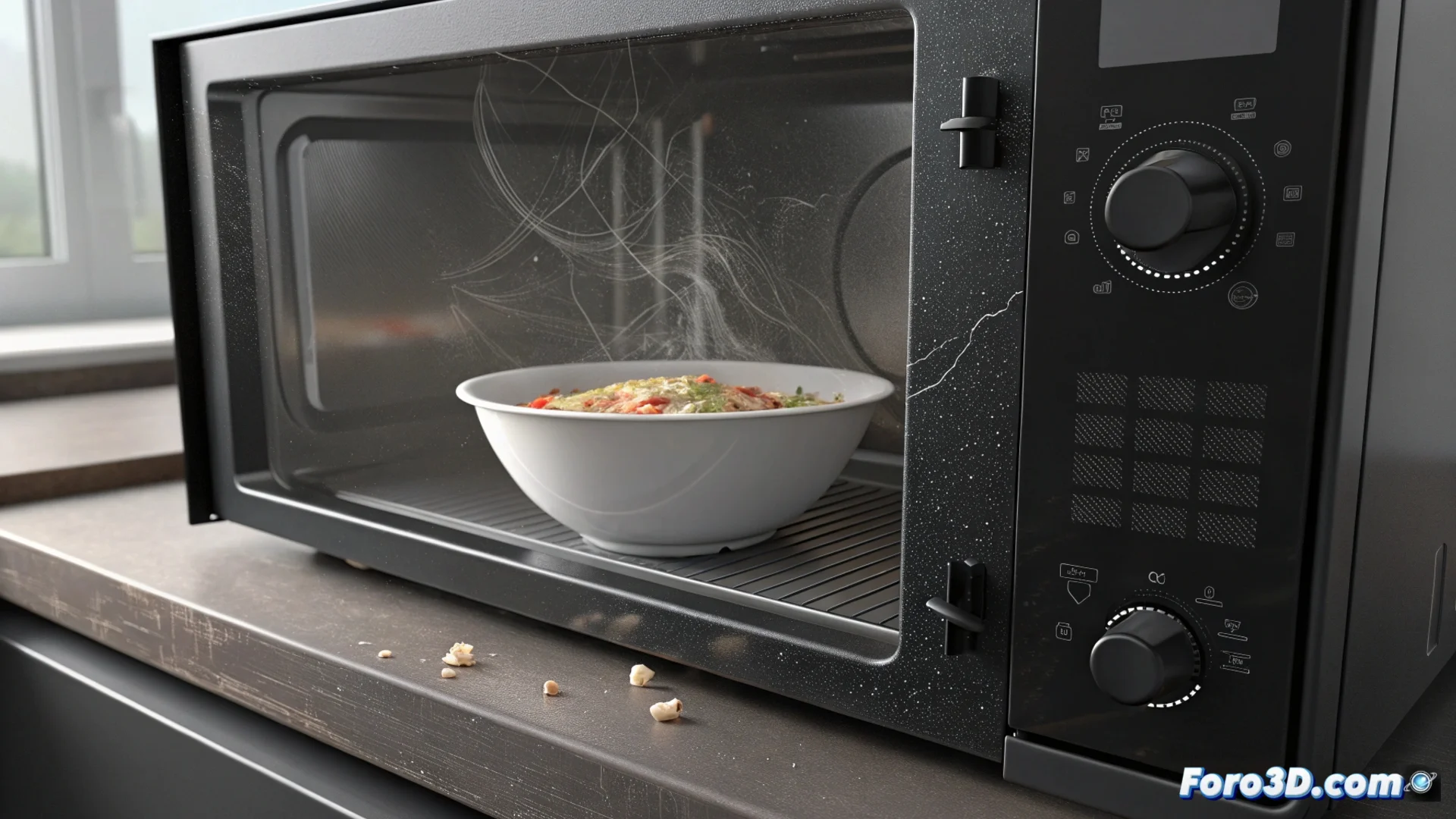
Why Modern Microwave Touch Panels Fail
The evolution of household appliances brought capacitive control panels that replace rotary knobs and push buttons. These systems detect finger contact through an electric field. However, this elegant design harbors a fundamental weakness against the hostile kitchen environment. 🧑🍳
The Invisible Enemies: Heat and Contaminants
The normal operation of a microwave oven generates cyclic thermal stress. This heat, combined with steam and grease aerosols that accumulate, directly attacks the electronics and the sensitive surface layer. Over time, these factors degrade the materials, causing the panel to stop perceiving touches accurately.
Consequences of a Highly Integrated Design:- The electronic architecture is so compact that a single damaged sensor or connection paralyzes the entire interface.
- The panel manages everything from time to power, so its failure completely locks the appliance.
- It is not possible to replace an individual "button"; the entire touch module must be replaced, which is usually soldered.
A microwave can stop working not because its magnetron fails, but because its user interface does not withstand the conditions it was designed for.
The Economic Equation That Discourages Repair
When the touch panel fails, the user faces a harsh reality. The cost of the replacement component, being a complete unit, is high. This is added to the price of specialized labor to disassemble and solder.
Typical Result for the Consumer:- The budget to fix it approaches or exceeds the value of a new entry-level model.
- This situation makes throwing away the old appliance seem the most logical option.
- It becomes a clear example of designed planned obsolescence, where repairability was not a priority.
A Step Forward in Technology, a Step Back in Durability
Thus, an apparently advanced appliance can become unusable due to a fragile interface element. The pursuit of a minimalist and easy-to-clean design clashes with the necessary robustness for a kitchen environment. Technological advancement does not always translate into products that last longer, but into shorter replacement cycles. 🤖➡️🗑️