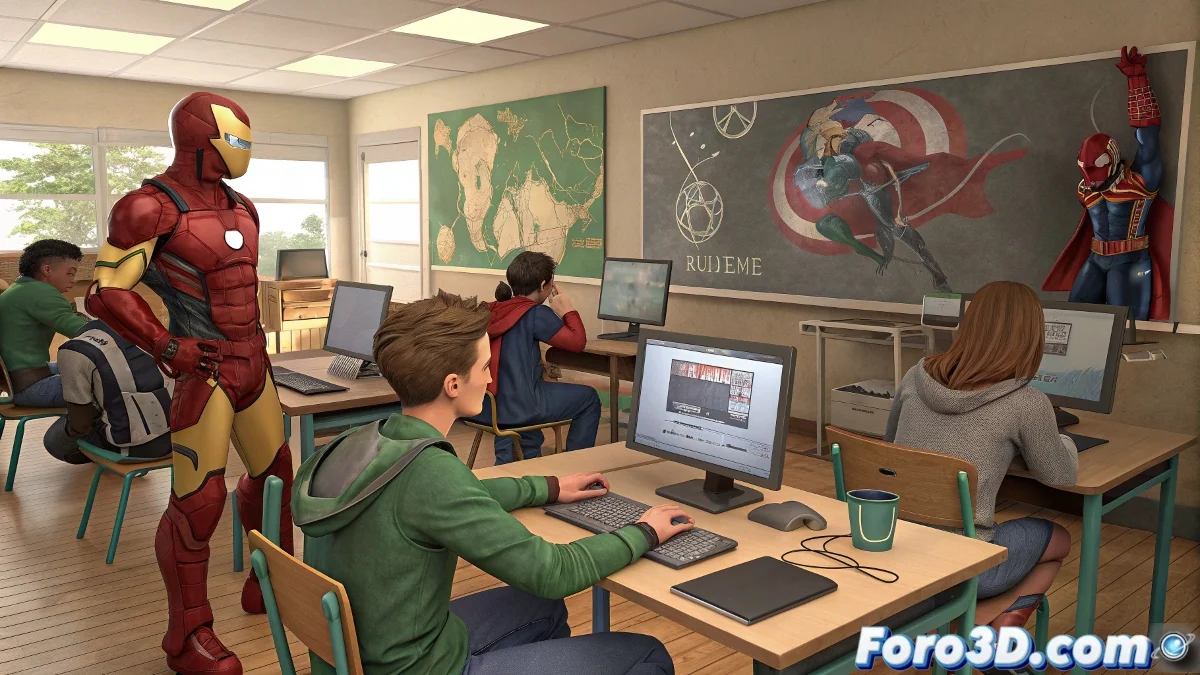
The Gap Between the AI Pilot and the Passenger
There is a fundamental difference between being taught to direct AI models with strategic mastery and simply learning to passively consume existing tools. Very few training programs are crossing this critical line, keeping students in the role of end-users instead of training them as creative architects capable of designing and orchestrating intelligent systems. This distinction marks the separation between those who will simply use AI and those who will direct it to materialize complex and original creative visions.
What makes this gap particularly concerning is how it reproduces old educational patterns in a new technological context. Just as many schools traditionally taught software without teaching fundamental design principles, they now risk teaching AI tools without developing a deep understanding of how they work, how they are trained, or how to design prompt strategies that go beyond the superficial. The result is students who can use DALL-E or Midjourney to generate images, but do not understand the principles that would make their work truly distinctive and strategic.
Signs That You're Being Taught to Direct, Not Just to Consume
- Teaching of principles of complex prompt architecture
- Critical analysis of model biases and limitations
- Development of iteration and systematic refinement strategies
- Integration of multiple models into customized workflows
The Art of Strategic Prompt Engineering
Effectively directing AI models requires a deep understanding of the psychology of language systems, not just basic prompt syntax. Programs that truly prepare for the future teach how different models process information, how to structure prompts for different types of creative outputs, and how to design prompting strategies that evolve with the project. This approach goes far beyond teaching lists of keywords or parameters, delving into the design of creative dialogues with intelligent systems.
Learning to consume tools makes you a user. Learning to direct models makes you a creator
True AI education should include understanding the technical fundamentals that enable advanced customization. This means not only using graphical interfaces, but understanding concepts like fine-tuning, embeddings, and transfer learning - the mechanisms that allow adapting generic models to specific creative needs. Without this understanding, artists are limited to what pre-packaged tools can do, instead of having the power to shape the tools themselves to their unique vision.
What's Missing in Most Current Programs
- Teaching how to evaluate and select models for specific projects
- Development of methodologies to test and validate AI outputs
- Understanding of the ethical and legal aspects of custom training
- Strategies for integrating multiple AI systems into coherent pipelines
For students and professionals seeking genuinely transformative education, the key question is no longer "do you know how to use this tool?", but "can you design creative systems that strategically integrate multiple AI tools?". The difference between passive consumption and active direction will be what separates mediocre professionals from exceptional ones in the next decade. If your current training is not preparing you for this level of sophistication, it's time to seek educational supplements that fill this critical gap. 🎯
And so, between basic prompts and complex architectures, we discover that true AI education is not about learning which buttons to press, but about developing the ability to think in systems and strategies - although we probably still need to explain to the academic director that "knowing how to use Stable Diffusion" is not the same as "knowing how to create with artificial intelligence". 🧠