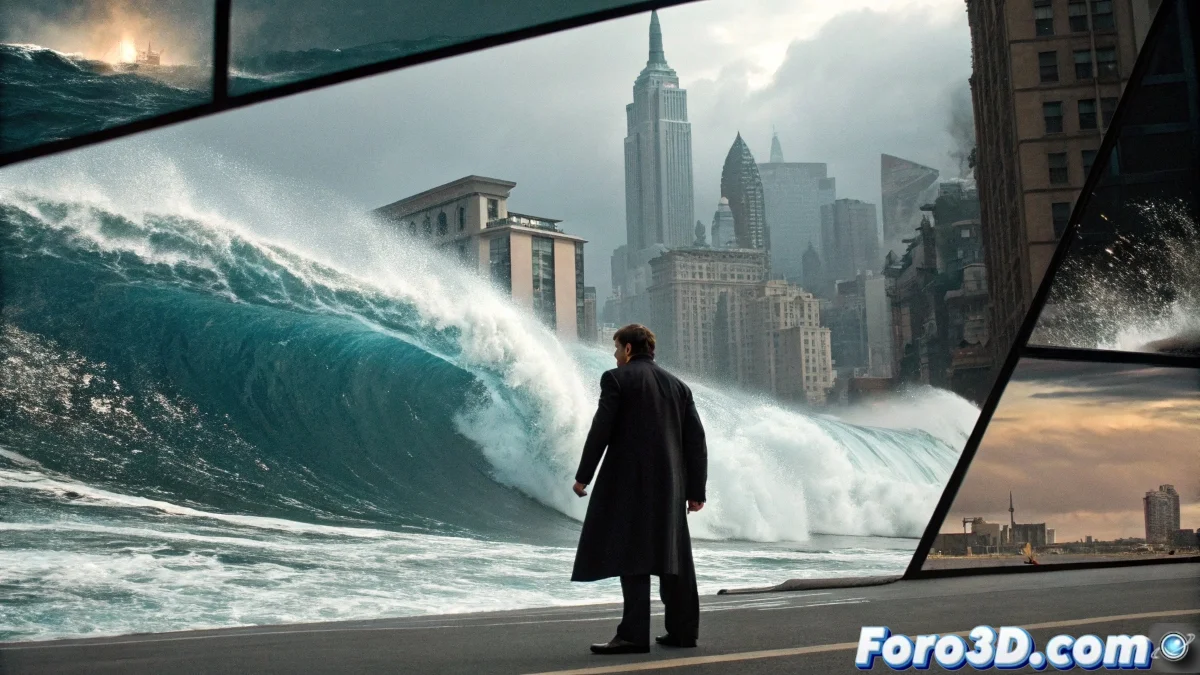
When Cinema Meets Its Perfect Digital Wizard 🎬
The partnership between DNEG and Christopher Nolan is like coffee and sugar: good on their own, but addictive together. This showreel demonstrates how for 20 years they have redefined what's possible on screen, always with one foot in the practical and the other in the digital.
The Milestones of a Legendary Collaboration
For this masterclass in cinema, the following were needed:
- Cities that fold like napkins (Inception)
- Black holes calculated by a Nobel laureate (Interstellar)
- Real explosions later enhanced digitally (The Dark Knight)
- Inverted time that confused even the editors (Tenet)
The result is so impressive that even Nolan himself is sometimes surprised. And he planned it all. 🎥
Technology in Service of Art
"Working with Nolan is like having masterclasses in cinema every day. He pushes us to limits we didn't even know existed" - DNEG
The black hole in Interstellar consumed more render hours than Cooper spent in space. And he was out there for quite a while. 🚀
The Art of Making the Impossible Believable
Balancing practical with digital effects was like the train scene in Inception: a challenge that seems impossible until you pull it off. The integration is so perfect that even celluloid purists applaud.
And that's how you make history in cinema: with enough talent to fold cities, enough patience to calculate black holes, and enough IMAX film to go around the world. Does anyone have an instruction manual for the fourth dimension? 🕰️
Bonus: Figures That Defy Reality
For the data lovers:
- 500+ shots in Inception (one for every dream within a dream)
- 370 effects in The Dark Knight (and a torn suit or two)
- 300 shots in Tenet (half of them seen in reverse)
- 8K resolution because IMAX doesn't forgive
All this while maintaining that tangible magic that makes Nolan's cinema feel real... even when it shows the impossible. Makes you want to watch it on loop... forwards and backwards. 🔄