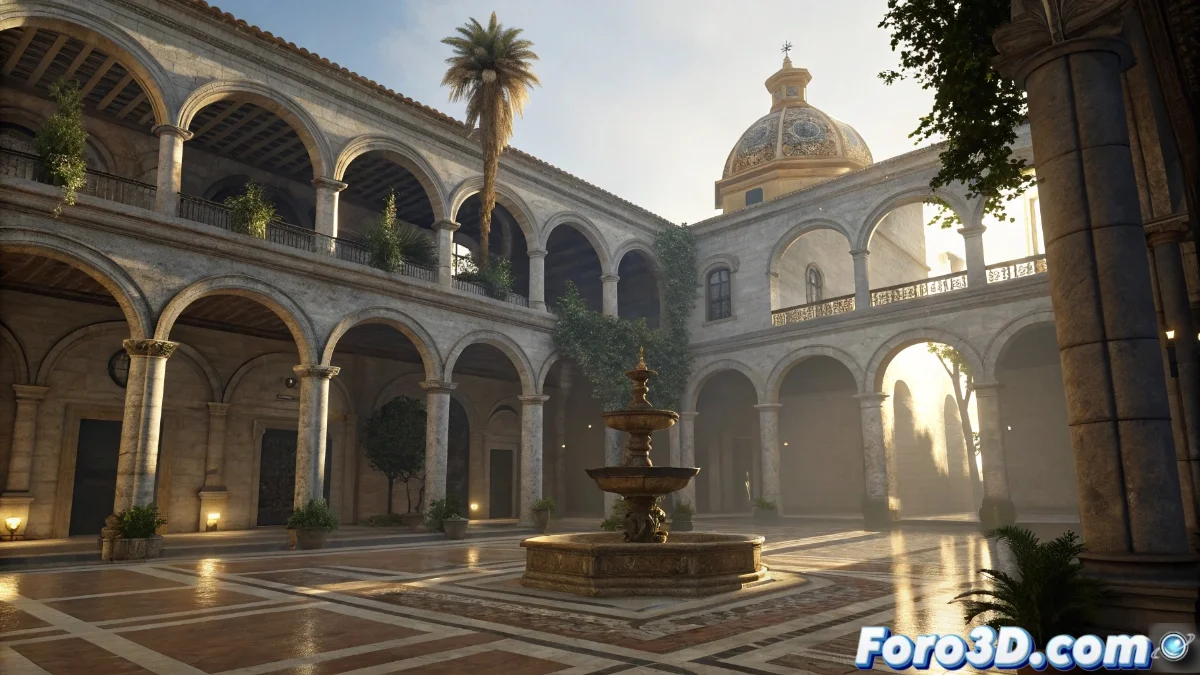
Distance Field AO in Unreal Engine 5: Complete Implementation Guide
The Distance Field Ambient Occlusion technique represents a significant advancement in real-time rendering, allowing the simulation of how ambient light is blocked in the deepest areas and crevices of 3D models. 🎮 This approach uses precomputed distance fields to accurately determine areas where light penetration is lower, generating soft shadows that add depth and visual realism without compromising system performance.
Configuration and Optimization in Unreal Engine 5
To correctly implement this technology in Unreal Engine 5, developers must access the Edit | Project Settings menu, specifically in the Rendering section. Critical parameters include the ray tracing distance and the effect intensity, which must be carefully balanced to maintain fluidity in complex scenes. 💻
Essential Settings for Optimal Performance:- Trace Distance: Controls how far ambient occlusion is calculated from each surface
- Effect Intensity: Determines how dark the occluded areas appear
- Distance Field Resolution: Affects calculation precision and resource consumption
The strategic combination of Distance Field AO with Lumen for global illumination ensures that ambient shadows integrate seamlessly with other dynamic light sources, creating exceptional visual coherence.
Competitive Advantages Over Conventional Methods
Unlike screen-space ambient occlusion, which depends exclusively on visible pixel information, Distance Field AO provides more uniform coverage in extensive environments and with constantly moving objects. This independence from immediate screen information eliminates annoying visual artifacts like flickering or blurring in shaded regions. ✨
Highlighted Benefits of This Approach:- Visual stability across different resolutions and hardware configurations
- Significant reduction of artifacts common in screen-based techniques
- Efficient GPU implementation that prioritizes visual fidelity in real-time
Practical Considerations and Limitations
Although Distance Field AO is an extraordinarily powerful tool, it is important to understand that it does not magically solve all lighting challenges. Developers must be prepared to make iterative adjustments to the configuration until the desired result is achieved, preventing shadows from appearing as unrealistic smudges in the scene. 🛠️ Patience and methodical experimentation are essential to fully master this advanced rendering technique.