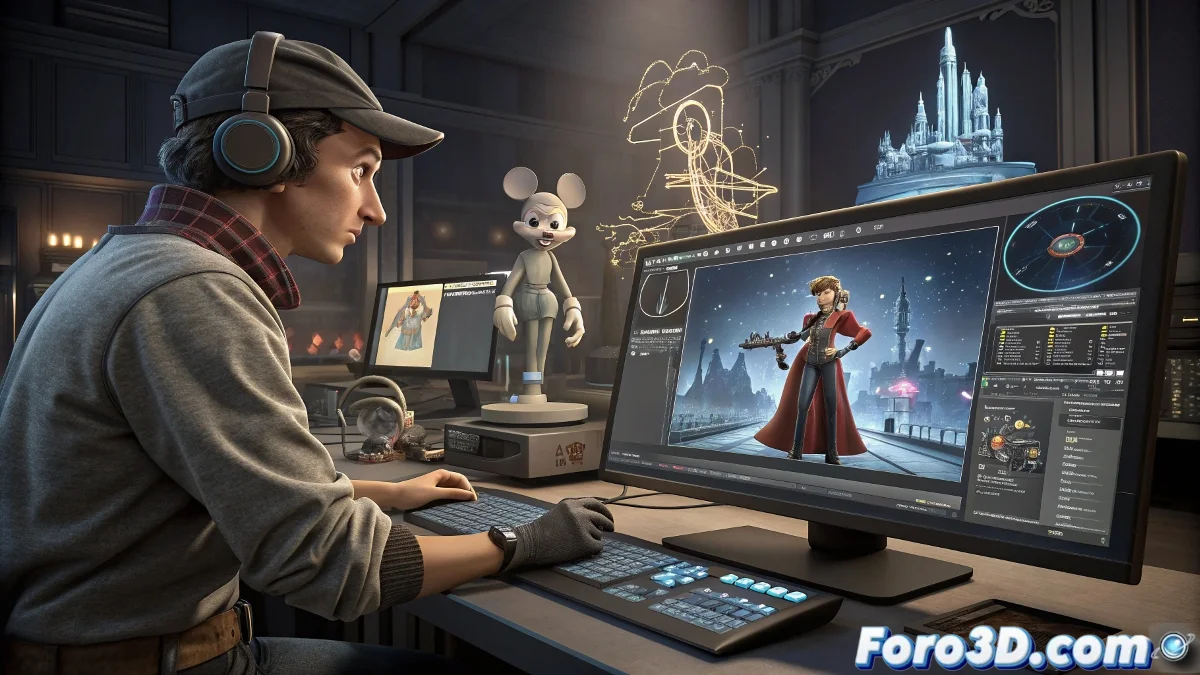
When Disney Teaches How to Tame AI to Serve Art
In a revealing analysis from the heart of the entertainment industry, a Disney 3D artist has shared the strategies the studio is developing to integrate artificial intelligence into its creative pipelines. Far from the apocalyptic discourse surrounding AI in art, Disney's approach prioritizes intelligent collaboration between human and machine, where technology amplifies rather than replaces the artist's creativity. The studio's experience serves as a compass for navigating the turbulent landscape of AI-assisted creation.
The artist highlights the central paradox facing major studios: AI is tremendously efficient for massive tasks but surprisingly clumsy for subtle adjustments. While a model can generate a hundred variations of a character in seconds, it can fail miserably when trying to slightly modify the expression of an eye or adjust the drape of a garment. The key, according to Disney, lies in identifying exactly where AI adds value and where it becomes an obstacle. 🎨
At Disney, AI is not the painter, but the assistant who prepares the colors and cleans the brushes
Lessons Learned from Real Productions
Disney's experience reveals clear patterns about which AI functions work in professional environments and which need to mature.
- Generation of variations for early conceptual exploration without committing human resources
- Automation of repetitive tasks like basic UV mapping or standard material setup
- Assistance in technical tasks such as geometry optimization and LOD management
- Acceleration of searches in asset libraries through natural description
The true value emerges when artists can iterate faster during creative phases, reserving their mental energy for the artistic decisions that truly matter.
The Challenge of Small Changes in Big Productions
One of the most valuable insights is how AI struggles with the law of diminishing returns in refinement.
- Subtle modifications in facial animation that require emotional understanding
- Lighting adjustments that depend on the narrative context of the scene
- Texture variations that must maintain consistency with the established style guide
- Composition changes that affect the global visual balance of a shot
Disney has discovered that for the "last 10%" of refinement—the part that separates good from excellent—human intuition remains irreplaceable.
The Path to Effective Collaboration
Disney's strategy prioritizes AI tools that amplify rather than automate creativity. The approach is pragmatic rather than revolutionary.
Instead of seeking to replace artists, the studio is developing AI assistants that understand the production context and can suggest solutions within established parameters. The result is a workflow where AI handles the tedious while artists focus on the magical. For the creative industry, this collaborative model could be the most sustainable path toward AI adoption. ✨
And if Disney achieves this balance, we might soon see artists spending more time creating magic and less time fighting technical debt... though they'll probably still complain about deadlines just like before 😉