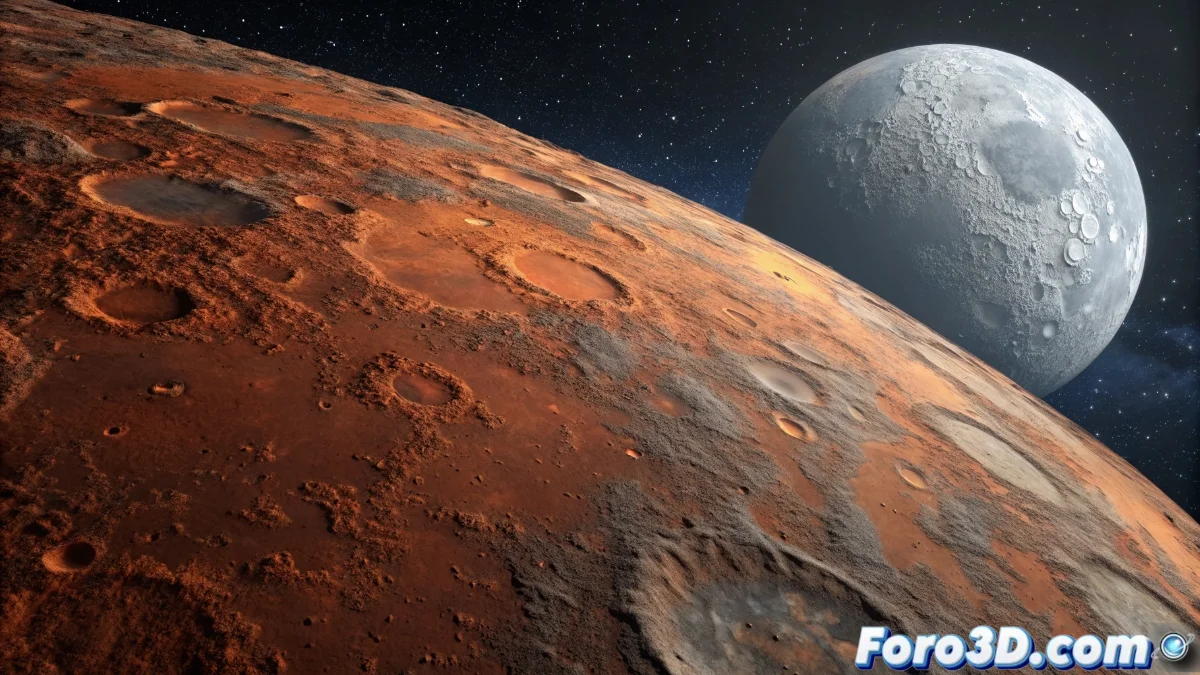
Discovery of Hematite at Lunar Poles Challenges Scientific Theories
NASA has made a discovery that is revolutionizing our understanding of lunar geology: the presence of hematite in the polar regions of our natural satellite. This finding is particularly intriguing because it contradicts the basic principles of oxidation chemistry, as the Moon lacks the two essential components for this process: atmosphere and liquid water. 🔍
Oxidation Mechanism in the Lunar Environment
The detailed analysis of data provided by India's Chandrayaan-1 orbiter has identified a unique chemical process that explains this apparent impossibility. The key lies in the interaction of three fundamental elements that, combined in a specific way, generate the necessary conditions for the formation of oxide.
Key Factors in Lunar Hematite Formation:- Traces of water in the lunar regolith that, although minimal, participate in the chemical reactions
- Oxygen particles transported from Earth during periods when the Moon is within our magnetosphere
- Iron present in lunar rocks and minerals that reacts with the imported elements
This discovery completely redefines our understanding of chemical processes on celestial bodies without an atmosphere and opens new perspectives for space exploration
Impact on Lunar Exploration and Colonization
The implications of this finding are profound for future lunar missions and plans for establishing permanent bases. The confirmed presence of active oxidation processes represents a significant challenge for the durability of equipment and structures, but also reveals unexpected opportunities.
Practical Consequences of the Discovery:- Corrosion challenges for materials and systems that remain on the lunar surface for long periods
- Chemical complexity of the lunar environment greater than anticipated, affecting mission planning
- Potential utilization of these processes for in-situ resource acquisition
Future Research and Applications
Scientists continue to investigate whether this interplanetary oxidation phenomenon occurs on other celestial bodies without an atmosphere, which could have implications for resource searches throughout the solar system. Meanwhile, scientific humor has not overlooked that even our natural satellite might need anti-corrosion maintenance, suggesting that perhaps we should include protective paint in the equipment for upcoming lunar missions. 🚀