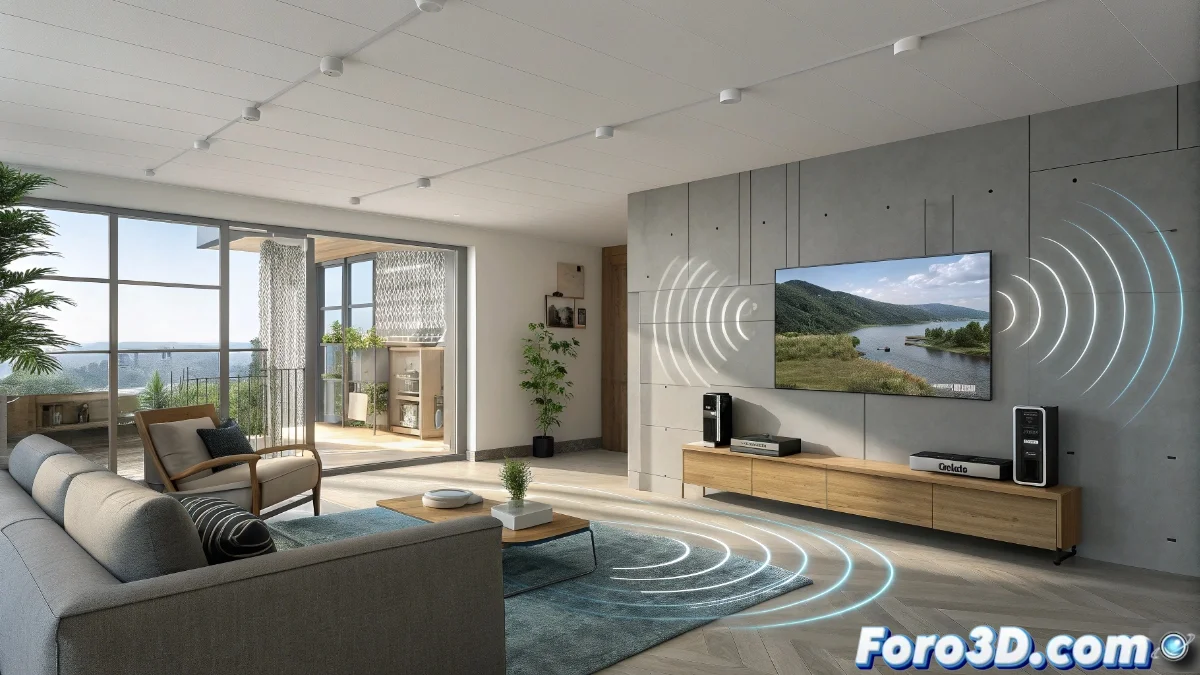
Directional Audio: Personalized Sound Bubbles Without Headphones
Directional audio technology has reached a level of sophistication that allows the creation of individualized auditory spaces, where sound waves are concentrated exclusively on the desired receiver. This advancement combines innovative acoustic principles with digital signal processing to generate precise listening zones, eliminating the need for physical devices like headphones or isolating booths 🔊.
Mechanisms Behind Focused Sound
Specialized systems employ arrays of transducers that emit ultrasonic frequencies modulated with auditory content. Upon interacting with the medium, these waves undergo non-linear self-demodulation, transforming into audible sound right at the intended point. Directionality is controlled through beamforming algorithms and phase adjustments, producing thin acoustic beams that maintain their clarity even over long distances.
Key System Components:- Ultrasonic transducers that generate modulated carrier frequencies
- Digital signal processors for phase and amplitude control
- Focusing algorithms that adapt the sound beam to the environment
The modern paradox: creating auditory privacy bubbles in shared spaces allows us to ignore our surroundings with technological validation.
Implementations in Real-World Contexts
Applications range from personalized museum guides to multifunctional work environments. In homes, it enables multiple family members to consume media simultaneously without interference. Shopping centers use the technology to deliver targeted advertisements while maintaining a generally quiet ambiance.
Highlighted Use Cases:- Interactive exhibitions with individualized narrations for each visitor
- Open offices with multiple independent acoustic zones
- Simultaneous home entertainment for different family members
Social Impact of Selective Hearing
This technological evolution represents a paradigmatic shift in how we interact with sound in shared spaces. Auditory bubbles not only solve practical acoustic coexistence problems but also redefine the boundaries between public and private, allowing us to curate our sound experiences in unprecedented ways 🎯.