When Wildlife Bursts into the Digital
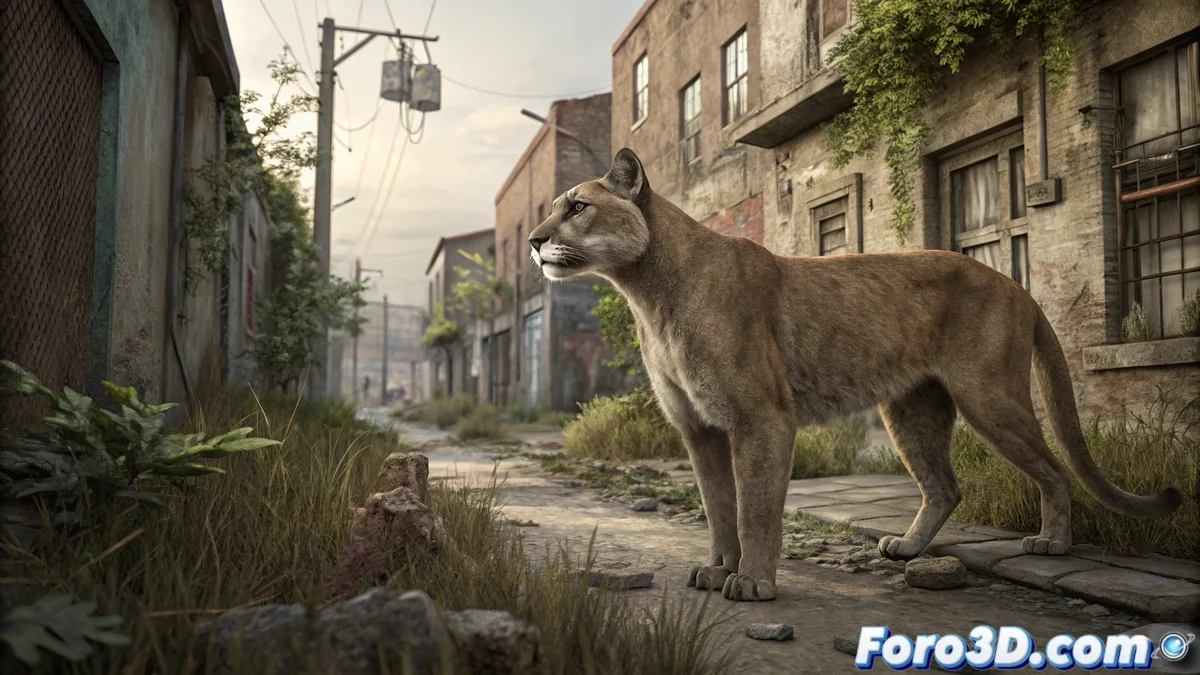
The sighting of a puma in the Arco Iris neighborhood of Goya represents one of those moments where nature claims its space in urbanized environments. 🐾🏙️ In ZBrush, we can capture this episode, sculpting not only the precise anatomy of the feline but also the tension of the moment when it was discovered prowling among houses. This recreation allows studying and appreciating the animal's beauty without the risks of a real encounter.
Initial Project Setup
Upon opening ZBrush, a new document is created with sufficient resolution for detailed work (4096x4096 px or higher). SubTools organization is fundamental: Base_Puma, Head, Legs, Tail, Terrain, and Vegetation keep the workflow orderly. Saving the project as puma_goya_zbrush.zpr ensures all subdivision levels and strokes are preserved… because in digital sculpture, as in wildlife tracking, patience is key.
Initial Blocking and Feline Anatomy
ZSpheres are used to establish the correct body proportions—approximately 20 kg of mass, 1.5 meters long—creating an adaptable mesh that serves as a base. 🦁 Brushes like Move and Clay Buildup are used to define typical puma muscular volumes: powerful shoulders, elongated torso, and developed hind legs for jumping. The tail extends as a counterweight, crucial for the feline's balance in motion.
Sculpting wildlife in ZBrush does not just replicate forms; it captures the animal's essence—its latent power, its adaptation to the environment—allowing anatomical study without interfering with real specimens.
Organic Detailing and Natural Textures
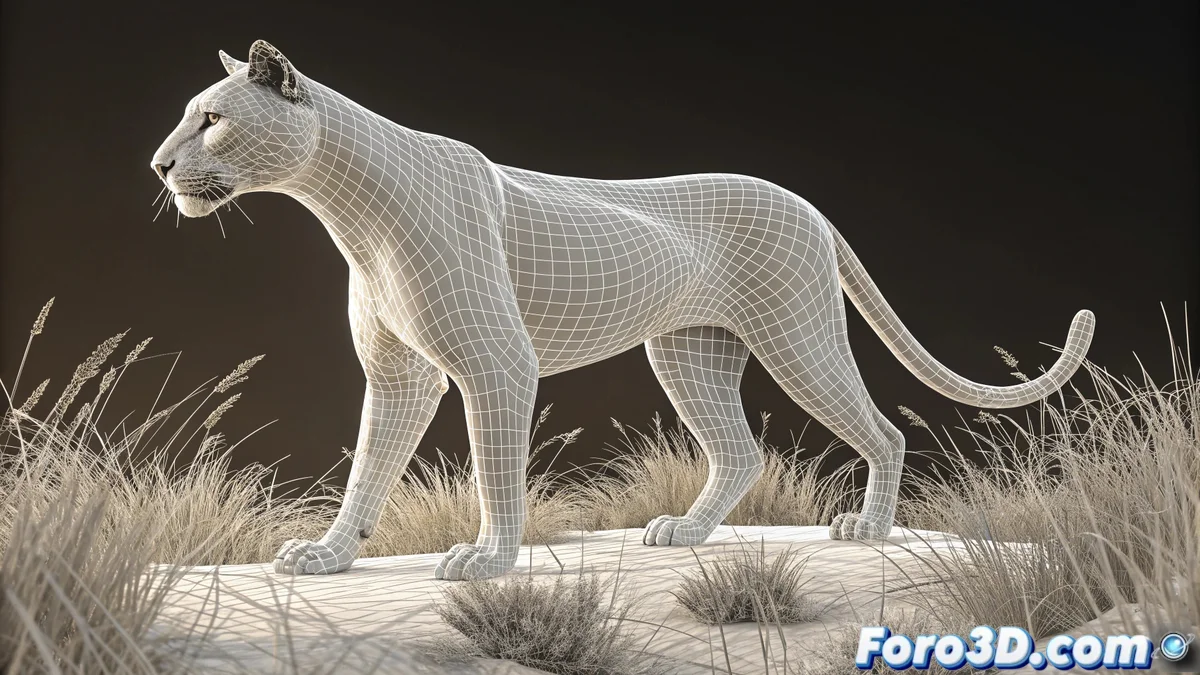
DynaMesh is applied to refine surfaces and add details like skin folds around joints and facial muscles. 🎨 With Polypaint, the color base is established—sand and reddish-brown tones characteristic of Corrientes pumas—adding shadow layers on the abdomen and legs. Fur is suggested through alpha strokes with brushes like Standard and Slash3, creating the illusion of density without overloading polygons.
Contextual Environment Creation
- Terrain: A grassland is sculpted using deformed planes with Noise and Layers brushes, simulating tall grass where the puma was found.
- Urban elements: Subtle references to the environment—fences, posts—are added as silhouettes in the background to contextualize without distracting.
- Dramatic lighting: Lateral light is set up to cast elongated shadows, simulating the sunset when the sighting occurred.
Rendering and Final Presentation
BPR render is used with soft shadows and ambient occlusion settings to give depth. 📸 Cameras are positioned at low angles to emphasize the puma's silhouette against the sky, recreating the perspective of the residents who sighted it. Optionally, animated turntables are exported to show the model from all angles.
Beyond Artistic Recreation
This model can serve as educational material for conservation programs, showing puma anatomy without the need for real specimens. 🏞️ The anatomical precision achieved in ZBrush allows studying physical adaptations and behaviors of this endangered species in some regions.
Thus, while the real puma rests in the conservation center, its digital double can be studied and admired infinitely… without cages or tranquilizers. Because in ZBrush, the only claw mark that exists is that of the stylus on the tablet. 😉