Digitally Recovering a Lost Treasure
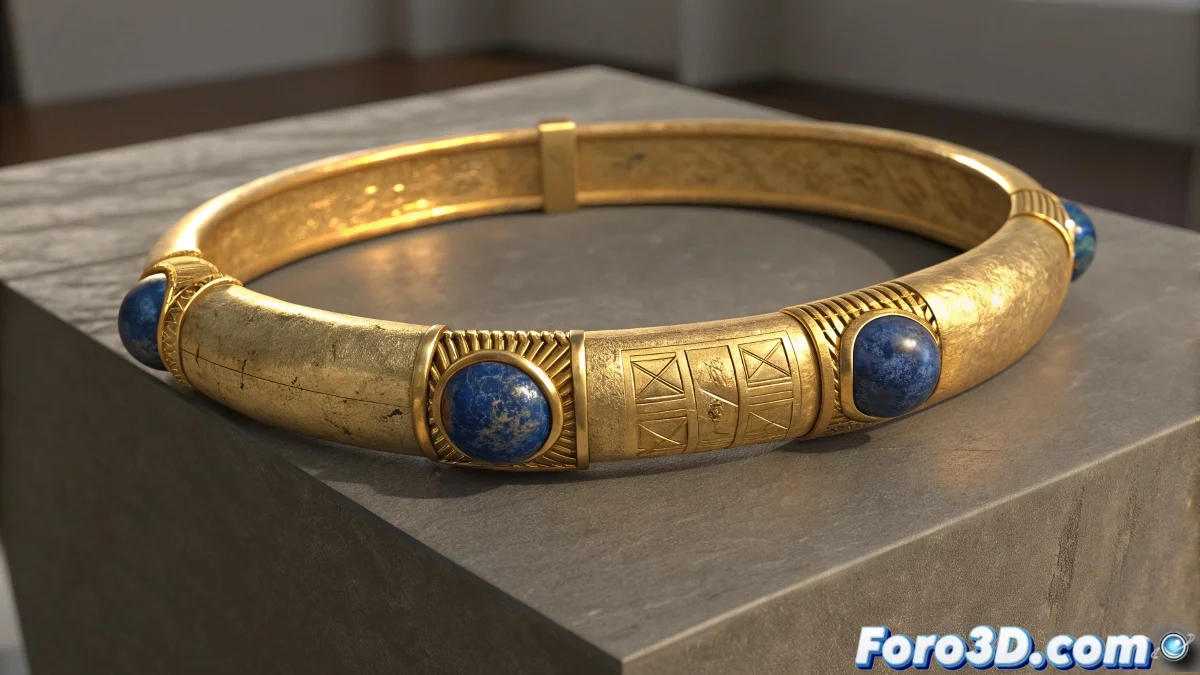
The world of archaeology has been shaken by the sad theft of an invaluable piece: a 3,000-year-old gold bracelet belonging to Pharaoh Amenemope was stolen from the Egyptian Museum in Cairo. 🏺 Authorities discovered that a museum employee sold it for less than 4,000 dollars, after which the buyer melted down the jewel, destroying forever an artifact of incalculable scientific value. Although it was not particularly flashy, experts highlighted its importance as a simple gold band decorated with a lapis lazuli bead, which offered unique information about the metallurgical techniques of ancient Egypt.
For digital artists and virtual conservators, this tragedy represents an opportunity to demonstrate the power of digital preservation using tools like Mudbox. 💻 The precise recreation of this jewel allows not only to visually document what was lost, but also to study and share digitally its characteristics with the global academic community. This approach becomes a form of cultural resistance against the destruction of historical heritage.
When the physical disappears, the digital remains as testimony of what was.
Digital Sculpting Techniques for Ancient Jewelry
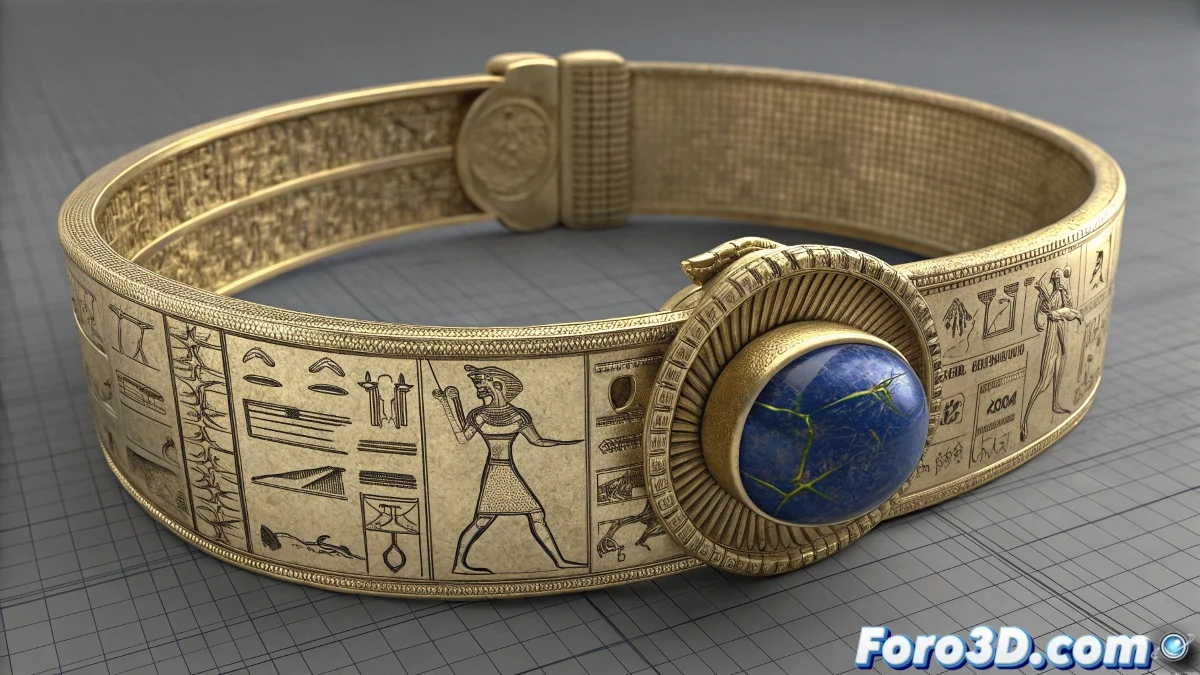
The recreation in Mudbox begins with meticulous historical research of the available descriptions and photographs of the bracelet. 📐 Setting units in millimeters is crucial to achieve the dimensional precision required in archaeological jewelry. The modeling must capture not only the basic shape of the gold band, but also the imperfections and irregularities typical of ancient manual manufacturing, which give authenticity to the digital piece.
The key elements to faithfully recreate the bracelet include:
- Gold band with anatomical curvature for the wrist
- Lapis lazuli bead with natural veins and inclusions
- Wear and scratches from 3,000 years of age
- Historical patina and signs of ritual use
Texturing and Materials for Historical Authenticity
Texturing in Mudbox must simulate the real physical properties of ancient gold and lapis lazuli. ✨ For the metal, a material with moderate but not excessive shine, precise reflectivity, and slight color variations that suggest natural alloys is required. The lapis lazuli bead needs a translucent shader with intense blue color depth and pyrite inclusions that capture the essence of this semi-precious stone so valued in ancient Egypt.
What is profoundly ironic is that an object that survived 3,000 years through pharaohs, lootings, and revolutions ended up disappearing because someone couldn't resist a handful of dollars. 💸 A sad lesson on how modern greed can destroy in minutes what history preserved for millennia, making digital preservation of our cultural heritage more valuable than ever.