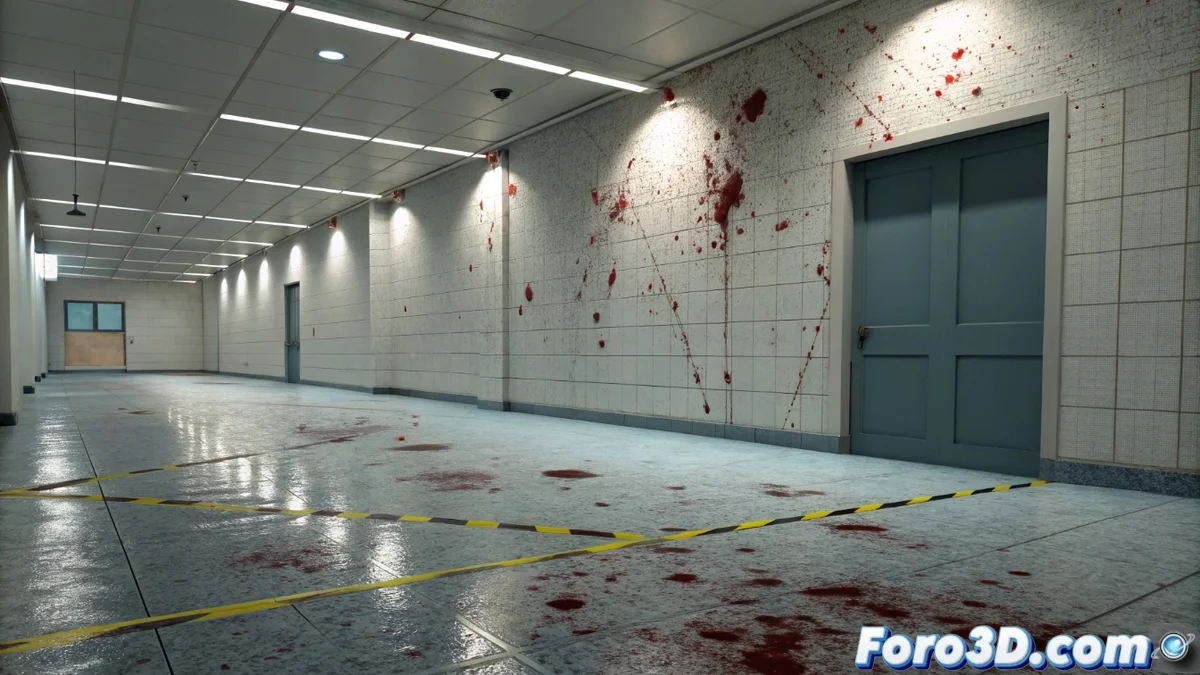
Digital Reconstruction of Crime Scenes with 3D Technology
The digital reconstruction of crime scenes marks a revolutionary milestone in contemporary investigative methods. When a blood-shedding incident occurs, forensic experts capture the entire environment using high-precision 3D scanning, meticulously documenting every spatter pattern on vertical, horizontal, and oblique surfaces. This comprehensive digitization ensures the perpetual preservation of the scene and enables sophisticated analyses that surpass the limitations of conventional techniques. 🕵️♂️
Processing Methodology with Digital Tools
Forensic investigators use specialized software such as FARO Zone 3D to process captured data and HemoSpat for specific examination of blood evidence. Each bloodstain is interpreted as an elliptical figure whose geometric characteristics reveal vital information about the direction, angle, and speed of the liquid projectile. Through the simultaneous analysis of multiple patterns, computational applications precisely determine the convergence area and locate the epicenter of the main impact.
Key Tools in the Forensic Process:- FARO Zone 3D for point cloud processing and spatial modeling
- HemoSpat for advanced analysis of blood spatter patterns
- Blender and 3ds Max for visual recreations and dynamic simulations
Millimeter precision in digital documentation transforms the interpretation of physical evidence into quantifiable and reproducible data.
Visual Recreation and Event Representation
Once the quantitative analysis is complete, 3D visualization platforms are implemented to generate photorealistic reconstructions of blood trajectories. These graphical representations show in an intuitive and scientific manner the relative positions between victim and aggressor during the event, facilitating case understanding for both investigators and jury members in judicial proceedings.
Stages in Forensic Visualization:- Integration of scan data with three-dimensional models
- Simulation of trajectories based on physics-mathematics analysis
- Rendering of animated sequences for temporal representation
Final Reflection on the Reconstructive Process
The fundamental irony lies in the considerable investment of technical resources to reconstruct how a person's blood was spilled, when the ideal scenario would be that such a situation never occurred. However, this meticulous methodology represents a crucial advancement for justice, transforming physical evidence into comprehensible visual narratives that contribute to clarifying the facts with scientific rigor. 🔬