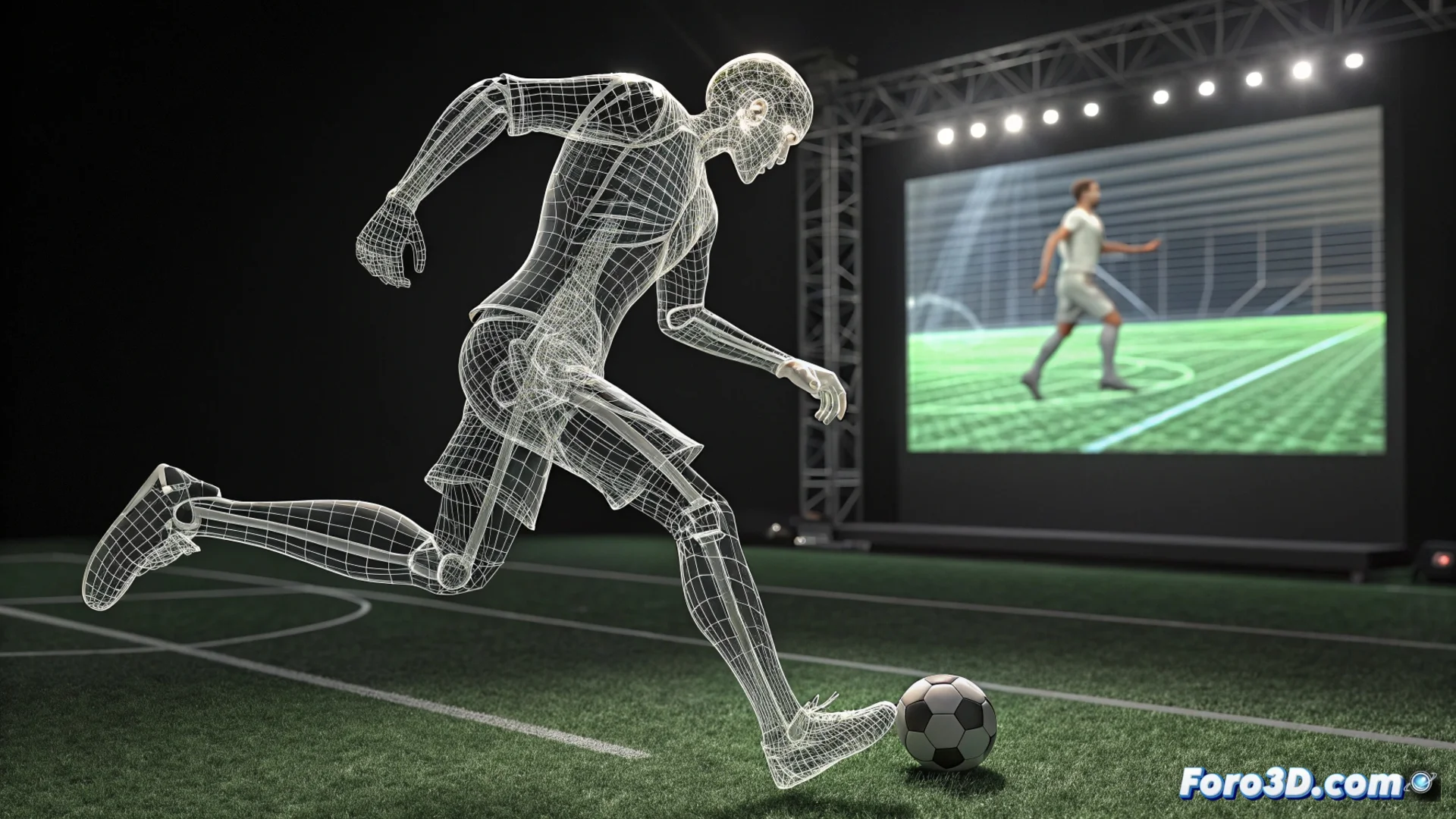
Digital Biomechanical Analysis Reconstructs a Non-Contact Injury
When a soccer player suffers a serious injury without any opponent touching them, the question about the cause is inevitable. To answer it, digital forensic teams spring into action, combining 3D technology and physics to unravel the mystery. 🕵️♂️
Recreating the Play with Millimeter Precision
The process begins with data from motion capture systems installed in the stadium, such as Vicon or OptiTrack. These devices record the position and movement of each player on the field. With that information, experts build a precise 3D model of the environment in software like Blender, even replicating the exact state of the grass at the moment of the incident.
Key Phases of the Reconstruction:- Collect optical capture data of the players and the ball.
- Model the playing field and its conditions in 3D for a faithful context.
- Integrate all spatial and temporal data into a single digital scene.
Digital evidence doesn't lie: every angle and every force is recorded for analysis.
Simulating the Forces that Tear the Knee
The core of the analysis takes place in biomechanical simulation software like OpenSim. Here, a virtual model of the athlete's skeleton is animated. The software processes the motion data and applies the laws of physics to calculate the exact forces acting on the joint: shear, compression, and torsion forces. Technicians can alter variables like boot grip or ground hardness to see how they affect the outcome.
Parameters Studied in the Simulation:- The kinematics of the technical movement (turn, jump, support).
- The mechanical loads on the anterior cruciate ligament.
- The influence of external factors, such as ground irregularities.
From the Digital Model to the Technical Verdict
By cross-referencing the simulation results with the medical reports of the injury, a probable cause is established. The recreation determines whether the combination of speed, joint angle, and movement was sufficient to damage the ligament, or if an external element was decisive. This digital evidence, often presented with clear animations from Maya and kinematic data, becomes crucial in legal disputes between clubs, insurers, or the athletes themselves. Sometimes, the most complex injury to explain is the one that occurs in isolation. ⚖️