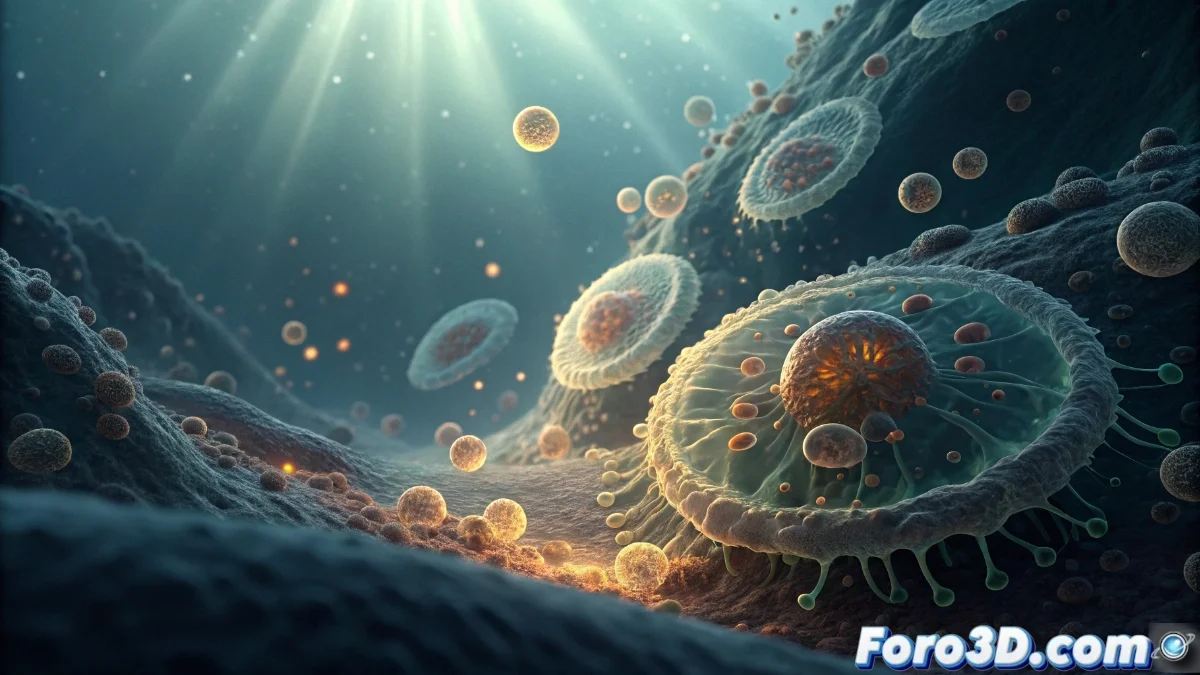
Digital Art Inspired by Cellular and Molecular Structures
The intersection between biology and digital art is revolutionizing the creation of 3D scenes, where microscopic patterns become an inexhaustible source of inspiration. This fusion allows for the exploration of universes invisible to the human eye, transforming scientific concepts into captivating aesthetic experiences 🎨.
Advanced Organic Modeling Techniques
To capture the essence of these biological structures, artists combine digital sculpting with procedural generators that replicate nature's complexity. Particle systems and mesh modifiers are essential for simulating cell membranes or molecular chains, while custom shaders reproduce unique transparency and reflection effects 🔬.
Key Tools for Recreating Microstructures:- Digital sculpting for detailed organic shapes
- Procedural generators that mimic natural patterns
- Custom shaders for translucent properties
Life imitates art even at the cellular level: we model perfect mitochondria while the real ones work in silence.
Applications in Contemporary Visual Media
These creations find multiple applications in scientific animation, audiovisual backgrounds, and interactive installations. Their versatility allows them to be adapted from educational contexts to video game scenarios, demonstrating how science can enrich art and vice versa 🌐.
Main Implementation Fields:- Scientific animation for visualizing biological processes
- Audiovisual productions with microcosmic backgrounds
- Immersive interactive artistic installations
The Future of Digital Biological Representation
This innovative approach not only generates visually striking compositions but also democratizes access to complex scientific concepts. By balancing biological realism with creative freedom, artists build bridges between disciplines, revealing the hidden beauty of the microscopic world ✨.