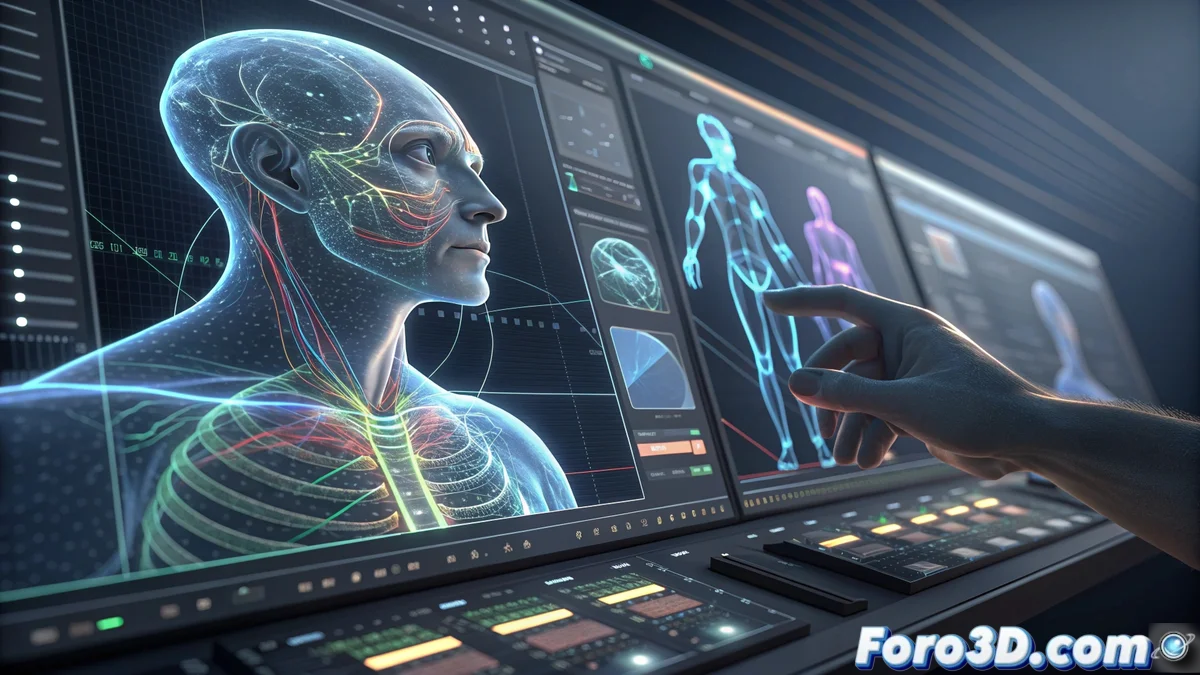
DiffusionBrowser Enables Real-Time Preview of AI-Generated Videos
Diffusion models for video creation have changed how we produce sequences, but they are usually slow and act as a black box during generation, leaving the user unable to intervene. This work presents DiffusionBrowser, a framework with a lightweight and adaptable decoder that enables interactive previews at any stage of the denoising process. 🎬
A Decoder that Enables Real-Time Control
The system can produce multimodal representations that include RGB color and intrinsic scene data at a speed that exceeds four times real-time. This shows an appearance and movement that are consistent with the final video result. The key is a trained decoder that, once deployed, allows interactively guiding the generation in intermediate steps.
Capabilities unlocked by this approach:- Stochasticity reinjection: Modify randomness during the process to redirect the outcome.
- Modal steering: Adjust and focus the generation toward specific modes or styles on the fly.
- Active intervention: Users no longer have to wait passively; they can perceive and adjust the process based on immediate preview.
So, while other models leave you staring at a blinking cursor, here you can direct the movie before it's fully revealed.
A Window to Understand the Internal Model
In addition to generation, learned decoders serve as a powerful tool for systematically analyzing how the model works. This reveals how scene details, objects, and other elements are composed and assembled during the denoising phases, a process that is normally opaque.
Key contributions to analysis:- Process transparency: Unveils the internal mechanisms of complex generative systems.
- Composition understanding: Shows how visual elements are progressively built.
- Model diagnostics: Provides unique insights to evaluate and improve the diffusion system architecture.
Redefining the AI Workflow
DiffusionBrowser represents a significant advance by addressing two main limitations of video diffusion models: slowness and lack of feedback. By integrating a model-agnostic decoder, it not only accelerates the preview process but also democratizes creative control and opens a pathway to investigate and understand these artificial intelligence systems in a previously impossible way. 🔍